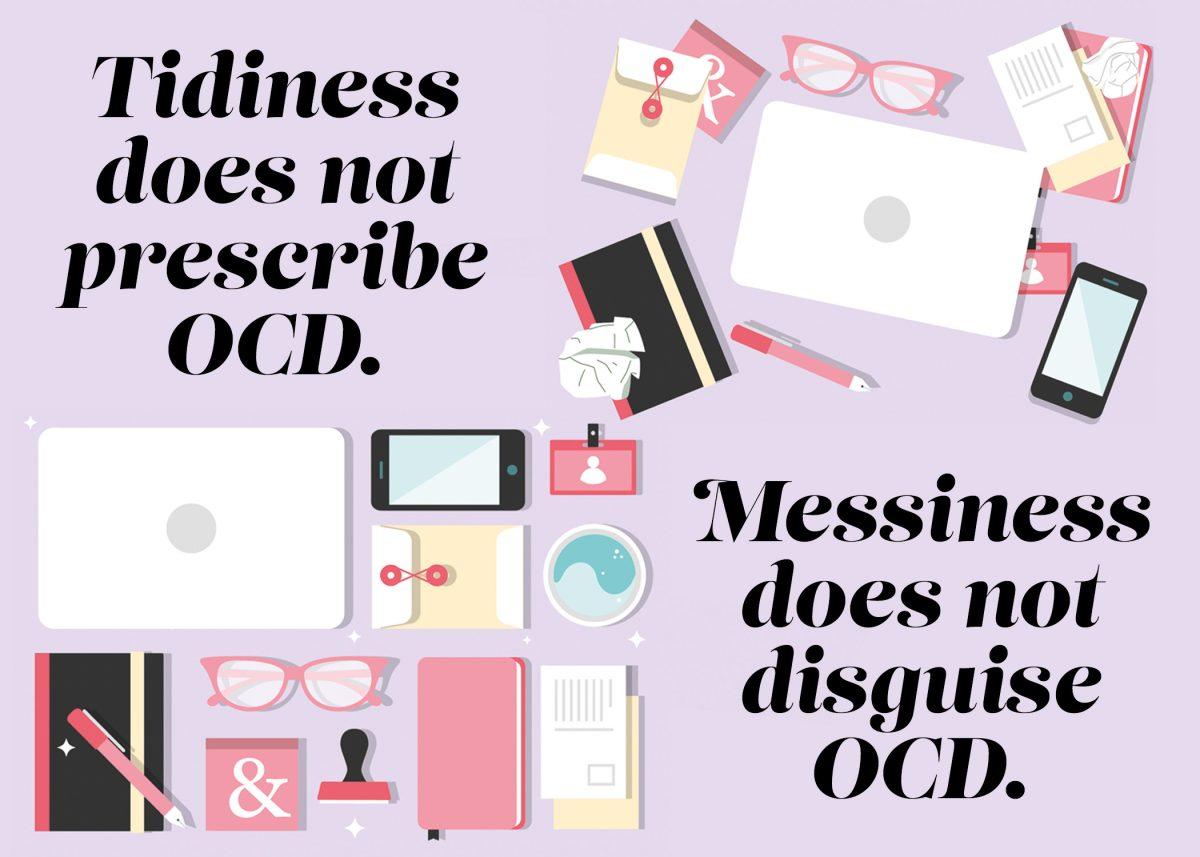
The American Psychological Association (APA) defines obsessive-compulsive disorder as “a disorder characterized by recurrent intrusive thoughts (obsessions) that prompt the performance of neutralizing rituals (compulsions).” Although this definition is accurate, it fails to acknowledge everything a sufferer of OCD endures daily
Most people with OCD know the frustration of having a casual conversation and hearing the classic, “That messes with my OCD so bad” or “Oh my God, I’m so OCD.” I know I’ve felt that frustration one too many times. The sigh of frustration because your all-too-real disorder is used as a meaningless adjective for someone who likes to be organized.
I certainly do not claim to know what all OCD sufferers experience, nor do I claim to speak for everyone with the disorder. However, I believe I can articulately speak out on why OCD is not an adjective because at just seven years old, I was diagnosed with obsessive-compulsive disorder.
So here is a gentle reminder that just because you like your room to be clean and your pens to be color-organized does not mean you have OCD. These miscellaneous organizational tasks do not make your diagnosis any less valid. My room is messy, my pens are not color-coded, and I have OCD.
OCD encompasses a vast array of obsessions and compulsions that present differently in every single patient. One thing all OCD sufferers have in common, though, is the obsessions and compulsions that affect our daily lives. In that way, we can all relate.
“People with OCD process their thoughts differently and behave differently from what is considered neurotypical,” writer Julia Simkus stated in a Simply Psychology article. “Their brains show higher levels of activity in brain regions related to planning, judgment, and body movements, leading to obsessions and compulsions.”
OCD is a real disorder with a serious and observable diagnosis. You may not even realize that you are improperly using the diagnosis of OCD yourself. I can confidently tell you that sufferers of OCD do recognize when someone else uses OCD as an adjective.
Medication and therapy can help treat the severity of someone’s OCD. When left untreated, it has the power to consume all aspects of life. When the acronym OCD is used correctly, it can be a helpful tool/diagnosis to validate someone’s experiences and symptoms so they may move forward on the path to treatment and recovery. When it is used incorrectly, it can trivialize the diagnosis and may deter someone from seeking help when it’s needed.
I first remember experiencing symptoms of OCD at five years old. I would cry, sitting on the floor, retying my shoes over and over until I could get the knot perfect. I remember the sheer exacerbation of my OCD when I started kindergarten, which brought along panic attacks.
Compulsions took over my life for most of elementary school. I was terrified of going to school. Fun sleepovers and sweet play dates added another layer of terror because my obsessions never left me alone.
My obsessions and compulsions defined my day-to-day life. I would lay awake at night with death on my mind. I would walk through life in terror of the next panic attack. My intrusive thoughts convinced me that I was an awful person. OCD kept me from being a kid for many years.
When I was 12 years old, I began my long journey of finding psychiatric medication to treat my OCD, a journey that I’m still on today. Things are a lot better now, but I still live with obsessions and compulsions that affect my daily life and are sometimes difficult to manage.
If any of these experiences or descriptions of OCD resonate with you, I encourage you to seek help through a clinician, therapist or psychiatrist to assess what may be going on. To those diagnosed with OCD who may be reading this, remember that you are not alone.
OCD sufferers, like myself, wish that OCD was as simplistic as wanting to be organized or liking to clean. Every time you utter the phrase “I’m so OCD,” think about how you may be discrediting the very real diagnosis for people who have the disorder. Think about how you are invalidating sufferers of OCD.
So, be careful how you speak about OCD. You never know who around you may be suffering from it since it is not an outwardly visible disorder. Millions of us are not only OCD sufferers but OCD survivors.
Alayna Heifner is a freshman at UT this year studying philosophy. She can be reached at [email protected].