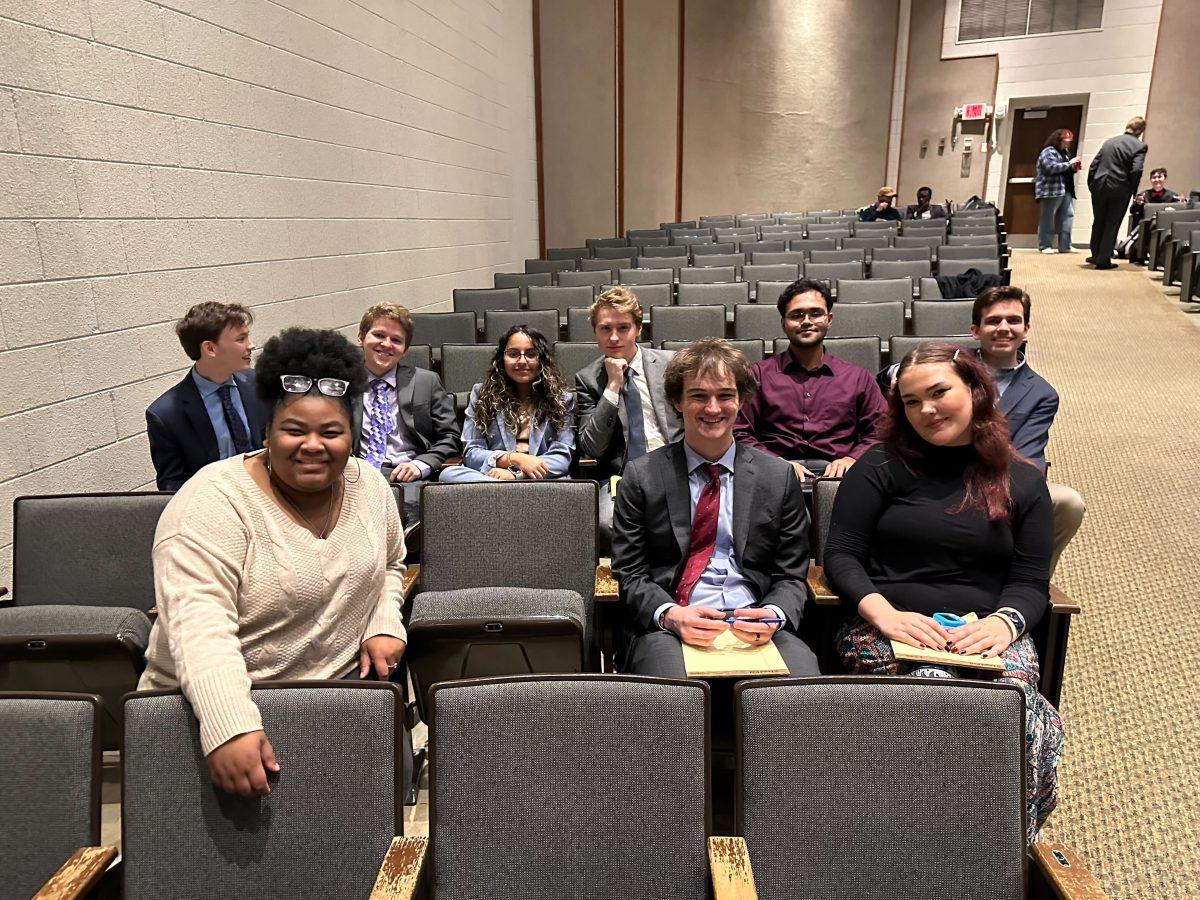
Over the past weekend, the University of Tennessee Speech and Debate team embarked on a challenging journey to Louisiana State University at Shreveport, participating in what turned out to be one of the most competitive tournaments of the season. The event served as a microcosm of the broader national circuit of the International Public Debate Association.
In this competition, four of the Volunteers’ varsity members participated.
Among the many skilled debaters representing UT, economics major Brayton Moloney emerged as an outstanding performer. In the fierce competition, Moloney not only made it to the elimination rounds but also secured a remarkable second-place finish in the varsity division. This accomplishment stands as a testament to his dedication and skills, bringing pride to the entire UT debate team.
Abbey Barnes, director of Speech and Debate and assistant professor of practice, was impressed with the overall team’s performance.
While Moloney was the sole competitor who advanced to the elimination rounds, Barnes said it was a collaborative effort. She believed that each team member played a vital role by contributing to research and assisting in the development of persuasive arguments, which greatly bolstered Moloney’s performance in subsequent rounds.
“Brayton exercised consistency and a level head throughout the tourney,” Barnes said. “He was receptive to creative argumentation during preps and executed them well in round.”
Looking ahead, the UT debate team is committed to staying at the forefront of national IPDA trends while adhering to its core ethical principles when it comes to crafting valid and compelling arguments.
Owen Thurber, a senior marketing and accounting major, participated in the tournament over the weekend and reflected on the highs and lows of the tournament.
“I would say one of our team’s biggest strengths is when we are in round thinking on the spot and our speaking skills. We flourish once we get into the room and get into the groove of the round,” Thurber said. “I think our team could work on when we prep the round, though. We all want to help each other, and it causes us to get overwhelmed by each other sometimes.”
Barnes plans to use the forthcoming practices to revolve around the critical question of how can they maintain ethically sound, legitimate arguments while making them comprehendible to the judges, including those who may have no prior background in competitive debate.
IPDA values real-world argumentation and persuasion skills, emphasizing inclusivity by allowing members of the general public to serve as judges, even if they lack prior experience in competitive debate.
In response to this unique challenge, the UT Speech and Debate team is fully devoted to transforming intricate debate terminology into language that is clear and easily understood.
Barnes believes rather than flooding their arguments with an excessive amount of evidence, they are shifting their focus to highlight the impacts of the evidence they present. This approach is designed to make their arguments more comprehensible and compelling to a broader audience.
Barnes wants to focus the team on avoiding subtlety.
“We are learning to translate a lot of debate jargon and focusing on the impacts of evidence rather than the amount of evidence itself,” Barnes said. “So, how do we steer away from sophistry and redirect the judge to vote for argumentation that is good in substance and that they can understand.”
The Speech and Debate team’s commitment to ethical, effective and accessible argumentation remains unwavering, setting them on a path to further success on the national circuit of IPDA.
As the season progresses, the UT debate team looks forward to further refining their approach and continuing to make a positive impact on the competitive debate scene. The dedication and determination of the team’s debaters, as exemplified by Moloney’s performance, serve as a source of inspiration for the entire team.