As college students, it can be difficult to discern how a president’s stance on foreign policy issues affects us. Not every student has access to political science courses or someone who can break down these complicated issues.
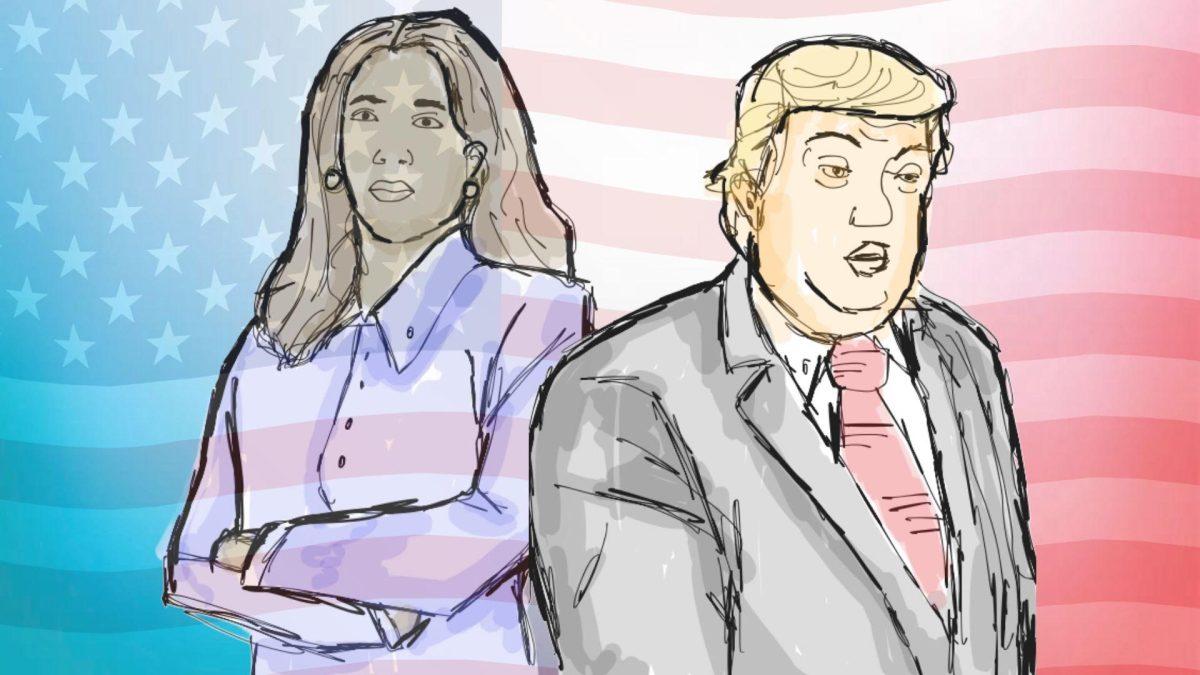
Competing administrations will take very different approaches to foreign policy in this coming presidential election, which could significantly impact Americans at home.
Krista Weigand, director of the Center for National Security and Foreign Affairs and professor at the Baker School of Public Policy and Public Affairs at UT, is an expert on foreign policy and spoke to the Beacon about these issues.
The U.S. Constitution outlines the president’s responsibility to serve as the commander-in-chief of all military forces and oversee all defense decisions.
“So he or she is really the final decision maker of all foreign policy related to military, defense and national security,” Weigand said.
Currently, there are several international crises and national interest issues that the U.S. is very concerned about.
It is likely that the former president and vice president will continue to focus their peace efforts in these areas as they did under their previous administrations, according to Weigand.
However, looking forward, it is crucial that both Trump and Harris focus their attention on the wars between Ukraine and Russia and Israel and Gaza, as these wars have the ability to throw the U.S. and the rest of the world into a major war through collective defense contract as mentioned in Article 5 of the North Atlantic Treaty Organization that states that any armed attack against one ally is an armed attack against all allies.
NATO and the war in Ukraine
Trump’s criticisms and claims of pulling out of NATO and the recent push of populism and isolationism from some conservative politicians have raised some concerns on the side of foreign policy as Trump proceeds in his campaign.
“A lot of people criticize NATO and say, you know, it’s not really effective. It’s just, it’s just a legal organism — Article 5 is just a legal article that doesn’t carry much weight,” Weigand said, “But at the same time, so far, it has actually worked for 50-plus years.”
So far, Article 5 is a powerful reason why Russian President Vladimir Putin has not invaded other countries like the Baltic States — Latvia, Lithuania and Estonia, according to Weigand.
“(Putin) can’t afford to fight a war against all of the NATO military … I don’t think he wants that war, and the U.S. certainly doesn’t want a war against Russia. And so, that article is actually really powerful right now, and it seems to be working, and it seems to be holding,” Weigand said.
Harris said as she accepted her Democratic nomination that she would stand by Ukraine and its NATO Allies.
Israeli support
On the other hand, in the war between Israel and Gaza, the Trump administration has made it clear that they stand on the side of Israel, and so has the Biden administration. However, it is unclear how Harris would handle this situation if she were elected president in November.
“I think that’s going to be the major distinction between Biden and Harris,” Weigand said. “She’s going to be a little more open to criticizing Israel with regards to human rights. … When (Biden) finally said, ‘We’re concerned about human rights,’ it kind of fell short because he had already been so vocal about supporting Israel.”
However, this is a tricky situation because Israel is a U.S. ally, and now — with Iran’s recent attacks on Israel and their potential influence on terrorist groups Hamas and Hezbollah — the U.S. is obligated to come to Israel’s aid.
In Harris’ first sit-down television interview with her running mate Senator Tim Walz on CNN, she discussed her stance on the war in Israel and the human rights issues there.
“Let me be very clear. I’m unequivocal and — and unwavering in my commitment to Israel’s defense and its ability to defend itself. And that’s not gonna change,” Harris said. “But let’s take a step back. … As I said then, I say today, Israel had a right — has a right — to defend itself. … And how it does so matters. Far too many innocent Palestinians have been killed. And we have got to get a deal done. … This war must end.”
Trade war policies
There’s also massive concern about China’s rise in power and the modernization of its military in terms of its new development of nuclear weapons, regular weapons, ships, tanks and airplanes.
China has also made overt threats about invading Taiwan or taking Taiwan — a U.S. partner. Therefore, going forward, the U.S. has a very real and strategic interest in protecting Taiwan and preventing China from threatening other allies and partners in the Indo-Pacific region.
One policy issue that both Trump and Harris plan to impose — or continue to impose — to keep China in check is tariffs.
America is heavily dependent on China’s global manufacturing industry. In a way, China serves as the factory of the world and provides products to other countries at very low costs.
During Trump’s presidency, he began by imposing a 10% tax levy on Chinese products. In May 2018, he also imposed a 25% tariff on all imported steel and a 10% tariff on all imported aluminum — starting a trade war, especially between the U.S. and China.
The Trump administration claims that the U.S. relies too heavily on other countries. However, the tariffs placed on thousands of products created a nearly $80 billion tax increase for the American people by 2020, making it the largest tax increase in decades.
As part of his 2024 presidential campaign, Trump has proposed a 60% tariff increase on Chinese goods and a 20% increase on goods imported from everywhere else. He has also talked about imposing a 100% tariff on goods made in Mexico and threatened a 150% tariff increase on China if it invaded Taiwan.
“While Trump’s idea of reducing dependency on China is a great idea, and many people support reducing the dependency on China, and tariffs is one way to do this, it is going to be a painful experience for American companies and the American consumer,” Weigan said.
If Trump is elected, his proposed tariff policies have the potential to continue raising the inflation rate over the coming years. In the short term, this will cost the American people more as a noticeable increase in consumer prices will occur.
However, the Biden administration has kept most of the Trump administration’s tariffs in place, and more tax revenue has been collected under the Biden administration than from Trump. In July, the Biden administration imposed additional tariffs on certain metals from Mexico, which would block Chinese materials from a route into the U.S.
During her campaign, Harris openly criticized Trump’s tariff policy. However, it is important to note that Harris is not criticizing tariffs, but Trump’s policies on tariffs. If she is elected, she will likely continue the trade war efforts created by the two previous administrations and add her own.
“I am not a protectionist Democrat,” Harris said during a 2020 Democratic presidential primary debate. “At the same time … we have to hold China accountable.”
While Trump is looking at the bigger picture to protect U.S. industries and raise revenues, Harris is proposing a mix of tariffs and higher taxes on wealthier Americans to generate revenue.
“Other countries are going to finally, after 75 years, pay us back for all that we’ve done for the world, and the tariff will be substantial,” Trump said, adding that his tariff proposal would raise billions of dollars for the U.S. and help pull us out of debt.
Immigration
To battle this crisis, the Trump administration would focus more on domestic efforts like building walls, tightening border security and focus on the deportation of criminals who illegally cross the border. Meanwhile, the Harris administration would continue a long-term investment strategy by offering economic aid to Latin American countries, hoping to keep people from wanting to leave their home country and cross illegally into the States.
“The downside of the Harris approach, though, is that that’s really more of a long-term process. It’s not something we could see happen just in four years and under the Biden administration,” Weigand said.
The Biden administration has been heavily criticized for handling immigration at the border. Therefore, if Harris is going to deal with the border issues seriously, she will probably also have to address some of the immigration issues domestically. Still, she will never go to the extreme that Trump would.
Harris plans to continue to crack down on the number of asylum claims and extend restrictions on them. She has endorsed comprehensive immigration reform, which aims to help immigrants receive U.S. citizenship faster and also help those who arrived in the States as children get on a fast track to obtaining citizenship. Harris has not spoken much about her plans for the border outside of asylum crackdowns.
Harris also plans to bring back bipartisan border security, which she claims Trump “killed,” and sign it into law. This border compromise bill would give the president greater authority, including the ability to shut down the border when necessary and limit the number of parole migrants, allowing them to temporarily enter the U.S.
Harris has also called for immigration reform and argues that the system is “broken,” but has not discussed the scope of the situation.
Trump plans to bar entry from Muslim-majority countries and also promises to restore his “Migrant Protection Protocols” and “Remain in Mexico Program,” which requires asylum seekers to stay in Mexico while they await their immigration proceedings. Trump also plans to reinforce the Title 42 border policy, which prevents migrants with infectious diseases from entering the U.S.
But as Harris plans to give migrants in the U.S. citizenship, Trump vows massive deportation efforts. Despite this, he made the same claims in 2016, and his administration never deported more than 350,000 immigrants, in contrast with the Obama administration, which deported more than 430,000 immigrants in 2013 — which is the highest recorded annual total of deportations.
However, this time, Trump has promised to use the National Guard to help him carry out more deportations if he is elected by invoking the Alien Enemies Act of 1798.
Overall, many social issues, both foreign and domestic, directly impact America, whether Americans realize it or not.
“I think from a foreign policy perspective,” Weigand said, “It’s really important to understand that almost everything we do in our lives on a daily basis is somehow connected to another country internationally, like through our globalized economy.”
As students prepare to cast their ballots this election cycle, they should know that they do not have to be experts on foreign policy to understand the impact the president of the U.S. has on others. This election is about more than gas prices and housing markets — it’s about the potential peace and stability of the world.