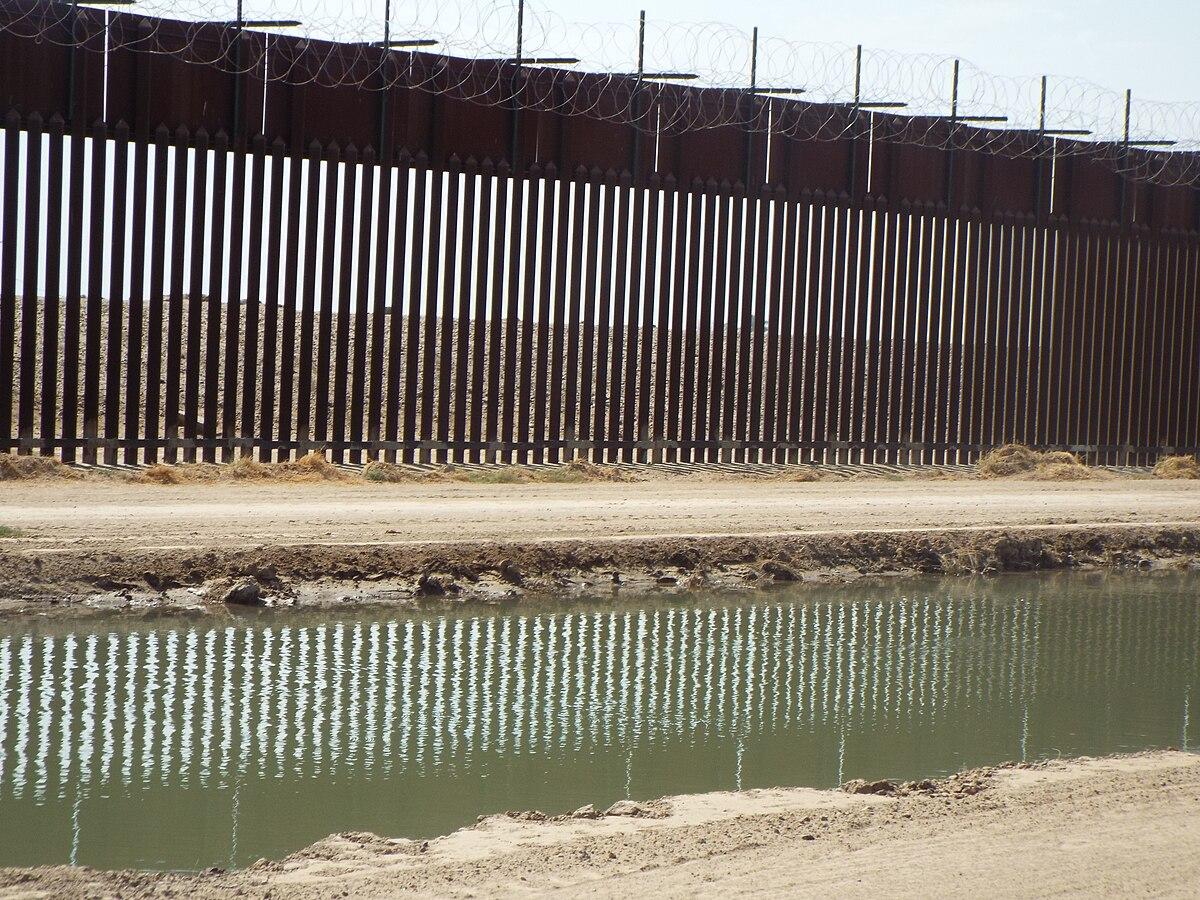
This election cycle marks the third in a row in which contention over handling the U.S.-Mexico border has been among the candidates’ top issues. Different candidates have presented a plethora of proposals to tackle the issue, but first, understanding the issue itself is key.
U.S. Customs and Border Protection is the federal law enforcement agency responsible for patrolling, policing and enforcing federal policy on the border. CBP keeps data about border crossings, but one might encounter several different statistics when listening to the discussion on border policy.
“Total encounters” refers to the number of times immigration officials stop someone at the border. This includes apprehensions when migrants are taken into custody, inadmissible when legal admission requests are denied and immediate expulsions. Briefly, from 2020 until 2023, this also included Title 42 expulsions, which were enacted as a public health order to slow the spread of COVID-19.
From 2016-20, total encounters on the southern border ranged from 300,000 to 400,000, with 2019 as an outlier at over 850,000. The numbers sparked sharply in 2021, with over 1,700,000 total encounters. 2022 and 2023 saw a rise to about 2,400,000 total encounters each year, while 2024 saw a slight drop to about 2,100,000 — some of the highest numbers in history.
These numbers are not the same as the numbers of unauthorized migrants who might have entered the country, but because of the nature of illegal entries, there is no definitive data. Furthermore, statistics from more recent years are less accessible than data from decades ago. In other words, putting together a clear picture of the situation at the southern border is very difficult.
CBP keeps statistics on “known getaways” — individuals they know were able to sneak through the border without contact from agents — and this information is primarily collected through intelligence and surveillance.
That number began rising in April 2020. Under former President Donald Trump, known getaways stayed mostly within the range of 10,000 to 15,000 a month, but under President Joe Biden, that number rose as high as nearly 75,000 in March 2023. However, after the reversal of Title 42, that number began to fall in mid-2023.
Title 42 permitted agents to immediately expel migrants at the border due to public health concerns about the spread of COVID-19. After that policy ended, CBP began to see many more migrants simply turn themselves into agents rather than attempt to evade. This largely explains the drop-off of known getaways that occurred in 2023.
The bottom line question of how many unauthorized migrants are in the U.S. is also challenging to answer. In 2022, the Pew Research Center estimated that 11 million unauthorized migrants in the U.S. — way up from a 10.2 million estimate in 2019.
Understanding how the southern border affects the rest of the country is important, but exactly how it does that is controversial. Knox County Mayor Glenn Jacobs traveled to the southern border in February of this year, indicating that he believes the problems at the border are relevant to the Knoxville area.
Many elected officials from Knoxville and the surrounding area have been vocal about what they see to be the direct connection between southern border policy and adverse effects locally. U.S. Representative Diana Harshbarger of Tennessee’s first district discussed the impacts on East Tennessee in the first paragraph of her section on her own border policies.
“As a matter of national security, we must secure our borders,” Harshbarger said. “Even here in East Tennessee, we see the ill effects of an unsecured border, as the opioid epidemic has devastated many households aided by the flow of illicit drugs across our borders.”
The Tennessee Bureau of Investigation’s website states that Tennessee is currently observing epidemic levels of opioid addiction, overdose and death. This is at the same time as state legislation has acted to cut down on the supply of prescription opioids, indicating that opioids are now entering Tennessee through other means.
Senator Marsha Blackburn of Tennessee also traveled to the southern border in 2024.
The discussion of the local impacts of policy decisions at the southern border continues broadly, and some students are not afraid to voice their concerns on the subject.
Luke Hattler, a freshman studying political science, explained how he believes the southern border affects life in Knoxville.
“I think that we all have a moral obligation to oppose the dehumanizing policies of the federal government,” Hattler said. “Putting people in cages is wrong, it’s always going to be wrong. Putting children in cages and separating them from the parents is immoral, we can’t do that.”
With debate on the issue still raging, students have different objections to our policies at the border. Elijah Boatwright, a junior studying economics and political science, explained his disapproval of handling the immigration crisis at the border.
“Well, it’s in shambles right now under the Biden-Harris administration,” Boatwright said. “We have record high illegal border crossings. We saw day one, Biden reversed all of the good Trump policies that made our border secure and safe.”
Colin Burgess, a sophomore studying biological sciences, explained where he sees the economic effects of the southern border on Knoxville.
“Extra immigrants coming anywhere into the country, it’s going to make prices go up. It’s going to create extra competition for jobs,” Burgess said. “Immigrants who come across are a lot more likely to be able to work below the minimum wage.”
Students continue to debate on the merits of policies implemented by the Trump and Biden administrations. Christopher Yard, a senior studying political science, explained his thoughts on the current handling of the border.
“I approve,” Yard said. “I think that Kamala Harris and Joe Biden had a very good border deal, and it fell through because Trump wanted something to run on. He sank the border bill, which could’ve helped border patrol and could’ve had funding for the border, but Trump needed something to run on so he sank the bill.”
Debate over the southern border continues as we wrap up the 2024 presidential election.
As we navigate the debate over the U.S.-Mexico border issue, it’s important to understand how this issue affects us all, even here in Knoxville.
Local residents’ dialogue and experiences underscore this issue’s importance as the country seeks solutions that balance security, humanitarian concerns and economic realities.