Over the decades, UT’s football program has transformed, and game day fashion has evolved alongside it. From Condredge Holloway in the ‘70s to Nico Iamaleava today, each quarterback era has brought changes in style and approach to game day attire.
Here is the evolution of game day fashion throughout the different UT quarterback eras.
Condredge Holloway (1972-1974)
The era of Condredge Holloway holds a significant place in the history of the Vols and the SEC, as Holloway made history as the first Black quarterback to start in the conference.
According to UT class of 1974 alum Marilyn Burney, game day fashion of the 1970s mirrored this spirit of change, embracing retro flair while staying comfortably relaxed.
Fans embraced bell bottoms with wide belts, often pairing them with orange and white paisley or tie-dye shirts. Women sported vibrant mini dresses with dramatic bell sleeves, go-go boots and halo headbands.
Burney’s typical game day outfit accounted for the weather, featuring bell bottoms and boots or clogs. Depending on a special occasion, like a bowl game, Burney would elevate her style by wearing an “orange hot pants outfit” that included a blazer and matching shorts.
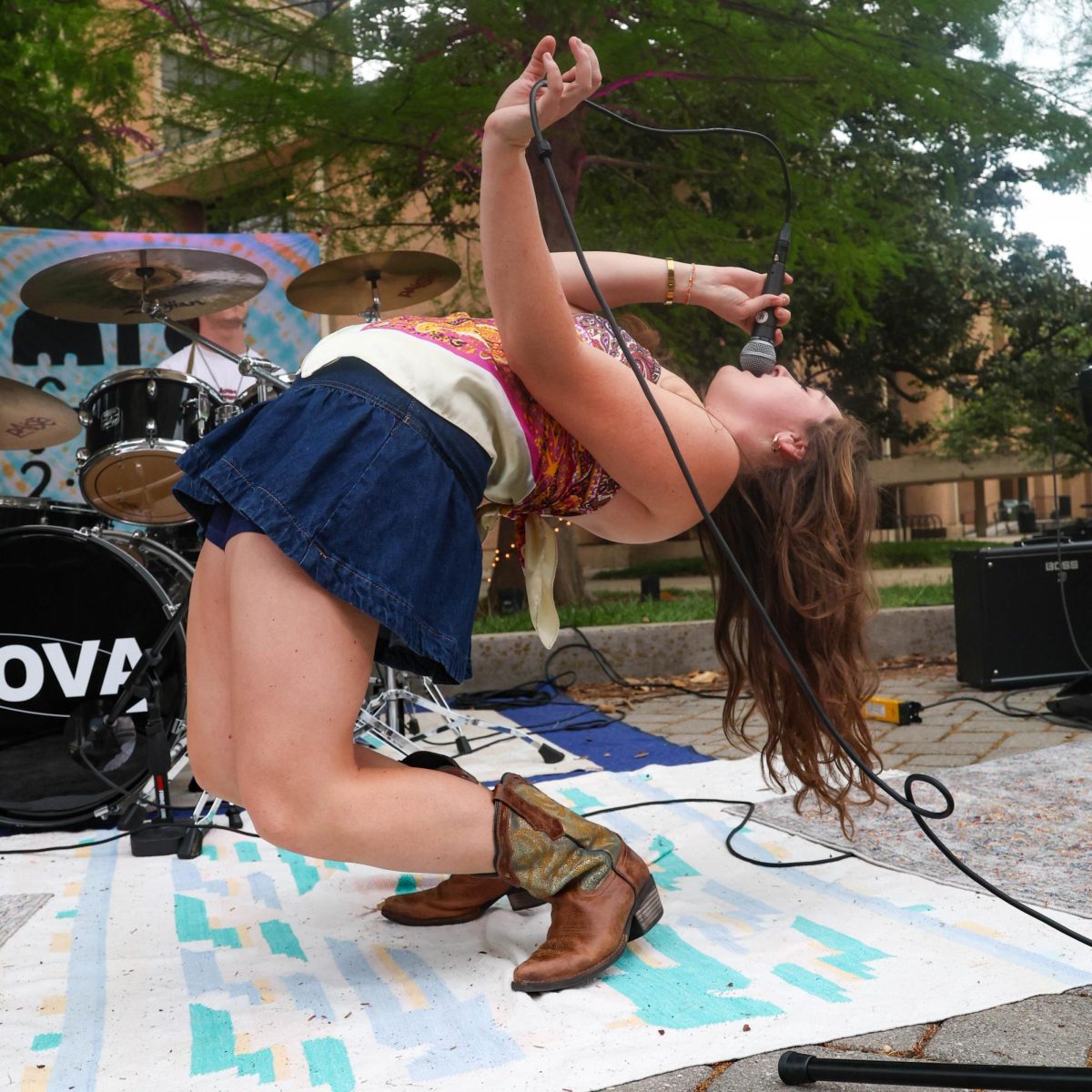
Game day fashion has since evolved, in Burney’s eyes, to maintain the trend of boots, but swapping go-go for cowboy, and dresses, but altering the length to be shorter and embracing a newer trend of jersey dresses.
“There’s a lot more cowboy boots,” Burney said. “Back then we wore boots, but they weren’t like cowboy boots. And a lot of the jersey dresses. We didn’t have jersey dresses or anything like that.”
Jeff Francis (1986-1988) and Andy Kelly (1989-1991)
The late 1980s brought highs and lows for Tennessee football, but in 1989, Andy Kelly led the team to an 11-1 record and a Cotton Bowl win.
Fashion in the ‘80s and early ‘90s saw a shift toward looser, oversized clothing as fitted styles faded. Like the ‘70s, fans dressed for comfort and weather. Margaret Little, a 1990 graduate, described her typical game day outfit as jeans and a sweatshirt — a combination equivalent to comfort.
“There wasn’t quite the fashion that there is now,” Little said. “There wasn’t as much diversity in the clothing and different brands and the bling. There was not a lot of bling then — it was pretty basic stuff.”
Aside from fashion, game day processes and procedures were also different. There was no lottery system or online way of getting tickets that students and fans know today.
“Back then there was a ticket office and you would go stand in line with your activities pass,” Little said. “And they just randomly assigned tickets. I know now you have to do a lottery. … Back then you could take 10 activity passes of your friends, and one person could go and stand in line and get 10 tickets together.”
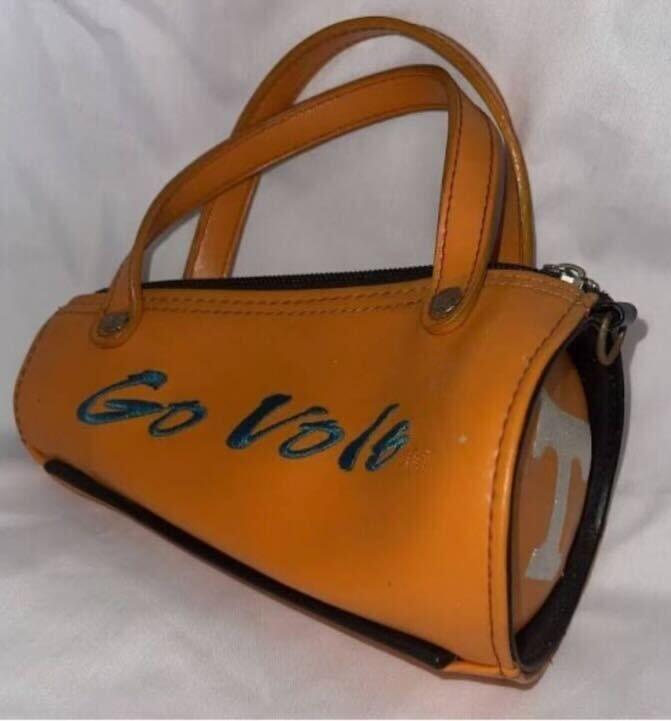
In addition to the ticketing process, Little also remembers the time before there was a clear bag policy.
“I probably had at least 30 cute bags,” Little said. “One thing I do miss is the purses. People would carry the cutest things you ever saw.”
Heath Schuler (1992-1993), Peyton Manning (1994-1997) and Tee Martin (1998-1999)
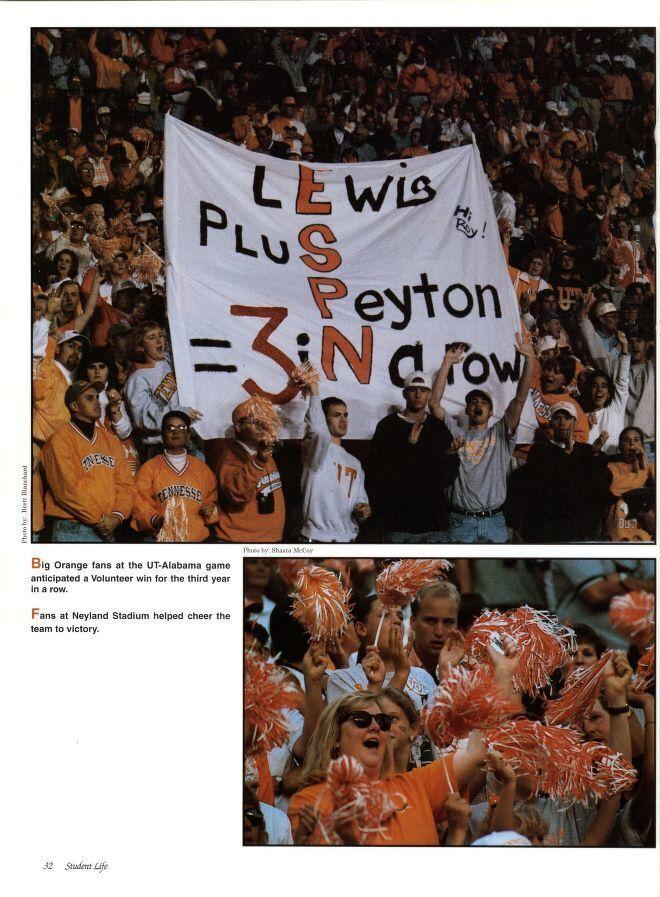
The ‘90s were a standout era in Tennessee football, with Hall of Fame players like Heath Shuler and Peyton Manning and a national championship win under Tee Martin in 1998. While fan pride soared, orange-filled stadiums weren’t yet the norm.
The theme of dressing comfortably and for the weather carried on throughout the ‘90s. However, according to class of 1993 alum Pam Schmidt, dressing for comfort and the weather did not always mean wearing classic UT orange.
“We just kind of wore whatever outfits we would wear any other day or any other night out or day out or whatever,” Schmidt said. “Like we were not all about wearing orange and white.”
However, there was one orange accessory that was popular when the weather was not cooperative — an orange rain poncho.
As for game day shoes, duck boots and tennis shoes were popular. UT alum Holly Wood (1990-1994, 1996-1999) noted the change in ‘90s tennis shoes and today’s “sneakers.”
“We wore tennis shoes and Nikes were very popular,” Wood said. “I don’t think we had as many options in tennis shoes as we have now, sneakers I think they’re called now. They’ve become popular. They’re a commodity. They weren’t a commodity in our day.”
While wearing Tennessee colors was not a requirement, students did wear Tennessee gear — especially in the late ‘90s. UT sweatshirts, T-shirts and baseball caps were popular options.
Fans would shop for Tennessee merchandise at the UT bookstore, thrift shops and a store on the Strip.
By the late ‘90s, wearing player jerseys, particularly Manning’s No. 16 and Martin’s No. 17, had gained popularity.
Joshua Dobbs (2013-2016)
After the heyday Tennessee had in the ‘90s, the 2000s saw setbacks as the program worked to recapture its former glory. However, Joshua Dobbs helped reignite hope for Tennessee fans in the 2010s, leaving a legacy as a resilient leader.
In the 2010s, game day fashion at UT became more about personal branding and self-expression. The “sea of orange” became a commonality on game days, and in 2014, after a photoshopped image of Neyland Stadium hit Twitter, the “Checker Neyland“ movement was born.
Students began to wear dressier outfits from higher-end brands. For example, UT alum Peyton Mooneyhan, would find orange pieces from Target, Free People and Madewell.
Nico Iamaleava (2023-Present)
With Nico Iamaleava currently leading Tennessee’s offense, game day fashion has embraced a fresh, dynamic style that mirrors the excitement surrounding a new era of Vols football.
Game days can now be seen as more of a fashion show, with a shift to dressier and more high-end — and sometimes impractical — outfits.
Current game day fashion includes oversized jersey dresses, trendy two-piece sets in Tennessee’s signature orange and white, and custom T-shirts with creative UT slogans or player-inspired graphics. Checkerboard patterns continue to be popular, extending beyond overalls to accessories like hats, scarves, and even nail art.
Although game day fashion trends have changed overtime, the sense of camaraderie and love fans have for the Vols has not faltered.

(L-R): Stacy Ivey, Mimi Brewer Williams, Susan Parsons Gornell and Pam Veach Schmidt at a UT game at Neyland Stadium in the early 90s.