In 2010, the studio of Rockstar Games introduced the world of gaming to a franchise now known to all as “Red Dead Redemption.” The name itself is sure to ring a bell for many, as the franchise quickly became Rockstar’s second most valuable title, just behind the likes of “Grand Theft Auto.”
Roughly 23 million sold copies later — making it one of the top-selling video games — Rockstar Games released the highly touted sequel, “Red Dead Redemption 2.”
The video game series featured two different protagonists over the years: John Marston, voiced by actor Rob Wiethoff and Arthur Morgan, voiced by Roger Clark.
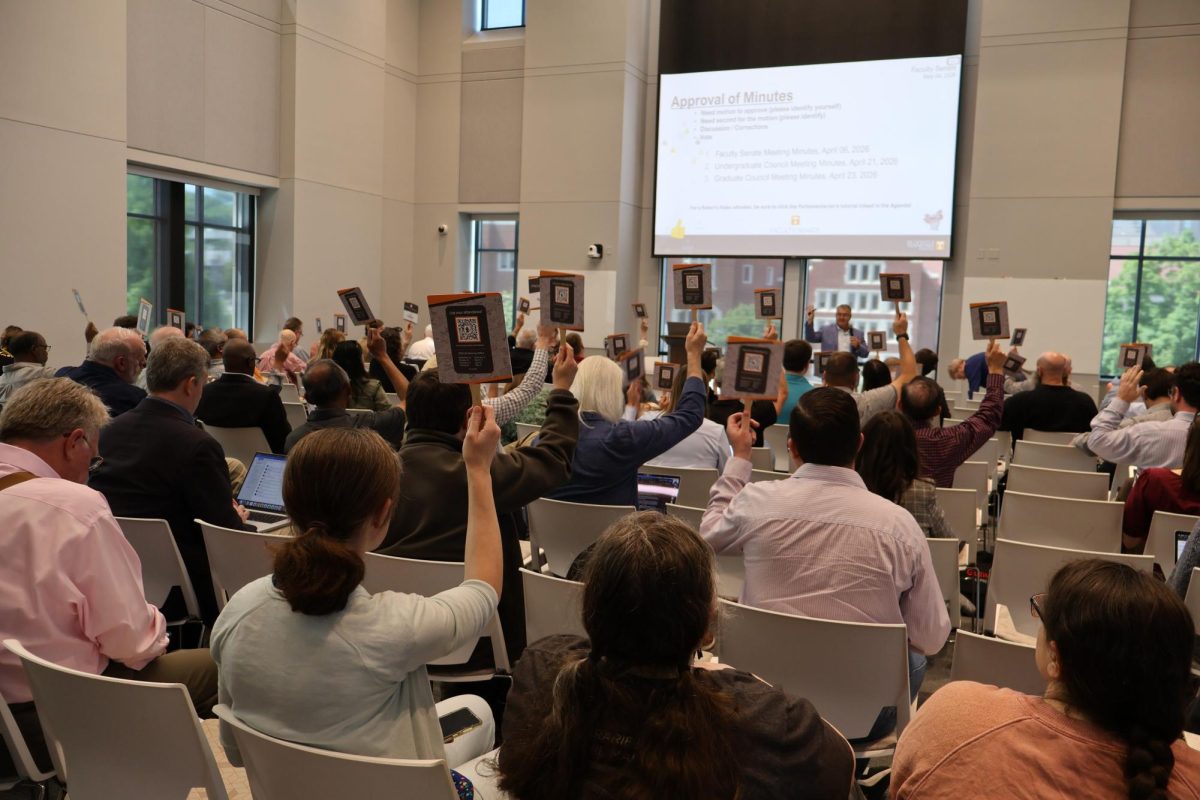
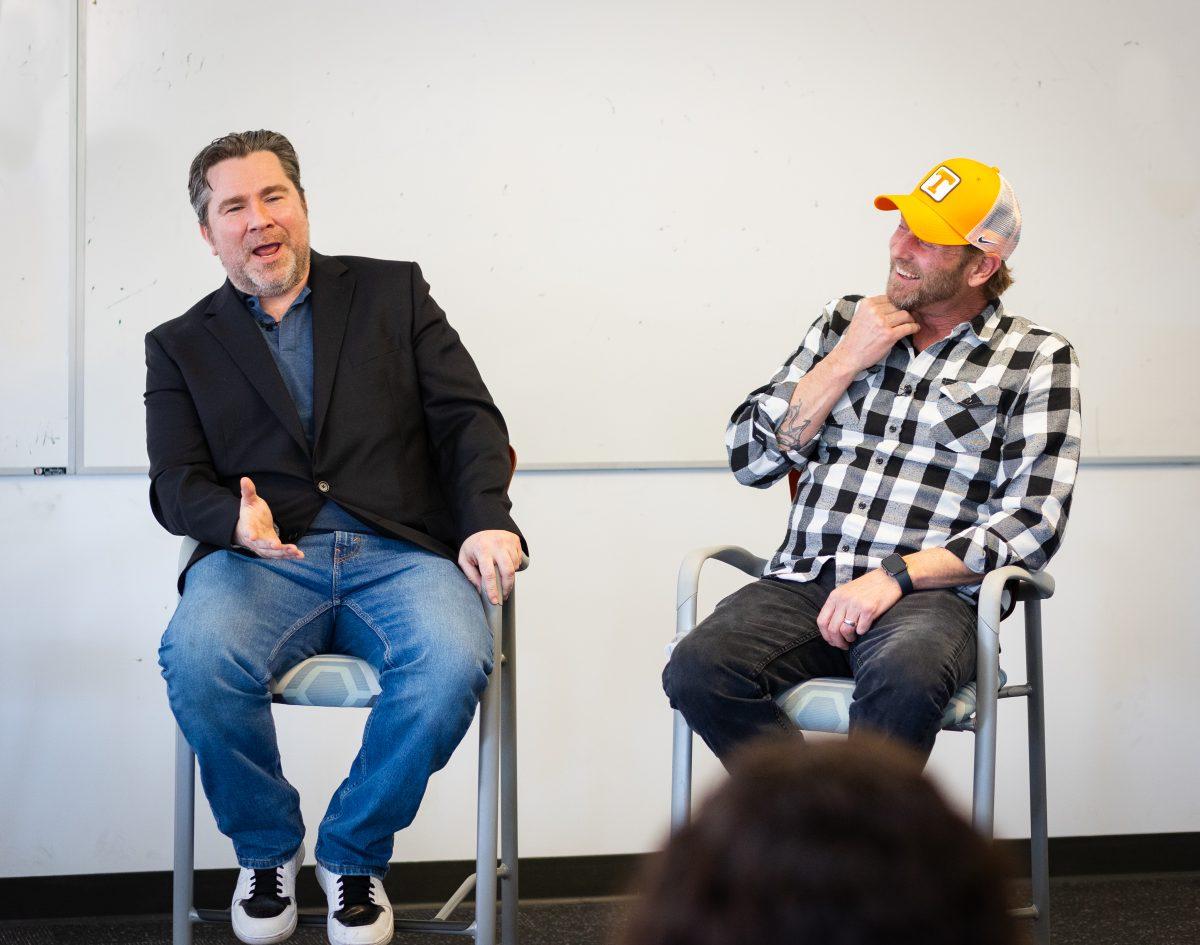
On Thursday, the two esteemed performers made their way from the TV screen to the classroom, making a surprise appearance at the Mossman Building to visit professor Tore Olsson’s “Red Dead Redemption” history class.
The class itself has been a part of the university’s rotation since 2021 and quickly became a raging success across campus. With the class growing fast, Olsson made the call to put out a book with the hopes of reaching the world outside of Knoxville. The book, called “Red Dead’s History,” will feature none other than Morgan’s voice actor, Clark.
“I discovered this incredibly popular game, ‘Red Dead Redemption 2,’ as a way to hook students into grappling with actual difficult subjects in American history, getting them to sign up and come out and have the passion to discuss big topics by using the game as a hook,” Olsson said.
There was no lack of passion in the room, from the students’ gasps when it was revealed that the actors would be visiting to the smiles on both of the actors’ faces when seeing the class’s reaction.
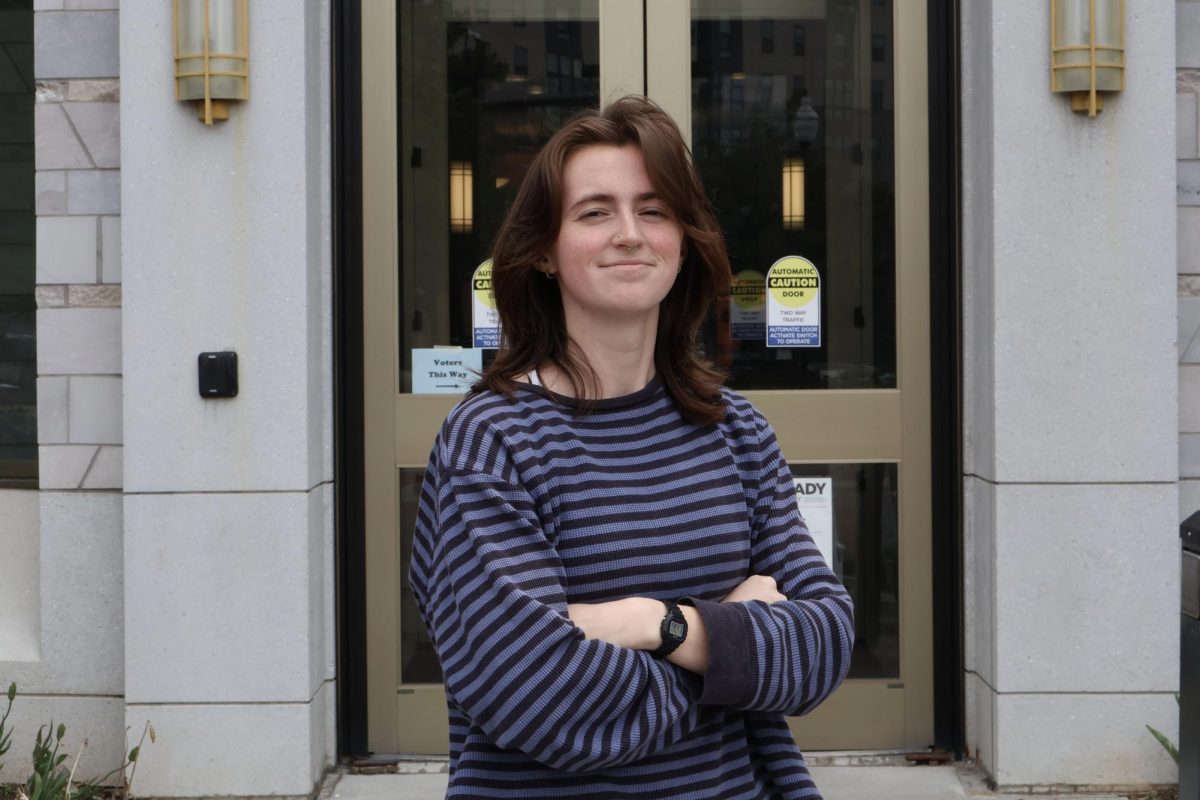
“With me being a history major, seeing one of my favorite games has a class here at Tennessee, it blew my mind,” Aidan Monroe, a junior at UT, said. “I didn’t care that I had to drive an hour to be here.”
Monroe continued to speak highly of the class, stating even though it was his only class at UT, he had to be there.
The discussion featured topics that ranged from the development of both games to the implications of the setting and the historical accuracy of the surroundings.
While the second game was still in its development, both Clark and Wiethoff touched on how Rockstar Games would put emphasis on perfecting dialect to resemble wherever the game was taking place. Even with the coaches, the actors joked on occasions where a mispronounced name would replace the given name.
Rockstar Games, to this day, remains one of the most respected gaming producers. The conversation would further prove the team’s commitment to creating a profound and detailed world. What continued to make the experience so immersive was that the game offered so much more than the main storyline entailed. The game doesn’t always have to be just a desert but rather an opportunity to explore the unknown, and if exploring might not be the reader’s tempo, the game also offers activities such as making coffee from scratch or going camping.
The little details take this game a long way and remain one of the reasons why “Red Dead Redemption 2” won over 175 Game of the Year awards since its release in 2018.
As the floor opened up for questions, the main question that both actors circled back to was if the game should focus on keeping a filter on historical accuracy. The answer was loud and consistent: There should be no filter, meaning that the ones willing to listen to what the game has to say get the opportunity to experience history for how it was, not how they wished it was.
“I loved how much our conversation gravitated around telling the whole truth, not sugarcoating things for the sake of feeling comfortable in our present day,” Olsson said. “I think it’s essential that we grapple with the good, the bad and the ugly in American history.”
Clark continued the talk by recounting his move to Ireland, also noting the attempts he witnessed there at sugarcoating history, just in different ways. Both Clark and Wiethoff stressed the importance of being as open as possible to every bit of the story.
“A lot of this class uses the game to engage questions of inequality, gender, race, capitalism,” Olsson said. “If we don’t understand how those things played out in the past, then we can’t make sense out of them in the present.”