Supporters claim the sweeping changes in the GOP’s new megabill are a necessary reset of the student loan system, while critics warn it could leave vulnerable students behind.
On July 4, 2025, President Trump signed the “One Big, Beautiful Bill” into law after a 218-214 vote from the House of Representatives the previous day. The bill’s name emphasizes its large capacity, but some argue that it is not ‘beautiful’ — Rep. Hakeem S. Jeffries even called it the “Big, Ugly Bill” during his record breaking eight hour and 45 minute speech on the house floor.
Rep. Jeffries’ speech was symbolic of the Democrats’ greater efforts to halt or hinder the bill. Indeed, not a single Democrat, in the House or Senate, voted in favor of the legislation.
The newly enacted GOP budget bill was introduced by President Trump early in his term. Some of the policies within the bill were even seen within his campaign for the 2024 election, and in his first term.
With just over 800 pages, the bill makes large tax cuts to a number of government assistance programs, creates new changes within energy and environmental laws and creates a large fund for immigration enforcement.
For current and future students here at the University of Tennessee, the bill’s overhaul of the federal student loan borrowing and repayment system may bring some major financial implications.
Changes include new caps on borrowing for parents and graduate students, massive changes to federal loan repayment plans and the restructuring of forbearance and deferment for borrowers facing financial hardship or unemployment.
The borrowing caps come as a consequence of graduate students no longer being able to receive the Grad PLUS loan as of July 1, 2026.
William Bricker, president of College Democrats at UT, explained that he believes with these changes, student debt will rise and graduation numbers will drop.
“Grad PLUS loans make up almost half of the average graduate student’s loan package, and ending this lifelong will certainly reduce the amount of students that pursue medical school and other graduate education,” Bricker said. “For those that still do opt for graduate degrees, this legislation pushes them towards underregulated, private loan providers that endanger their financial future.”
Jack Brothers, a member of the College Republicans at UT, has a different approach to the situation at hand. While he does believe numbers of graduates will drop, he explains this isn’t necessarily a bad thing.
“By redirecting our focus from college education as the flat goal for all, and instead incentivizing young Americans to take up apprenticeships or trade work instead, we are building the human capital necessary to reshore manufacturing and break away from our over-financialized economy,” Brothers said. “So yes, it is likely that graduate numbers will fall, but net incomes and standard of living will rise as a result.”
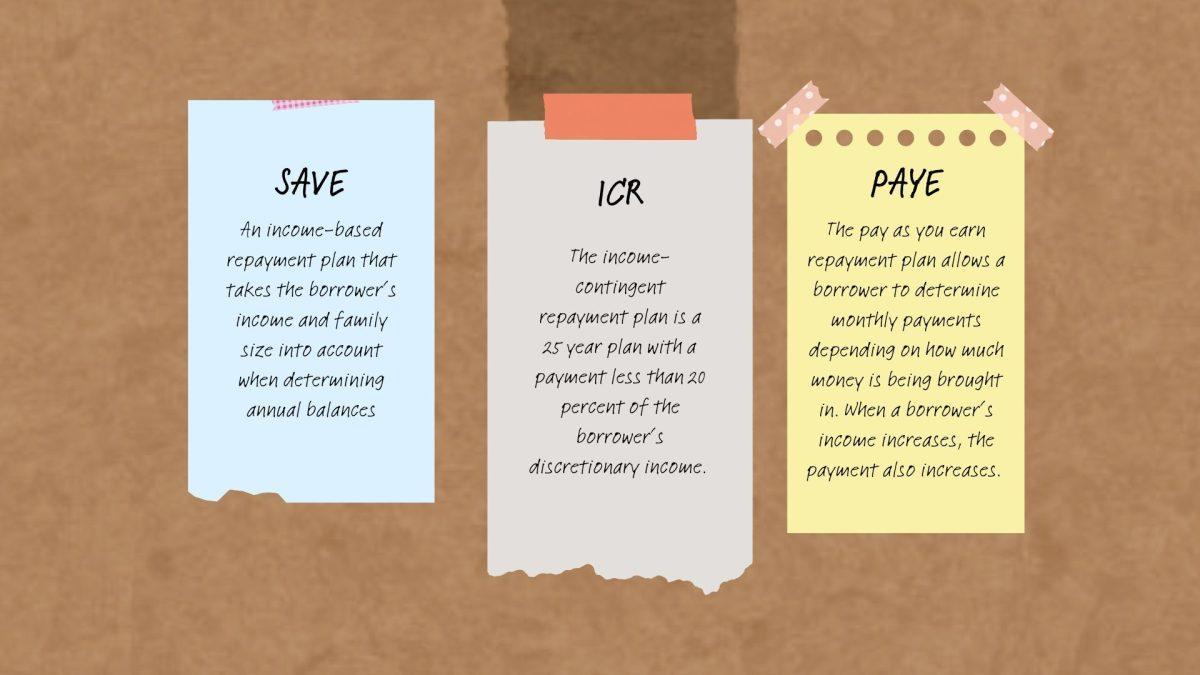
Loan repayment has also been dramatically changed by this new bill. The SAVE, PAYE, and ICR plans have been completely eliminated in favor of a more limited selection.
These plans include the standard repayment plan, the existing income-based repayment plan and the new Repayment Assistance Plan. Borrowers must be enrolled in one of these plans by July 1, 2028.
Additionally, the new bill ends deferment for student loans. Borrowers facing economic hardship can still apply for forbearance, though only for nine months out of a two year period.
“Prior to the bill’s passing, a borrower could claim economic hardship or unemployment as a reason for a missed payment, with deferred payment being accessible from three months all the way to a maximum of three years,” Brothers said. “The BBB eliminated these deferment paths, while keeping a deferment option for forbearance, which has a more limited time scope and accrues interest.”
The bill also changes which students will be eligible to receive a Pell Grant. Full time enrollment now means 15 credit hours as opposed to the previous 12, and part time students will no longer qualify for the grant at all.
Ángel Rentería, a communications associate with the Student Debt Crisis Center, explained how these changes could affect higher education funding.
“With fewer students receiving Pell, their state or institution would have to foot the bill,” Rentería said. “But many states are also not in the fiscal position to increase funding for higher education when they have to supplement the shortfall of the many federal programs that are being cut.”
As the GOP’s “Big, Beautiful Bill” begins to take effect, students, families and universities will have to navigate a reshaped federal student aid system. Whether these changes will result in a fairer and more sustainable model — or create new barriers within higher education — remains to be seen.

Photo by Jakub Żerdzicki on Unsplash