“Monkey see, monkey do” is a common phrase heard by many new students as they try to grasp their footing in a new college environment. Jane Goodall, renowned primatologist and zoologist, might argue there is some truth to the saying.
At the young age of 26, Goodall moved to Africa to begin working with these gentle primates, studying their behaviorisms and attempting to understand their social patterns. From there, she stayed highly involved in this work, writing books, giving educational lectures and even starting her own non-profit organization, the Jane Goodall Institute.
On Oct. 1, while on the road for her speaking tour, at the age of 91, Goodall passed away from natural causes.
While reports state she passed peacefully in her sleep, many students on campus have already felt the immense impact of her passing, and what that means for the future of chimpanzee conservation.
John Humphrey, a senior studying ecology and wildlife biology, has always felt a connection with the gentle creatures from his initial volunteer experience with Zoo Knoxville, back in 2017.
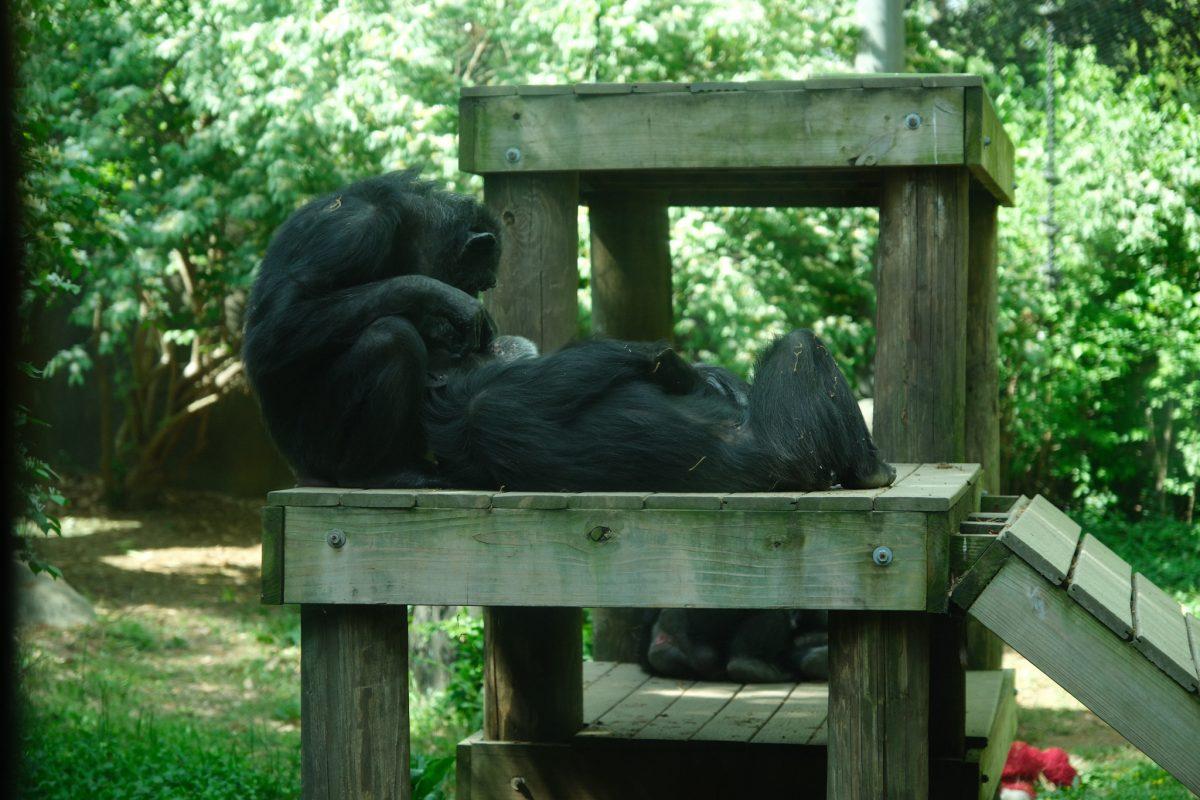
“I spent hours at the zoo’s chimpanzee habitat, went home to read Jane’s books and returned to their exhibit to see them doing behaviors Jane described from the wild,” Humphrey said.
This passion was never let go, and as Humphrey started asking more questions, he was repeatedly pointed towards the direction of Goodall’s reports and books.
Under the mindset that they were misunderstood creatures, and more intelligent than many gave them credit for, Goodall worked tirelessly to change the perception of how many viewed primates.
“Jane emphasizes connecting with chimpanzees on a personal level and telling their stories to touch the hearts of others, which is a huge reason why I care so much about how different factors impact the way people think about chimps,” Humphrey said.
The passing of this great primatologist has not only affected students, but also the professors who grew their careers by following her work and research, and even took inspiration for their own studies.
Blair Downey, an animal behavioral science professor, the sponsor for UT’s Animal Welfare club and certified animal lover, has always felt a strong connection toward this area of study from a young age.
Through tears, Downey expressed how impactful it was to her own career to have the opportunity to watch Goodall lecture live, and what an inspiration she had been towards pursuing her PhD in animal behavioral science.
“Just getting to study and learn about animals and what they do, and why they do it is the coolest thing you could possibly do. She is the coolest person, so from that moment in seventh grade I knew I was going to get my PhD in animal behavior.”
Goodall’s legacy goes beyond her impact on eager behavioral science students; her research and career has particularly helped to develop and shape the career pathways of young women.
“Even though she’s not here with us now, she has such a rich collection of media she produced that still inspires women to go into science,” Downey said.
Aspiring wildlife biologists can pick up one of Goodall’s many books and quickly see the passion behind each word she wrote.
Emma Johnson, a sophomore from Hendersonville, Tennessee, explained how Goodall’s work inspired her from a young age to get involved in the science field, starting from the first book report she wrote on “Who Was Jane Goodall.”
“I remember picking up that book and thinking, ‘I want to be a wildlife biologist when I grow up.’”
This passion stayed with her all the way till high school, and while her path diverted down a more research based path, Johnson still reports feeling the impact of being exposed to a female scientist at an age where women in STEM wasn’t a profound thought.
“I think just seeing someone pursue their goals and have such an impact even in a time period where women weren’t supposed to be in science is really inspirational,” Johnson said.
Goodall’s life was vast and her legacy will continue to reach the hearts and minds of millions throughout the world.
Her work and research on primates and conservation techniques inspired change in even the youngest of humans. Humphrey in particular saw his curiosity form from a young age, now having almost worked in the zoology field for seven and a half years.
“Jane was a master storyteller, noting the importance of sharing stories with people to reach their hearts. That’s how you make change,” Humphrey said.
And while there is a lot of uncertainty in the world, maybe there is a spark of hope for the generations now, and all those to come.
“That optimism for the future of conservation and our planet is rare and it will take a very special person to fill the void of the voice she gave our natural world,” Marcy Souza, the associate dean for the College of Veterinary Medicine, said.
“I don’t think we’re ever going to get away from the population of people inspired by her, and maybe we’ll just have more people to pay attention to,” Downey said.
For 91 years the world got to experience Jane Goodall’s work in flesh and bone. Despite her passing, the science community certainly will not let eager young scientists stray from the field, as they can say they were raised by Goodall first.