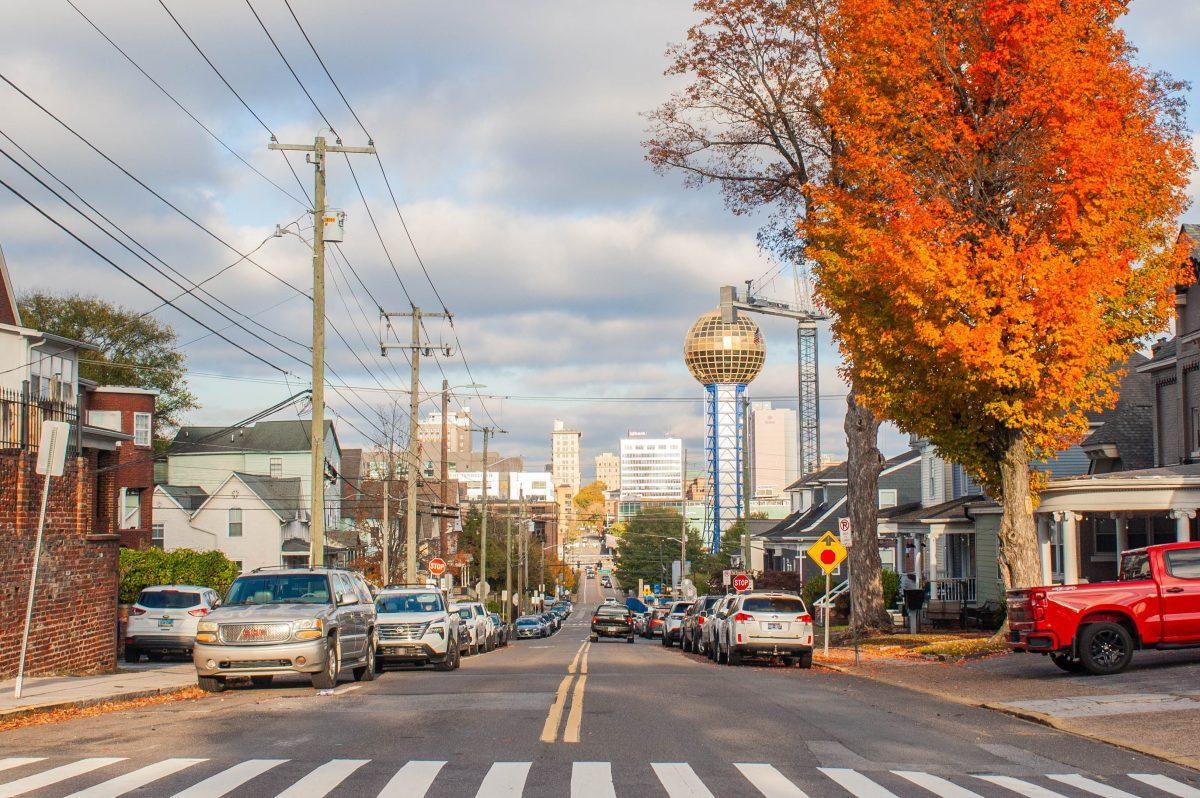
On Oct. 14, the Knoxville City Council approved a new greenway connecting the Fort Sanders and Tyson Park neighborhoods. The new greenway will extend from Clinch Avenue to Tyson Park’s Third Creek greenway.
The greenway comes after the 2015 City Bicycle Facilities Plan, identifying it as the city’s second most important project out of 120 others. What makes this project so important are its implications for bicyclists and commuter safety.
“Right now, anyone on their bike downtown, to get through and out of Fort Sanders, has to ride down to Cumberland Avenue where there’s a lot of vehicles and the sidewalk is very narrow,” Shawn Fitzpatrick, Knoxville’s civil engineering chief, said. “This project removes that bottleneck and safety issue at Cumberland Avenue.”
This area in particular already has a high density of people living there. This density will only grow as more people continue to move to Knoxville and the surrounding areas.
Debbie Helsley, councilwoman for Knoxville’s At Large Seat B, said that she hopes the new greenway project will alleviate some of Knoxville’s traffic congestion issues. Fitzpatrick echoed a similar sentiment.
“Projects like this make it safer and easier for alternate modes of transportation to be used,” Fitzpatrick said.
By giving residents the option to walk or bike, it helps take some cars off the road and makes transportation faster overall.
80% of the funding for the new greenway project will come from the federal government, while the remaining 20% will be raised locally.
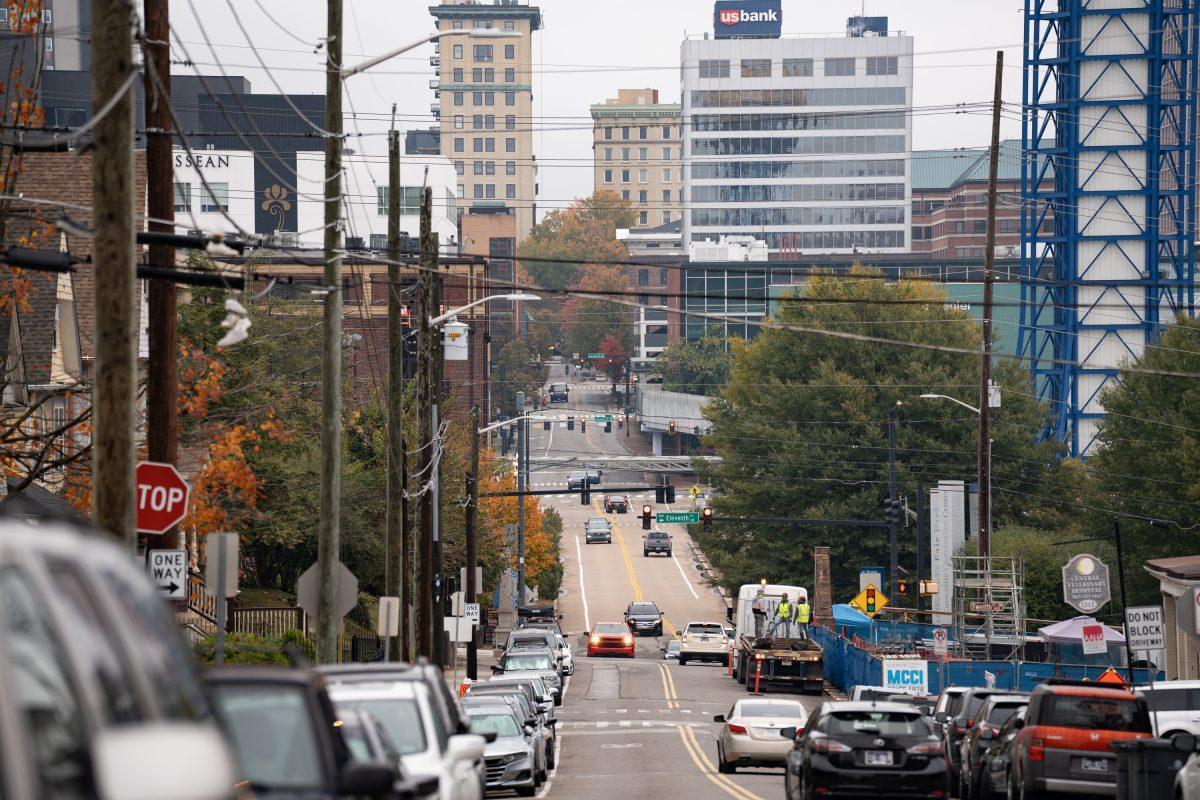
Downtown Knoxville, taken from 14th St and Clinch Ave. Monday, Nov. 3, 2025.
Most of the federal funding will come from the Tennessee Department of Transportation’s Surface Transportation Block Grant program. The STBG is specifically for cities with a population greater than 5,000. It allocates federal funds for projects aimed at improving roads, highways and other transportation-related infrastructure.
Funds from gas taxes in the region will also be allocated to the project by the Knoxville Regional Transportation Planning Organization.
Fitzpatrick said that funds for the design phase of the project have already been secured. “The only thing we don’t have [funding for] yet is construction.”
“This project is programmed into the TPO 2050 Mobility Plan . . . with an estimated total cost of $9.3 million,” Helsley said.
This project poses a unique challenge for the city as the new greenway intersects with the CSX and KXHR Railroads. Design plans include a pedestrian tunnel that will run underneath the CSX Railroad.
“The most difficult thing is going to be designing that and coordinating it with the railroad and constructing it without disrupting their activities,” Fitzpatrick said.
While the tunnel may be difficult, the city will be working closely with the railroad and CDM Smith, an engineering firm providing design services for the project.
According to Fitzpatrick, the University of Tennessee has expressed interest in the project.
“I foresee them accommodating it and making it attractive as well,” Fitzpatrick said. “They’re trying to make their student experiences better wherever they can.”
“Generally, UT students are a whole lot more mobile in different ways,” Helsley said. “It seems to be a big deal to provide connectivity for the folks at UT.”
Official documents list the new greenway’s completion date as 2040, but Fitzpatrick said this date may be subject to change.