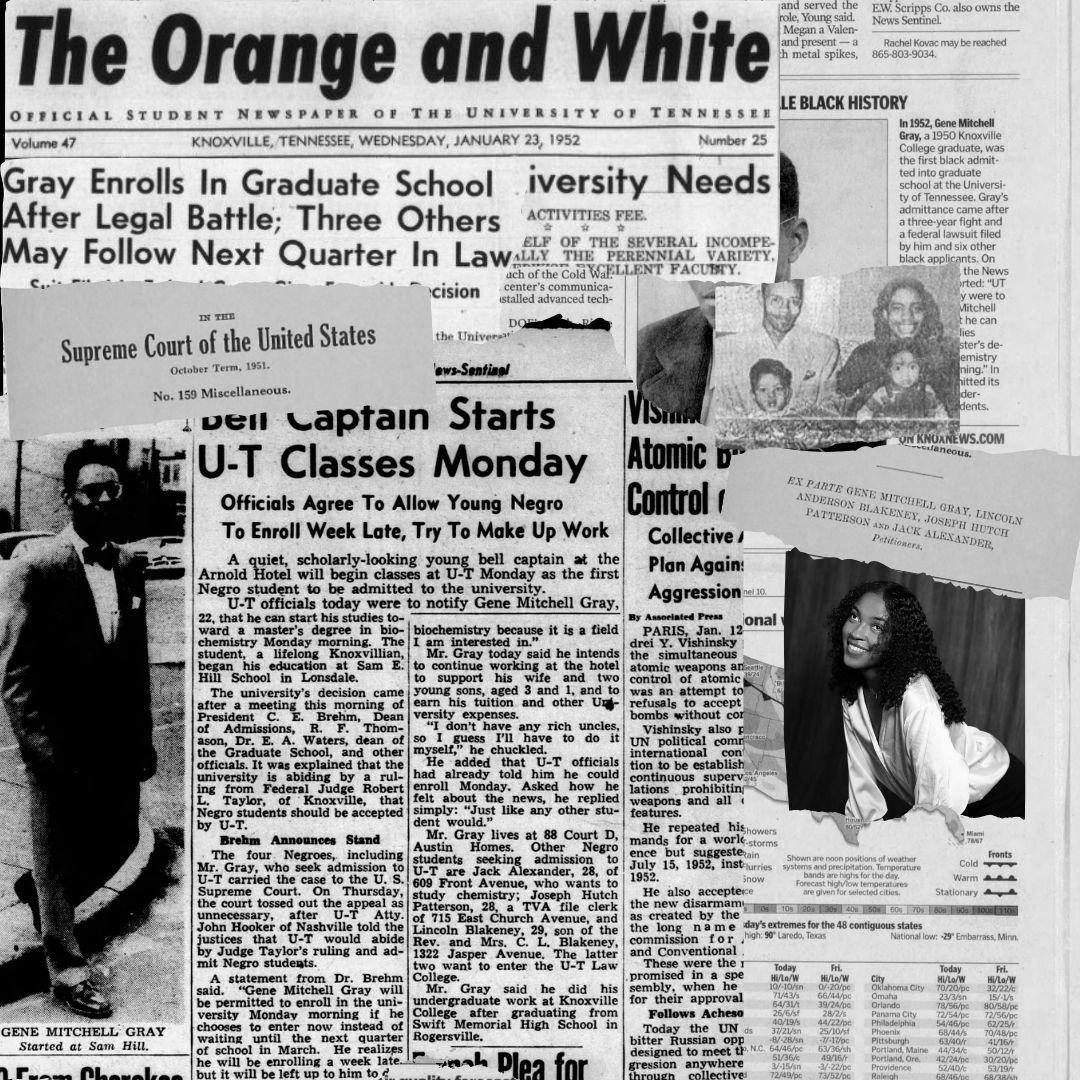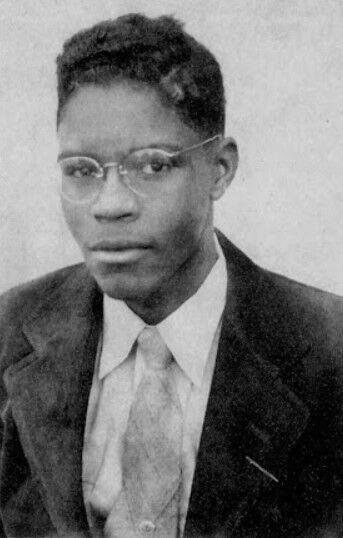
After three long years of legal battle, a young man strode through the halls of the University of Tennessee as the first ever Black student to attend UT.
In 1949, Gene Mitchell Gray Sr. graduated from Knoxville College with a Bachelor of Science and a dream of becoming a doctor. While he had the intellect, he did not have the money or “correct” skin color to pursue the higher education necessary to enter the medical field, according to strict segregation laws in the Tennessee Constitution.
“He didn’t want no special treatment. He just wanted equal treatment,” Arthur Gray Jr., Gray Sr.’s grandson, told The Daily Beacon in an interview.
After the university denied Gray Sr. acceptance to the university on the basis of his race, he and three other Black Knoxville men — Joseph Patterson, Lincoln Blakeney and Jack Alexander — filed a lawsuit in April 1951 against UT in a Federal District Court.
Gray Sr. was so adamant about going to UT because the school was his only feasible option.
He could have moved north to attend universities that had already been desegregated. However, he wanted to stay in Knoxville due to “financial reasons and family obligations,” according to what his former wife, Doris Gray Coleman, told The Orange and White in an article published Jan. 26, 1952.
“I don’t have any rich uncles, so I guess I’ll have to do it myself,” Gray Sr. told The Knoxville News Sentinel in an another article.
Gray Sr. joined a long list of black men who’d applied to UT’s graduate school. Many had tried all throughout the 1930s, but all had failed.
Gray Sr.’s lawsuit made it to the Supreme Court, where it was tossed after UT attorney John Hooker told justices that the university would abide by the ruling from Federal Judge Robert L. Taylor, which permitted “Negro” students to be accepted by UT.
During the winter quarter of 1952, Gray Sr., the 22-year-old began classes one week after the quarter started with “no restrictions” or segregation in classrooms, bathrooms or water fountains.
Gray Sr. began pursuing his master’s in biochemistry, taking his first class in calculus on Jan. 12 and auditing chemistry and physics courses.
Patterson, Blakeney and Alexander joined him the following September.
“The day before he entered UT, I was frightened because Gene would be alone on the Hill,” Gray Coleman told The Orange and White. “I was afraid that maybe tension and hostility would arise. But after his first day of classes he told me that everything went well except for one Negro photographer who followed Gene and made him feel uneasy.”
This peace would only be momentary as the media hounded Gray Sr., putting intense pressure on him and his family.
Gray Sr. became nationally recognized for his courage in the long legal battle, being featured in Jet Magazine, The Pittsburgh Courier, The Chicago Defender and other Black weekly newspapers, as well as local Knoxville news outlets like The Orange and White, The Knoxville News Sentinel, The Knoxville Independent Call and The Knoxville Journal.
While fighting in the courts, Gray Sr. worked two separate jobs to provide for his wife and two children, three-year-old Gene Gray Jr. and 14-month-old Larry Gray. A year later, they would welcome their third child, Arthur Gray Sr. — also known as “Pete” to the family — the father of Gray Jr.
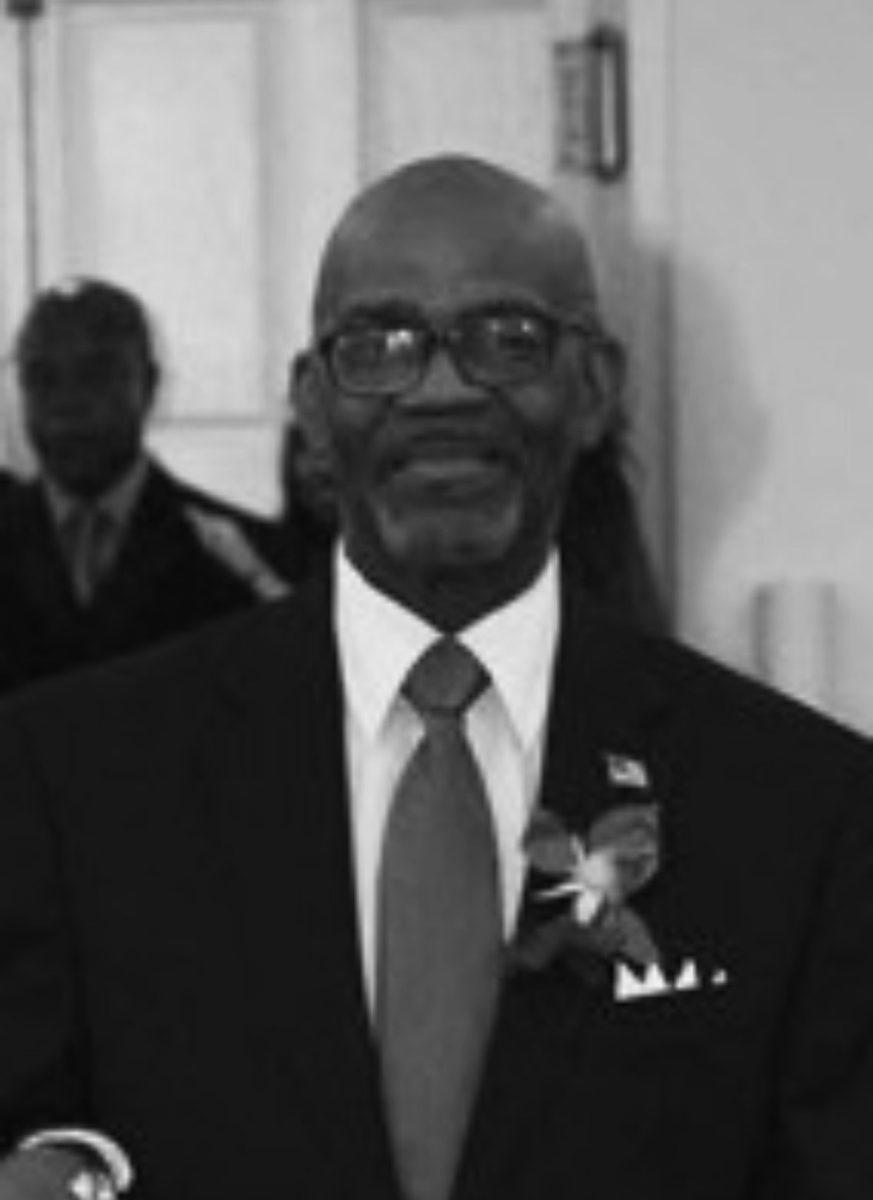
Arthur Gray Sr., also known as "Pete" to the family, was the youngest son of Gene Mitchell Gray Sr., the first Black man to attend the University of Tennessee.
The Beacon reached out to speak with Pete about his father. However, before he could be interviewed, he tragically passed away on Feb. 12, 2025, at the age of 71.
Unfortunately, according to Gray Jr., Pete may not have had much to say about his father as Gray Sr. left early in his childhood due to all the strife his pursuit of higher education and equal opportunity caused the family.
“He achieved his goal — it just tore the family apart,” Gray Jr. said.
While pursuing the lawsuit, Gray Sr. worked as a bellhop for the Arnold Hotel in downtown Knoxville alongside his mother, Bernice Taylor. Taylor worked as a maid and lived in a nice, small home in the Lonsdale community.
Bad press drew much unwanted attention, and management fired Gray Sr. and his mother from their jobs at the Arnold Hotel the day after his first day of class.
Gray Sr. then got a job with the Knoxville Iron Company, from which he was also fired because of the lawsuit and negative press attention.
“All our relatives pretty much got fired from their jobs,” Gray Jr. said. “They ended up losing all their homes and relocating.”
According to an excerpt from Jet Magazine on Feb. 14, 1952, “Gray said he was ‘frozen’ out of his job and given the ‘cold shoulder’ when he applied at other establishments for another job. … Meanwhile, a group of Knoxville Negroes moved to underwrite his current expenses as a bio-chemistry student.”
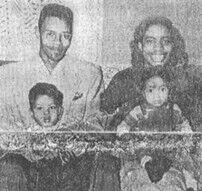
Because of this, Gray Sr. and the rest of his family were forced from their neighborhood and into Austin Homes — a projects community that the Gray family struggled to escape for generations.
“The situation arises at the most inopportune time,” The Orange and White reported in an article on Jan. 23, 1952. “Since Gray (Sr.) is a non-veteran, he must meet all the financial problems alone. This creates a two-fold problem: paying for his education and supporting his family.”
Gray Sr. refused to back down, but some of his surviving family still wonder if he made the right decision — wondering what their lives would have been like if he had stopped pursuing the lawsuit.
Gray Sr. never finished his master’s degree at UT. After one year, he dropped out and moved away from Knoxville, leaving his wife and children behind.
Later on, he did end up finishing his master’s at Lehigh University in Bethlehem, Pennsylvania, became a physician, and moved to Amherst, Massachusetts.
Gray Sr. then became the founder and CEO of several biomedical corporations and received two patents for dialysis procedures, according to a note published by the Beacon on Jan. 12, 1995.
He stayed in Amherst until he died in 1989, only coming back to Knoxville to visit his sister on occasion, according to his family.
Pete seldom saw his father again and blamed the university for his family’s hardships during his childhood. Pete’s mother, now a single Black woman in the deep South in the ’60s, had three young children to support all on her own.
“Can you imagine going from a house to the projects? Getting uprooted and all of these things,” Gray Jr. said. “And all of a sudden, you can’t put food on the table, all because somebody wants to go to better themselves. So yeah, there’s a lot of trauma there.”
For decades, the Gray family stayed pinned against UT, refusing to consider the university as a higher education option.
Gray Jr. joined the military and never thought that one day he would have a daughter who would beg to attend the university that he believed tore his family apart.

Arnashia Gray, Gene Mitchell Gray Sr.'s great-granddaughter who now attends the University of Tennessee and studies journalism.
Today, Arnashia Gray, a junior studying journalism, freely walks through the university halls that her great-grandfather fought so hard to have the right to tread. And for this, despite it all, Arnashia told the Beacon that she is grateful.
“My dad hated UT for so long, and I just was feeling like, ‘Let bygones be bygones,’” Arnashia said. “But I think I hold that history with me so much deeper now, and so my time at UT feels a little bit more emotional.”
And although it took a while to get used to, her father is grateful that Arnashia is at UT, too.
Arnashia is an active member of the UT community, holding a leadership position in the music industry club and the Black Students for Artistic Expression organization. She is even a part of UT’s legacy Chamber Choir. Here, she has met so many of her best friends and is pursuing the higher education her great-grandfather dreamed of.
“Times have changed,” Gray Jr. said. “This is your opportunity to make UT, Knoxville, or Tennessee as a whole, whatever you want. And I’m not trying to put my ill will or my ill feelings on my daughter because the ultimate goal is to get an education to better yourself.”
Today, Gray Sr.’s name is seldom heard nor recognized for the trail he blazed for every Black student who followed in his footsteps.
Aside from a portrait in the African American Hall of Fame in the Black Cultural Center, an annual pioneer award and a historical marker of desegregation on the Hill, Theotis Robinson Jr. usually receives all the credit for being the first Black student at UT.
However, Robinson was not the first Black student — he was the first Black undergraduate student, beginning classes at UT in 1961 — nine years after Gray Sr. started classes as a graduate student.
“I want people to know that (my great-grandfather) was the first,” Arnashia said. “And even though he didn’t stay at UT long and the others that came after him probably left a longer legacy — I think that he is just one of those unsung heroes in history. And it just takes one person to take that leap so that other people can be brave enough to do the same.”