
On April 17, 2025, the Tennessee Department of Health confirmed a total of six measles cases in the state. With the increase in cases and the known infectious nature of the disease, students and faculty raise the question: Will measles come to UT’s campus? And if so, what will the severity of an outbreak be?
Measles is an extremely contagious, potentially fatal disease. Two doses of the MMR vaccine are highly effective at preventing it, according to TDOH.
UT Knoxville requires proof of certain vaccinations from all new incoming students, in compliance with Tennessee’s Department of Health’s College Immunization Requirements. According to Tennessee’s website, full-time Tennessee college students are required to have four critical vaccinations, including two doses of the MMR vaccine if born on or after Jan. 1, 1957. UT does not require these vaccinations from full-time, distance-learning students. This means that students who attend UT completely remote are not required to have the same proof of immunization as students who attend in-person.
And of course, not all in-person students receive vaccinations.
According to a public records request filed by The Daily Beacon, 4,903 vaccination waivers were filed and approved for students of the University of Tennessee between academic years 2021-25.
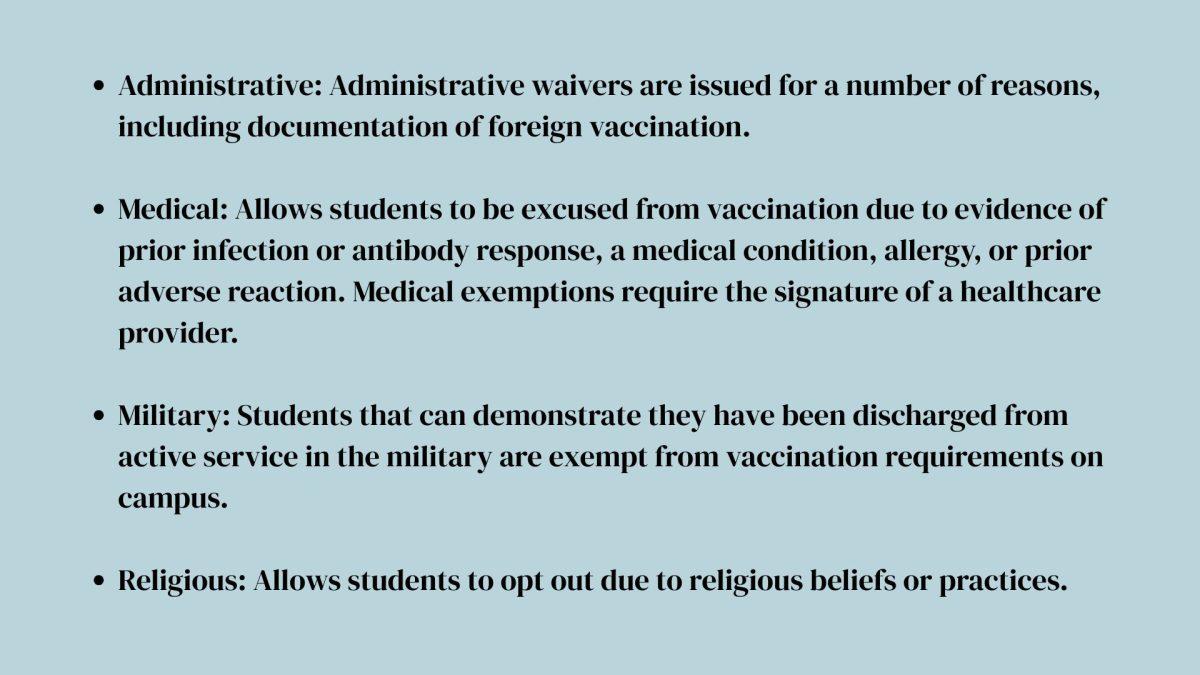
A vaccination waiver can be procured by submitting an immunization exemption form to the Office of Immunization. Types of waivers and reasons they are filed can vary. According to Charles Primm, public records manager at the UT System level, waiver types include administrative, medical, military and religious.
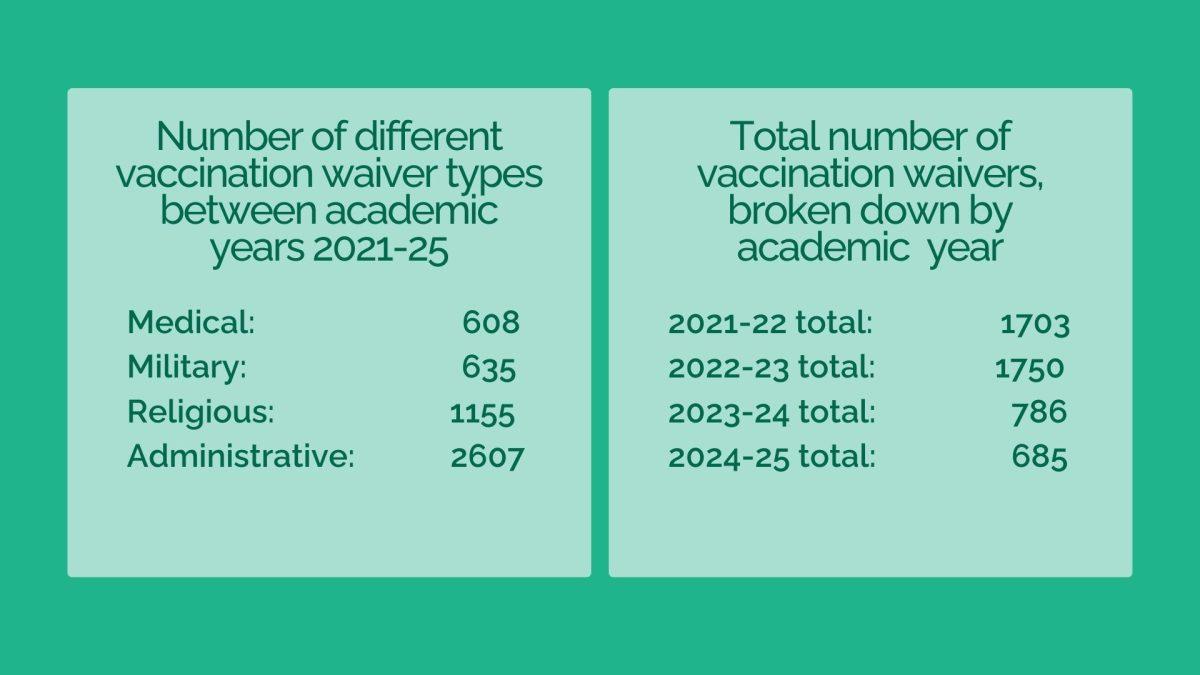
The numbers given to The Daily Beacon do not distinguish between some or all vaccines. It is unknown how many of those exemptions are for the MMR vaccine.
In the fall of 2024, UT reported that 38,728 students were enrolled. Approximately 8,000 students currently live in the Knoxville campus residence halls. In order for a community to be protected from measles, it needs a vaccination rate of 95%. It is unlikely that all 4,903 vaccine waivers were for the MMR vaccine, but if they were, UT’s measles vaccination rate in students would be 87.34%.
Although risk might be low, it is still good practice to be informed on symptoms and handling of the disease.
First, know what you are looking for. Measles is prefaced by a fever and malaise, but is most often identified by its initial red and spotty rash. This rash blanches to the touch and follows a very specific path through the body.
“It starts on the face and it spreads from the head down and from the center out,” Dr. Abigail Blackmon of Blackmon Pediatrics said. “So, face to neck to trunk and back, and then to extremities. And it disappears in the order in which it appeared.”
Second, make sure you have received both doses of the MMR vaccine. Call your pediatrician’s office or a family member in charge of your immunization records.
Third, understand the risks involved with the disease and how quickly it can spread.
Measles can live in an airspace for up to 2 hours, according to the CDC. Breathing contaminated air, touching infectious surfaces or coming into contact with an infected individual increases the risk of contracting measles.
“If you’re sharing air, 90% of susceptible individuals will contract the disease,” Blackmon said. “20% of people with the measles will be hospitalized with complications. The case fatality rate is anywhere from 4-8%, depending on the resources available in the community.”
Blackmon said those who are immunocompromised — those who are diabetic, have asthma, etc. — should be especially aware of places they are going and the potential signs of measles.
History of measles in the United States
The first account of measles we have was written in the ninth century by a Persian doctor. In 1912, once widespread reporting of the measles was common in the U.S., 3 to 4 million people in the United States were infected each year. Approximately 400-500 measles-related deaths were reported yearly, and it was normal to have contracted measles by the time you were 15 years old.
In 1963, a measles vaccine was licensed. By 1981, the number of reported measles cases was down 80% from the previous year. After a small outbreak in school-aged children in 1989, medical associations began recommending a second dose of the MMR vaccine, and in 2000, measles was officially declared eliminated from the United States.