The opioid crisis has claimed the lives of over half a million Americans since the beginning of the epidemic, a process fueled heavily by prescription pain medications.
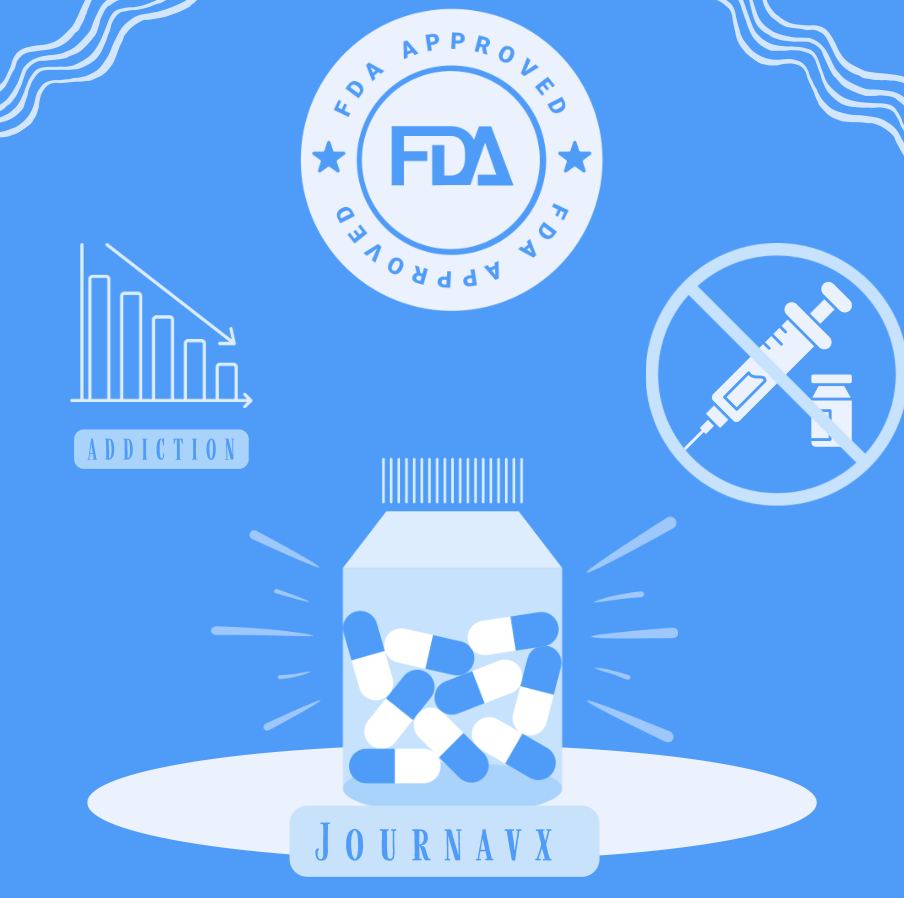
On Jan. 30, the United States Food and Drug Administration made a potentially revolutionary decision to approve Vertex Pharmaceuticals’ new pain relief medication marketed under the name Journavx.
Journavx represents the first drug in an entirely recently developed class of pain relief medications that address issues caused by traditional treatments — such as opioid addiction.
Karen Pershing, the interim director of primary prevention services at Metro Drug Coalition, explained what this new drug could mean for the opioid crisis at large.
“I am pleased to see the release of a non-narcotic pharmaceutical pain reliever,” Pershing said. “However, whenever new medications are released, I am cautiously optimistic.”
The new drug works by intercepting sodium channels within the peripheral nervous system of a patient. This interaction causes a reduction in pain signals before they reach the brain.
To truly grasp the importance of this development, it is necessary to understand how traditional pain treatments are different.
According to Anne Burnett Young, director of recovery support services at MDC, Buprenorphine is an opiate commonly used to treat both pain and opioid misuse. The drug is an example of this contrast and why traditional treatments carry some risk.
Young highlighted this distinction by explaining how opioids, specifically buprenorphine, affect the body.
“Buprenorphine is a partial opioid agonist,” Young said. “This means that it activates opioid receptors in the brain, but to a lesser extent than things like heroin or morphine would.”
This activation of a patient’s opioid receptors and subsequent triggering of the brain’s reward system is where the risk of addiction stems from.
The ability of Journavx to prevent pain without the risk of purposefully activating opioid receptors represents a significant step in combating both the prevalence and danger of these traditional treatments, of which 125 million prescriptions were written for American patients in 2023.
The efficacy of Journavx was tested within two studies that examined how the medication impacted patient recovery after two different surgeries when compared to a placebo.
The previous trials, combined with supporting data from another study, confirmed Journavx’s safety profile — a drug’s safety profile relates to its possible side effects, with fewer side effects correlating to a stronger safety profile.
Some common side effects of Journavx found in the study included itching, muscle spasms and rash. However, no serious side effects were found to be related to Journavx.
There are apprehensions about Journavx that permeate the discussion around this development. Pershing described what these concerns are.
“Many were told in the mid-1990s that OxyContin was non-addictive, which is what fueled the opioid epidemic,” Pershing said. “Another question is going to be the affordability of the new medication. Prescription opioids are on the generic tier for most health plans, including Medicare and Medicaid. For this medication to be affordable, it should be offered on the generic tier as well.”
As Journavx represents a vital change from the traditional and addictive pain relief medication, it alone cannot end the all-encompassing opioid crisis.
“It is important for everyone to remember that there are very effective non-pharmacological pain management therapies as well,” Pershing said.
Students interested in finding out more about Journavx can visit the medication’s website.