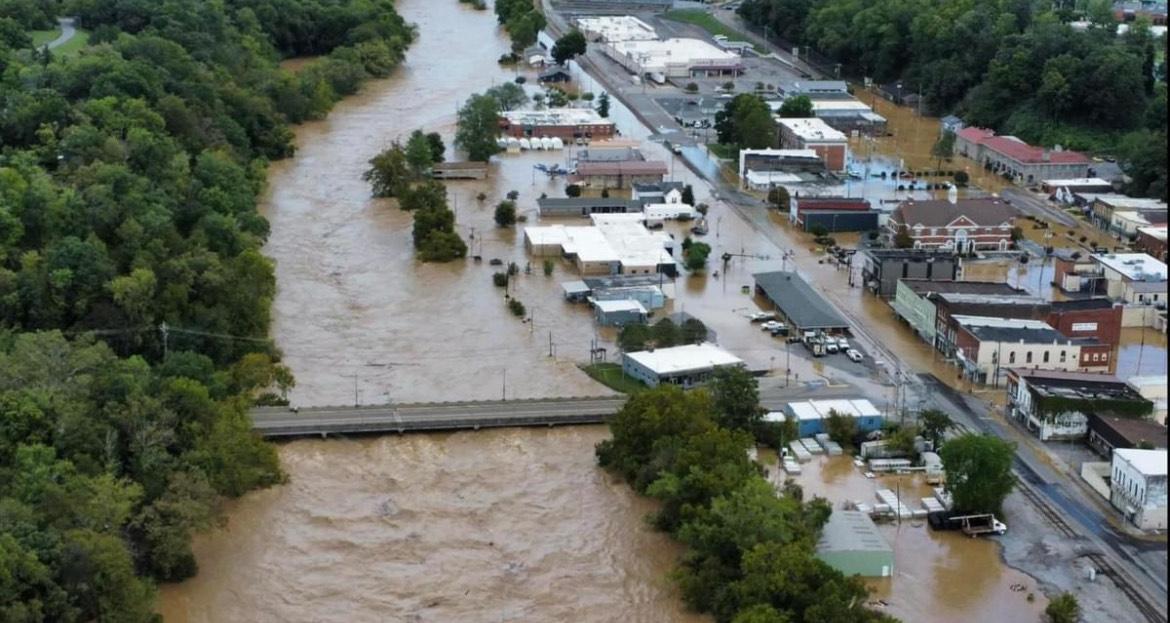
Last September, communities in East Tennessee were battered by Hurricane Helene. Cocke County, just an hour east of Knoxville, was among the hardest-hit counties in the state.
Relief and rebuilding efforts have evolved from the storm’s immediate aftermath but are far from complete.
A grassroots group, the Cocke County Long Term Recovery Group, has formed to help locals recover from the hurricane. The group aims to connect and allow for greater coordination between organizations, charities and emergency management agencies from the local to federal level.
Spring Duckett, the group’s executive director, explained how the group allows for greater cooperation between organizations in rebuilding.
“Two to three months in, we started having regular meetings in Cocke County that were facilitated by the United Way, Red Cross, FEMA, the local county officials, TEMA, state representatives and things like that, where we had open discussions on what organizations desired to be part of the long-term recovery process,” Duckett said.
Duckett described the group as an umbrella organization or meeting table for representatives of all those groups to come together.
“Some of the biggest challenges in the first part of things was the fact that community organizations, churches, secular nonprofits or just good-hearted people coming in wanted to help, but there wasn’t any kind of structure to how that help was happening,” Duckett said. “So that causes some chaos, it causes duplicity sometimes, it causes gaps in resources to people who aren’t caught in a timely fashion.”
According to Duckett, the organization primarily focuses on home repair or reconstruction. Cocke County was particularly susceptible to devastation in the storm because there are three rivers that flow through it — the Pigeon River, the French Broad River and the Nolichucky River.
When the storm came, hundreds of properties along all three rivers in Cocke County were destroyed or received severe damage. Even if a house’s foundation stood, other systems like heating or cooling, electricity, water and sewer and others were likely to have failed.
The Federal Emergency Management Agency has been in effect since the beginning and is vital to relief efforts. Since the storm, over $32.5 million in assistance has been provided to more than 14,000 households, and nearly $15 million has been sent to the state to support community restoration efforts, according to Michelle Holt-Lane, a Cocke County Long Term Recovery Group member.
Deborah Barr is the director of Clean Water Expected in East Tennessee a long-term recovery group member.
“We are focusing, as things are changing, on building circular economies and bringing local wealth back, food production and trying to work on the environment, our river,” Barr said.
The storm has devastated the county’s rivers, effectively sandblasting and destroying the old riverbanks and riverbeds, according to Barr. This is important for Cocke County because river rafting is a pillar of the county’s economy.
“Our biggest tax base in the county comes from rafting the Pigeon River,” Barr said. “It’s the most rafted commercial river in the southeast. Our tax revenue for the whole county depends on it, and we’re doing everything we can to bring back the thirteen rafting companies, which are mostly smaller companies.”
Recovery efforts faced another challenge when winter set in because so many people still didn’t have a way to heat their homes.
“A lot of people ended up in campers,” Duckett said. “Campers have been a common solution for displaced residents. Most everything in the camper runs on propane, so making sure that propane was available was important.”
The group and its cooperating agencies and charities provided everything from food to clothes, from transportation to paying residents’ electricity bills for residents who were affected.
According to the Tennessee Department of Economic and Community Development, Cocke County is considered one of the nine economically distressed counties in the state. This classification, meaning it’s among the 10% most economically distressed counties in the nation, has exacerbated the effects of the hurricane.
“FEMA continues working side by side with Tennessee Emergency Management Agency and North Carolina Emergency Management and our community partners to help survivors affected by Hurricane Helene move forward with their recovery,” a FEMA spokesperson told the Beacon.
Individuals already struggling financially or living paycheck to paycheck have more difficulty rebuilding their lives after the storm’s destruction. Duckett emphasized that rebuilding Cocke County involves investing resources in the local economy and promoting economic growth.
“A really simple thing you can do for all the counties that were devastated in East Tennessee is take a road trip,” Duckett said. “Take a road trip to one of these counties, find a local business and support them. Come spend your dollars in the local economies in Cocke County and in these other counties that have been hit because that’s how people will really be able to move forward.”