Many across academia are experiencing uncertainty as the Trump administration’s actions have resulted in cuts to research funding. Several students, faculty and professors at UT participate in research across all fields.
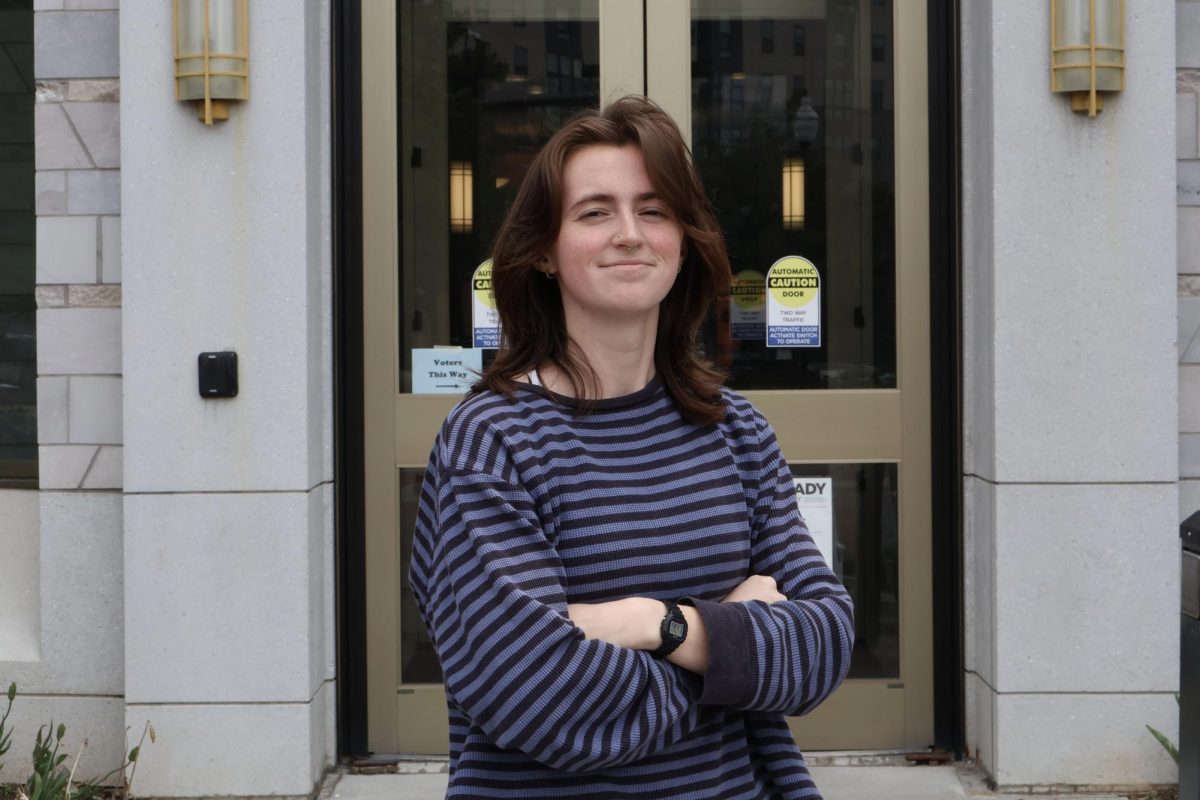
Carlisle Ballantine, a freshman studying civil engineering, is one such student who has worked as a research assistant since September.
Ballantine worked under Mohammad Safi, a researcher and PhD student, alongside four other students in the program. Ballantine expected the position to be stable and available to her all four years.
That changed three weeks ago when Ballantine received unexpected news — the sponsor cut funds to the project due to recent federal budget cuts.
Ballantine’s project was within a division of the Department of Civil and Environmental Engineering that examines geotechnical research. The research analyzes the soil’s load-bearing ability and how it acts under stresses in different environments.
“This research that we do kind of explains what happened to the Leaning Tower of Pisa and how the building slanted in because the soil underneath it couldn’t support the weight or the force being pressed down on the soil,” Ballantine said.
Ballantine was informed of the discontinuation of her research project through an email. Khalid Alshibli, professor and associate department head of graduate studies, informed the program’s participants of the change in funding.
“The sponsor cut the funds for the project that pays for your effort due to recent budgets by the federal government,” Alshibli said. “Therefore, I am sorry to inform you that the maximum number of hours per week will be reduced to 4 hours/ student effective Monday March 31 and will run out of funds by April 25. I am sorry and I wish to continue funding you beyond April 25th which is unlikely. I thank you for all help and contribution to our research.”
Ballantine searched for another research opportunity she could participate in, yet she discovered the funding is depleted in so many areas that she wasn’t likely to pick up another position.
Ballantine’s work as a research assistant provided valuable opportunities to grow her professional skills and scientific knowledge and contributed to her income as a college student. Ballantine worked eight hours a week and earned roughly $700 a month.
“I was going to use that to pay for college next year,” Ballantine said. “And so with it being defunded two weeks ago, I had a lot of instability in terms of how I was going to pay for it next year, but I’ve come up with a couple solutions.”
The difficulty extends beyond financial and professional concerns — as Ballantine believes, she’s losing relationships with her colleagues.
“These people have become part of my family, which is the hardest part,” Ballantine said. “I spend eight hours a week with these people, and all you do is make connections and talk and learn about each other. That whole aspect is just hard, because I’m not only losing a position that is helping me get better as a civil engineer, but I’m also losing the community that I have.”
Jack Mewhirter, an associate professor at the Baker School of Public Policy and Public Affairs, was also involved in a research effort that was cut early.
Mewhirter’s research typically examines complex governance systems and civic problems that involve intersectoral collaboration. Much of his previous work was related to COVID-19, along with co-production between vaccine providers, scientists and government agencies, the Department of Homeland Security and the National Security Agency.
Mewhirter and his colleagues won a planning grant through the National Science Foundation. The NSF is one of the largest funders of research grants in the agency, where many apply for the most significant grants available.
He and his colleagues won a $100,000 planning grant through the NSF’s Centers for Research and Innovation in Science, the Environment and Society program.
“Our proposal was to form an online one-health research center, which was designed to bring together 11 leading policy scholars, veterinary scientists, public health experts and disease ecologists to develop a systems-based approach for preventing and managing health threats that emerge at the human-animal environmental interface,” Mewhirter said.
The team worked on developing a proposal that if selected, would receive significantly more funding to complete the project. Part of their development project included members flying from across the globe and convening at Harvard University in Massachusetts. Their final proposal asked for $1.8 million in funding from the NSF.
A few weeks ago, Mewhirter’s team received an email from the grant office.
“The principal investigator received an email letting them know that the program was no longer in existence, and she emailed us and was just like ‘no dice,’” Mewhirter said.
Mewhirter’s team was saddened by the news but not shocked, having seen other program cuts and projects end.
“It’s disappointing to lose,” Mewhirter said. “Once you get a planning grant, the chance that you accomplish and get the ultimate grant goes up really high, so it’s obviously disappointing to not have a shot, especially when it’s a really important topic and something that you’re invested in.”
For Mewhirter and other researchers, grants will be less available. Mewhirter, however, continues to look for more opportunities for research funding, like other NSF grants and the Decision, Risks and Management Sciences grant.
Mewhirter also changed where he looks for funding — he is applying for a Sloan Foundation grant, a nonfederal organization that provides research grants.
The ripple effects of federal research cuts are profoundly felt at UT, where students and professors face not only financial and professional setbacks but also the loss of community and collaboration. While uncertainty for research looms large, researchers persist, seeking alternative funding solutions.