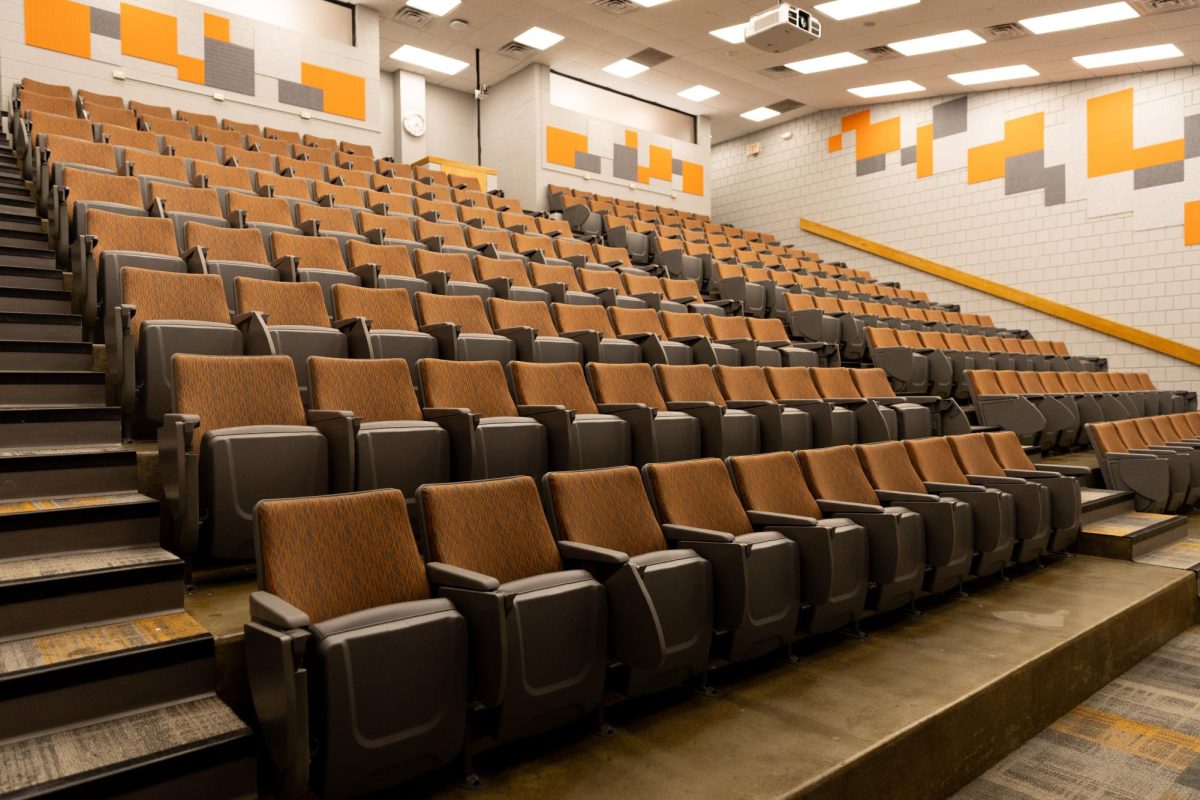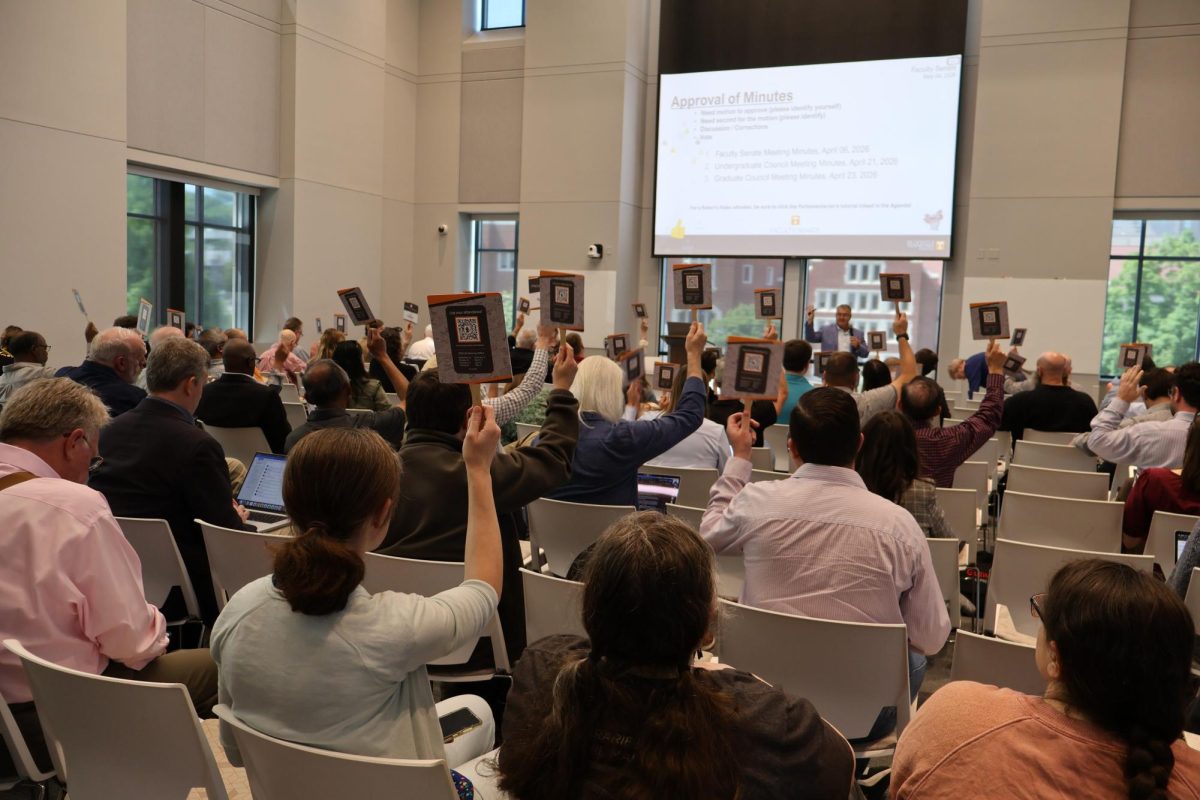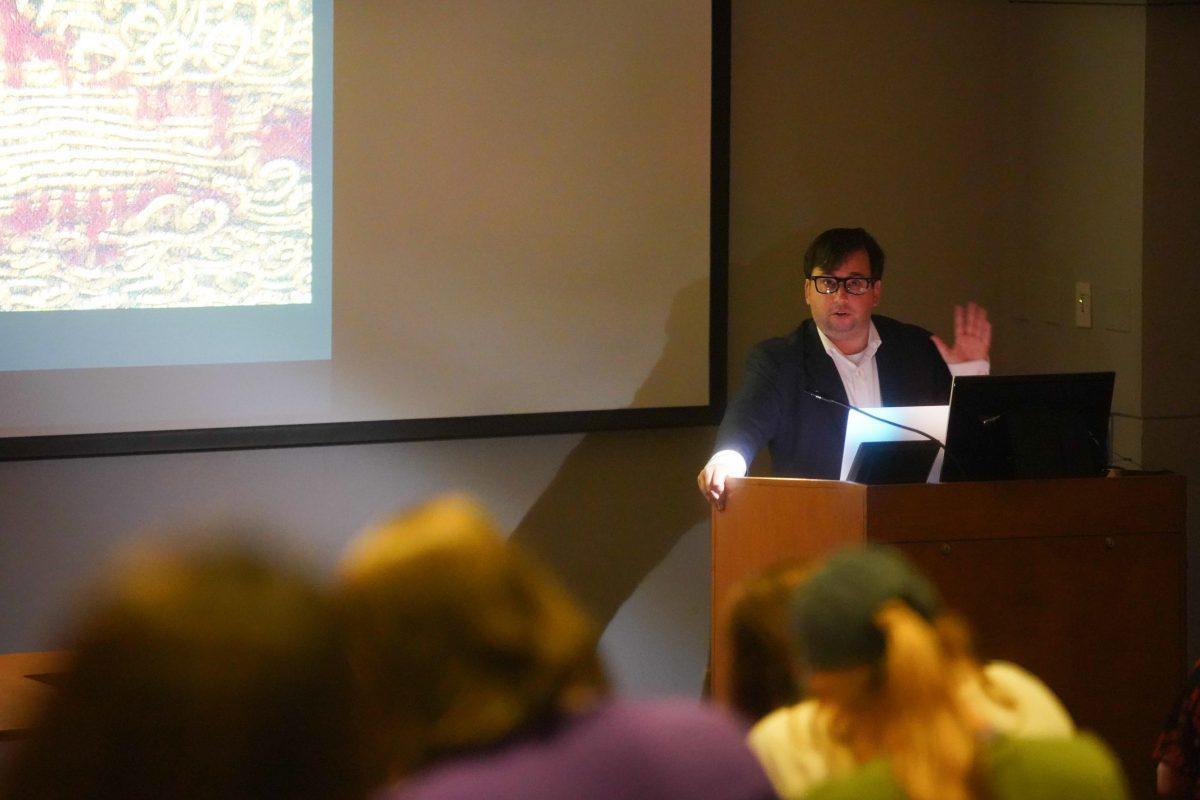
On Thursday evening, art history appreciators at UT gathered in the McCarty Auditorium of the Art and Architecture Building to listen to Tim McCall’s lecture, “Velvet Goldmine: Silk, Gold, and Renaissance Masculinity.”
Tim McCall of Villanova University is an expert on Italian Renaissance-era men’s fashion, which was the focus of his lecture. He spoke primarily about the importance of different textiles in men’s fashion, specifically brocades.
Brocades are cloth, typically silk or velvet, embroidered with precious metallic threads, such as gold or silver. By weaving these metals into the cloth, the already lustrous silks and velvets glistened so magnificently that their beauty seemed almost heavenly.
Since the material used to make brocades were precious and the process of creating brocades was so time-consuming, brocades were incredibly expensive and extremely valuable. Those who could afford brocade garments were therefore viewed as wealthy and powerful. Wearing brocades soon became a status symbol for men of nobility during the Renaissance.
McCall also highlighted the importance of this textile in the cities of Milan and Ferrara’s social setting. He revealed that Borso d’Este, the Duke of Ferrara, once ordered three kilometers of silk brocade for garments he would wear on a single trip to Florence. While this purchase sounds extravagant to us today, showing off one’s wealth and status was of the utmost importance while visiting socially and economically relevant cities like Florence.
The Italian nobility went to further lengths than this to keep up appearances and maintain status through clothing. At only a year old, Isabella d’Este, a member of the ruling Este family, was outfitted in garments made of materials just as lavish as those that the Italian male nobility wore. Likewise, Borso d’Este’s nephew Leonello was dressed in a rich crimson brocade for his funerary outfit. Whether a year old or in the grave, Italian nobility felt it was imperative to herald their status with the lavish clothing they wore.
After speaking with McCall at the conclusion of the lecture, he summarized the importance of brocade garments in the nobility’s wardrobe to tout social status.
“It’s not just what they wore — this was how they ruled. If they didn’t look good, they were in trouble, so it’s all about power,” McCall said.
In addition to their social importance, brocades were also an essential part of Milan and Ferrara’s economy. McCall specifies that the Sforza family, which ruled Milan during this time, heavily invested in textile production. With nobility like Borso d’Este relying so desperately upon these fabrics, the Sforza’s investment in the textile industry ended up greatly bolstering Milan’s economy.
Although McCall’s studies focus on the past, he also emphasized throughout the lecture how Renaissance-era male fashion relates to the present. He described how regions of Italy went to war merely over materials for dye, which in turn ended up fueling European colonialism in the Americas.
Additionally, he cites that the high demand for these materials which textile production relied on also took a terrible toll upon the environment. In the end, the Italian nobility’s avaricious desire for fine clothing resulted in violence against both humans and nature.
Sean Roberts, a senior lecturer from UTK’s art history department and organizer of the event, elaborates on the relevance of McCall’s work in relation to today’s issues.
“I think that Tim’s work on fashion touches on a lot of the issues that we are dealing with today, like fast-fashion. We were just hearing about the destruction of the environment — the ways in which all of the expensive things that we buy and that we depend on to show our status inevitably have consequences out there,” Roberts said.