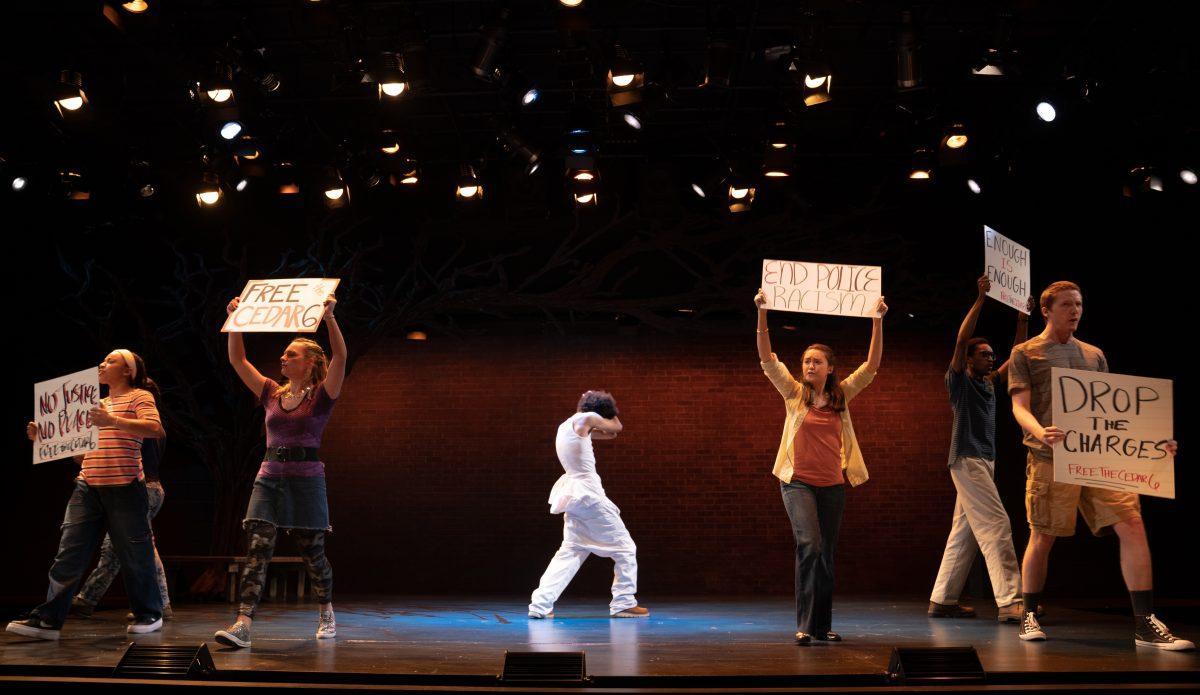
On March 4, UT’s Clarence Brown Theater opened its newest show, “Blood At The Root.”
Written by playwright Dominique Morisseau in 2017, the play is based on the true story of the Jena 6, a group of Black teenagers in Jena, Louisiana, who decided to sit under a tree where white children usually sat. To their surprise, when they returned to the tree that afternoon, they found that three nooses had been hung from it.
The white students responsible faced only three days of in-school suspension as a result. Many Black students protested this unfair punishment, and even attempted to address the school board, but to no avail.
These racial tensions resulted in a physical altercation between Black and white students. A white student named Justin Barker was injured in the fight, and in 2006 six Black teenagers were convicted in his beating, which was ultimately upgraded to an attempted murder charge.
Morisseau has written a myriad of acclaimed plays, such as “Skeleton Crew,” “Pipeline,” “Detroit ‘67” and “Paradise Blue.”
The play consisted of a student-filled cast, including Guthrie Butler, Neveah Daniel, Jasmine R. Handy, Peter Mayer Klepchick, Abigail McCarter, Bethany Moon, LoRen Seagrave and Alan Toney.
This was an incredibly eye-opening contrast from the shows normally performed at the Clarence Brown Theater, as it exhibited a true retelling of race relations within the United States and the adversity that Black individuals face at the hands of the legal system.
Not only was “Blood At The Root” an exquisite display of artistic expression from the student actors, but it was also an important depiction of Black culture. Its retelling of a crucial story in recent Black history is important in showing that discrimination is not only a thing of the past. Whether implicit or explicit, it is still prevalent in our society.
The actors, dressed in trending clothes of the early 2000s, created a scene of seemingly normal high school life at Jena. This appearance made the story even more surprising by further representing that the story was not from long ago in Black history, and internalized racism still remains prominent in our society.
Handy, who played the leading role of Raylynn in the show, played an exquisite role in her portrayal of Black pride and power, as well as her drive to overcome the long standing habits of her high school.
It is important to experience shows such as “Blood At The Root,” as they provide an inside view of the experiences that Black people have faced. These issues can be difficult to comprehend on paper or through stories, but actually being able to watch them play out can help to provide a more easily understandable perspective of the situation.
Not only did the show strongly depict racial relations in the United States, but it also represented the lack of belonging that people of color often feel. Although the tree on school grounds was not legally whites only, it was seen as such, and people of color often felt left out because of their skin color.
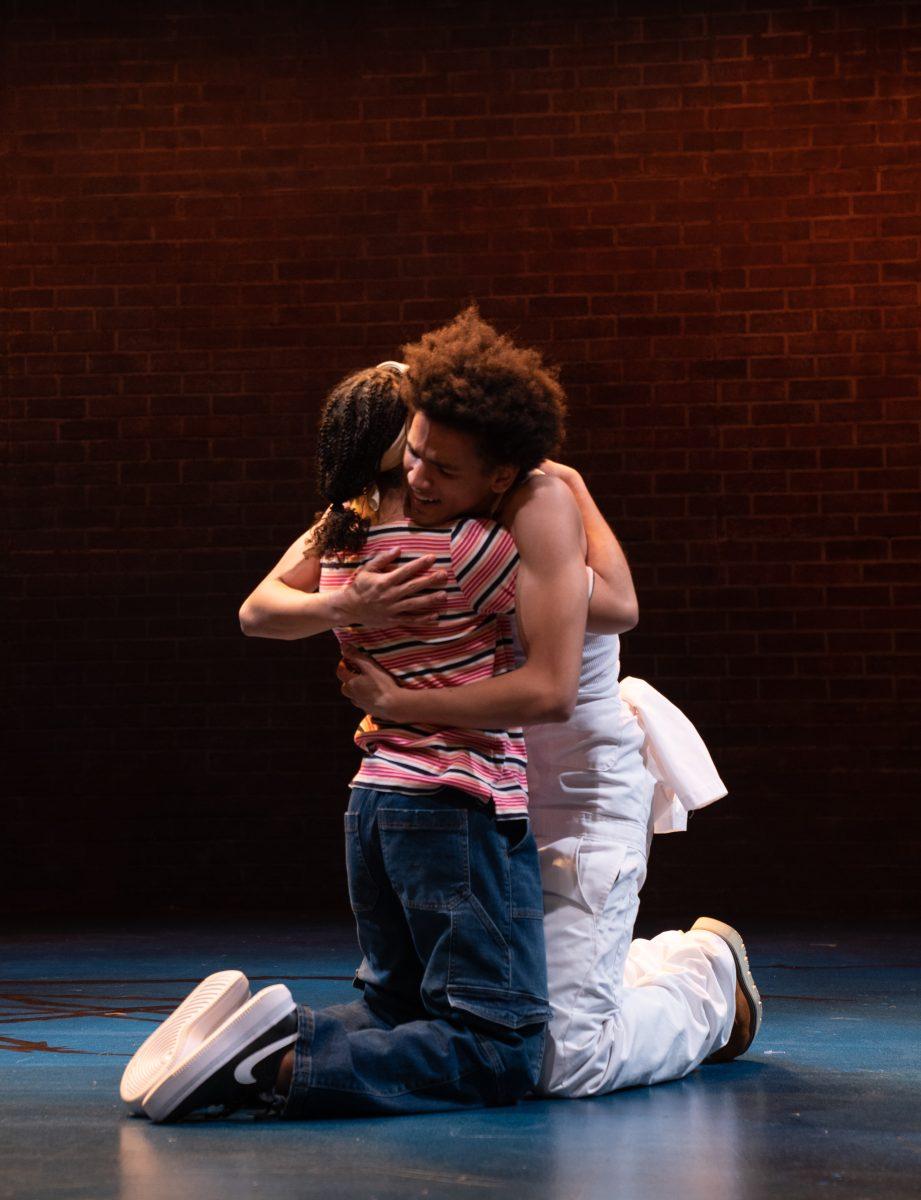
Jasmine R. Handy and LoRen Seagrave as Raylynn and De'Andre in the CBT production of "Blood at the Root."
Toney’s powerful monologues depicted his inability to fit in with either Black or white students, which revealed the societal expectations of race relations, and how this can be extremely detrimental to someone’s sense of belonging. “Blood At The Root” expresses that this does not have to be the case and that everyone deserves a seat at the table.
The student actors of “Blood At The Root” did a wonderful job of making the passions of this story come to life on stage.
With equal expression of hilariously raunchy teenage humor, passionate monologues and songs concerning both race and sexuality, this play made for the perfect representation of internalized racism and homosexuality within the Southeastern United States.
The show will run through March 13, with eight available show dates and times. Tickets can be purchased on the Clarence Brown Theater’s website.