Relationships can be complicated matters, filled with pushing and pulling to come to a compromise or understanding of one another.
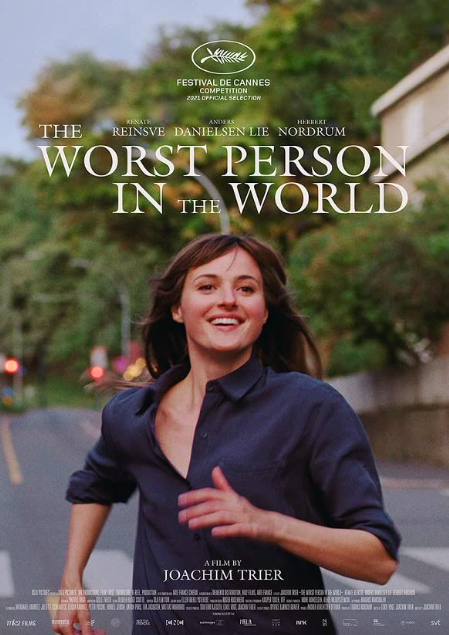
This lies at the heart of “The Worst Person in the World,” a Norwegian dark romantic comedy. It’s directed by Joachim Trier, and it acts as the conclusion to his Oslo trilogy along with “Reprise” and “Oslo, 31 August.” Trier wrote the film along with Eskil Vogt, which has been nominated for Best Original Screenplay at the Academy Awards. It’s also up for Best International Film as well.
The film follows Julie, a medical student that goes through several epiphanies very quickly to determine what she wants to do in her life. After becoming a photographer, she meets Aksel, an older underground cartoonist, and they form a relationship. Over the course of the film, it chronicles the ups and downs of their relationship, along with a new interest in a barista named Eivind that Julie meets at a wedding she crashes.
“The Worst Person in the World” is a deep exploration into relationships and how individuals perceive their side of it, told through incredible acting and writing. It’s relatively complex and poignant in its discussion, while still containing a sense of brevity throughout the film.
The film stars Renate Reinsve as Julie, Anders Danielsen Lie as Aksel and Herbert Nordrum as Eivind. These three principal actors give absolutely incredible performances throughout the entire film, especially Reinsve.
The nuances and subtleties of each character and how they individually react to each other and the situations around them are deep and introspective. In turn, they help the audience to not only come to terms with these characters, but also themselves as they act as a catalyst for personal inspection within the audience.
This is reinforced by the writing as well. Each character has a unique perspective on the world and their relationships, like Aksel’s defense of his offensive comic or Eivind’s environmental consciousness that he obtained from an ex-girlfriend. Julie remains at the forefront throughout the film, as she is constantly trying to figure out what she wants, both in her life and in her relationships. The opening humorously depicts her scramble to pick an epiphany, but the rest of the film does an excellent job at breaking her down to find out exactly what she wants.
In this sense, the film is split into 12 chapters including a prologue and an epilogue. It’s structured beautifully from a writing perspective, with clear transitions to each new chapter and a noticeable progression for the story and characters. It utilizes this structure to let the story breathe, letting it all develop naturally as if it was a well-paced book.
It uses this time to let the characters come to conclusions on their own. It lets them live within these moments while they decide whether it’s truly for them or not. This is especially true for Julie, as every aspect of her relationships is analyzed thoroughly. From having kids to working careers, Julie grapples with various tangible and intangible threads that dangle in front of her.
It’s a film about expectations, both from yourself and from others. It’s not just what you expect out of a relationship, but what your partner expects too, and vice versa. It discusses how two people might be right for each other, but their lives are in different seasons. It showcases how people pick up on certain aspects and hold onto those, even when they know the relationship won’t work. The film presents the idea that someone might be great at something like motherhood, but they need to realize that themselves before they dive into such a life-altering event.
Along with that, it’s about the minute selfishness of relationships, and how it’s always about you instead of the other — and this goes for the other characters as well. It’s about prioritizing yourself and your needs before you jump into something you aren’t ready for, like a relationship.
Whether it’s trying to live sustainably or figuring out what you want first, you might perceive yourself as the worst person in the world, but that’s not necessarily true. You need to discover yourself first before you can tackle everything else, and that doesn’t mean you’re worse than anyone else.
That’s part of the beauty of this film, which is its presentation of these themes over the course of the film’s chapters. Along with the story, the film presents itself well with some gorgeous cinematography, as several sequences capture the feeling of listlessness that people feel when figuring themselves out, like a recurring visual motif of looking out at the sea after a long walk. There are also several inventive angles and sequences strewn throughout the film, like when characters trip out on mushrooms during a late-night hangout.
The film has some great editing with several smart choices used for stitching scenes together. They’re unnoticeable at times, but the brilliant techniques that are used really stick out and hold a place within the mind of the viewer. It’s also well-paced, with the editing keeping a tempo that matches the film both within individual sequences and the movie as a whole.
Finally, the music fits the film well, both with the score and the soundtrack. The score isn’t overly prevalent, but when it introduces itself in various scenes it matches the tone well, along with creating themes that appear late into the film. The few songs that pop up also coincide with the tone, keeping the film lively while breaking up some of the tension at times.
“The Worst Person in the World” tackles large interpersonal issues revolving around relationships and our place in the world. It does so with excellent performances that match the eloquent writing.
Although this is technically the conclusion of a trilogy, it can be viewed and enjoyed on its own. You don’t need to have prior knowledge to view and understand the events of this movie. You just need to sit back and watch.
That being said, it might be hard for some people to fall in love with this movie. It’s a somewhat slower, more methodical romantic comedy, and it can seem as if nothing of importance is happening within it other than people starting, stopping and moving on from relationships.
But the themes and universal discussions on those relationships and what they mean to people, as well as figuring out what you want out of life first, elevate the movie about the typical films found within the genre.
At times, it didn’t quite resonate with me during my first viewing of it. However, moments of reflection have allowed the film and its themes to formulate a place in my mind that has made it resonate more during that time. It’s definitely a great film, and one that will grow in time and rewatches.
But if you’re looking for a higher form of romantic comedy, then this film is sure to deliver. It’s not the worst film in the world by any means.
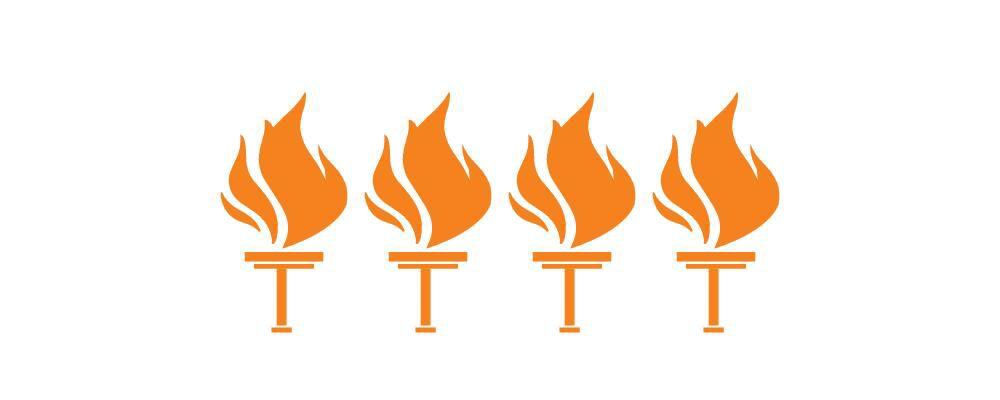
Rating: 4/5 torches.