The past few years have seen the occasional film within the Western genre release to significant acknowledgment, and this film fits right alongside them.
“The Power of the Dog” is the newest film from writer and director Jane Campion. It’s her first film in 12 years, with her last film “Bright Star” released in 2009. The film is based on the novel of the same name by Thomas Savage. It was released on Netflix in Dec. 2021.
The film follows brothers Phil and George Burbank, two ranch owners in Montana. Phil runs the ranch with an iron fist, never taking it easy on even his brother. But after George marries Rose, an inn owner with a young adult son Peter, Phil’s power dynamic is thrown off and he does everything in his power to keep everyone below his boot.
“The Power of the Dog” presents a power struggle within its gorgeous representation of the Midwest. It discusses hierarchy, control and repression under the guise of a Western film, and it’s an incredible, slow-burn dissection of those themes.
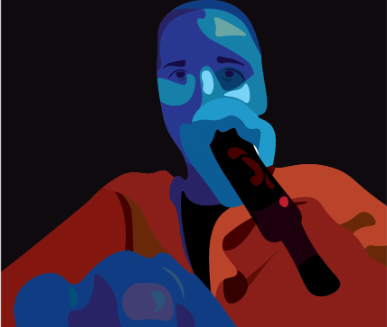
The film stars Benedict Cumberbatch as Phil. He delivers a phenomenal performance, infusing his character with the right amount of grating, brutish and bullying tendencies to make him perfectly unlikable. He pushes everyone’s buttons to the point where he draws on their insecurities, pulling them into ruin alongside him. As this primary antagonist towards the other characters, Cumberbatch gives one of his best performances.
Victims of his abuse, Jesse Plemons plays George, Kirsten Dunst plays Rose and Kodi Smit-McPhee plays Peter. They give relatively sheepish performances, which works in contrast to Phil’s taunting of them.
They move around with wariness and worry, trying to avoid Phil as much as possible. This even turns into distraught at times, like how Rose acts when Phil takes Peter under his wing. Their performances are quite excellent, especially within their subtlety at various points in the film.
The acting and characters reinforce the story of the film. Told over five chapters, the film takes its time to showcase the location, character dynamics and thematic elements. Pieces of information are spliced throughout, with more and more knowledge about the characters and their secrets being revealed as the film progresses.
This knowledge plays a key role in those character dynamics. They confirm what they already felt about another person, like Phil’s disliking of Rose is made real by her excessive drinking. By the end of the film, characters begin to use the knowledge of others that they have to gain what they want, usually to dire results.
In turn, the hierarchy established in the film begins to waver, with new and unlikely forces beginning to dismantle what was previously known. It becomes a power struggle, especially for Phil as his sexuality and his relationship with his mentor Bronco Henry begins to become questioned.
Along with that, there’s an air of bravado and masculinity that culminates with the film’s critique of what it means to be a man in the West quite thoroughly. The film presents these as themes to discuss and analyze, as they are deeply woven into the fabric of the film’s characters.
Outside of a few examples, some of these topics are somewhat foreign to the Western genre, and different aspects of filmmaking exemplify this. The score by Jonny Greenwood is a perfect example of this. It features several string and brass instruments that give the film a haunting and unfamiliar feeling.
For example, the plucking of a cello instead of banjo creates an entirely different experience within the traditional Western scores of yore. It often drones, but it’s a beautiful and eerily fitting score for the film.
Along with that, the sound design is excellent, with certain recurring elements creating unease even when they appear off camera. Sounds like the clang of Phil’s spurs, the scorching drag of a cigarette and the twang of fingers running over a comb have a crisp and resounding quality to them, tremendously adding to the film as a result.
The cinematography, set design and costuming also add to the film in this way.
The camera moves and stops with precision, often presenting people like Phil with a low angle. The lighting feels natural and the framing within certain sequences is astonishing. The overall composition of the film is stellar, and it helps that the landscapes — shot in New Zealand by the way — look otherworldly.
The set design works with the camera to present grimy, dusty and drab interiors, making the film appear more authentic as a result. Finally, the costumes are varied and interesting, matching the characteristics of everyone in the film while showing their ruggedness at times.
“The Power of the Dog” is a film rich in detail. Its presentation, along with its themes involving masculinity and power, create a unique film within the Western genre.
As a genre, Western films have come and gone over the past few decades, with a few films riding into town here and there. Fortunately, most of them have been pretty excellent and helped to diversify and change the genre for the better.
“The Power of the Dog” is one of those Westerns. It critiques and analyzes the nature of ranch owners and the bravado that they portray just as much as it depicts life in the Midwest, albeit in a place that never truly existed in that region.
As a result, it’s an American film through the lens of a non-American filmmaker, and Jane Campion completely delivers on all fronts. All in all, it’s a thorough film that rewards attentive viewing.
It’s a fairly slow film that likes to take its time. It’s also not for everyone, due to the slower pace, themes and animal treatment on set. But it is an excellent and subversive Western film that is richly detailed.
It’s worth watching to see Benedict Cumberbatch give one of his all-time best performances in this film, as well as a celebration of Jane Campion as a filmmaker.
Rating: 4 ½ out of 5.