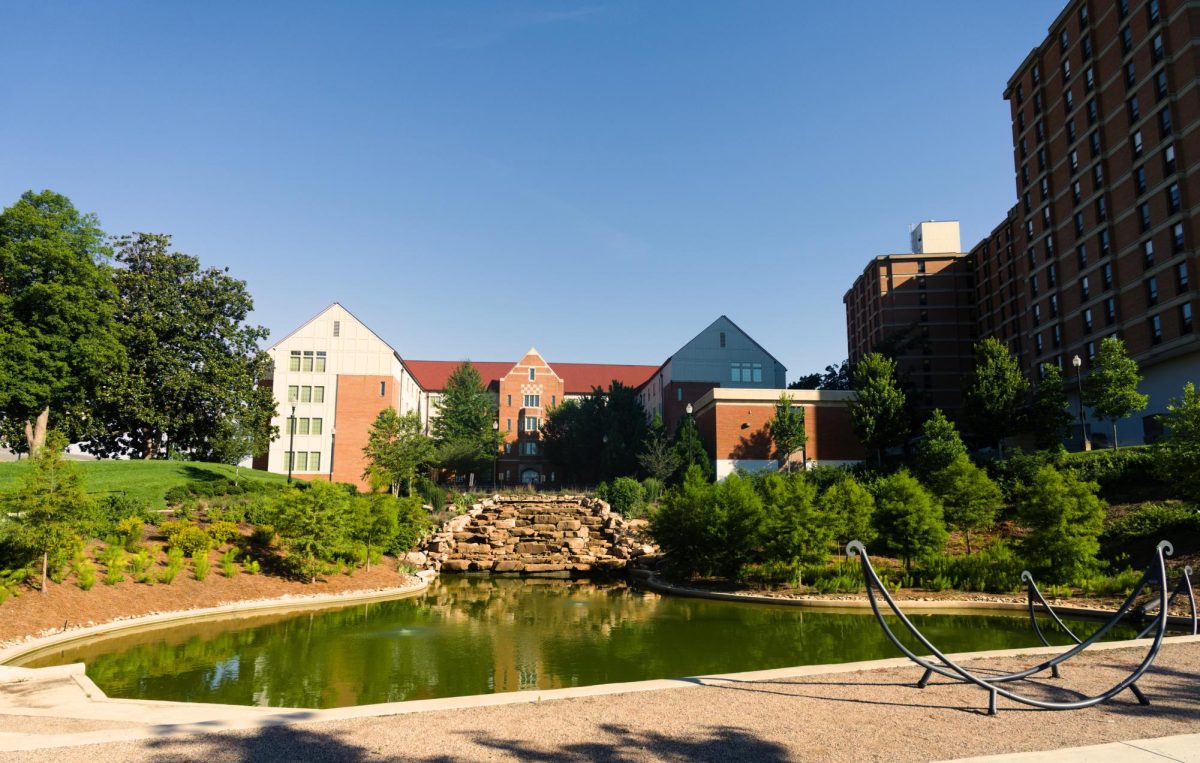
As summer begins to take full swing in Knoxville, many UT students are flocking to the classroom instead of the pool.
Offered at the same cost per hour as regular semester classes, summer class occur at a much faster pace and take half the time.
Russ Coughenour, Director of Career Services, sees value in summer classes for students trying to stay on schedule to graduate.
“I guess what is reasonable is up to each and every student,” Coughenour said, “But students should do their best to try and graduate in four years, and summer school can be instrumental in helping them stay on track. I think they benefit students who have fallen behind the most. It gives them a chance to catch up with their peers.”
Senior Brooke Jones uses summer classes to catch up after switching her major from nursing to hotel restaurant and tourism late in her sophomore year.
“It was worth it, because I know I want to graduate as fast as possible and if this is what it takes, so be it,” Jones said. “The cons are you miss out on the fun of summer. I have sacrificed going home to spend time with my family, because I usually can’t go home a lot during the semester with school, sorority, and work.”
Other students such as Yvette Vasquez, junior in mechanical engineering, use summer classes to offset heavy course loads in the future and to earn a master’s degree in five years.
Still, taking classes in the summer can inhibit students from gaining marketable experience through internships.
In a study by Internships.com, 63 percent of college undergrads graduating in 2012 had completed one internship while 28 percent had completed two or more.
Sixty-six percent of employers hiring interns rated interview performance and relevant experience as the most important factors, leaving resume, cover letter, and academic performance as secondary considerations.
And on a resume where GPA and degree earned only fill up a few lines, opportunity to gain experience may be more beneficial to students when applying for jobs later on.
Austin Weatherell, senior in hotel restaurant and tourism, is a marketing intern at Wyndham Resorts, an experience he believes will help him more with future employment than classes.
“It’s an interesting glimpse into a real 40-hour job,” Weatherell said, “it’s cool to get out and experience what that’s like and will be like when I join the workforce.”
While noting the benefit of summer classes to students in regard to graduating in four years, STEM-career consultant at UT Career Services Justin Rice highlights that the summer is an invaluable time for gaining real work experience.
“More and more employers place a higher emphasis on experience than GPA, and if a student does nothing except go to class, they limit their marketability as a candidate for employment,” Rice said. “Therefore, using the summer to hold an internship, an undergraduate research position, or a job related to one’s future career goals could potentially be much more beneficial. Like most things in life, there is rarely one, all-encompassing answer.”