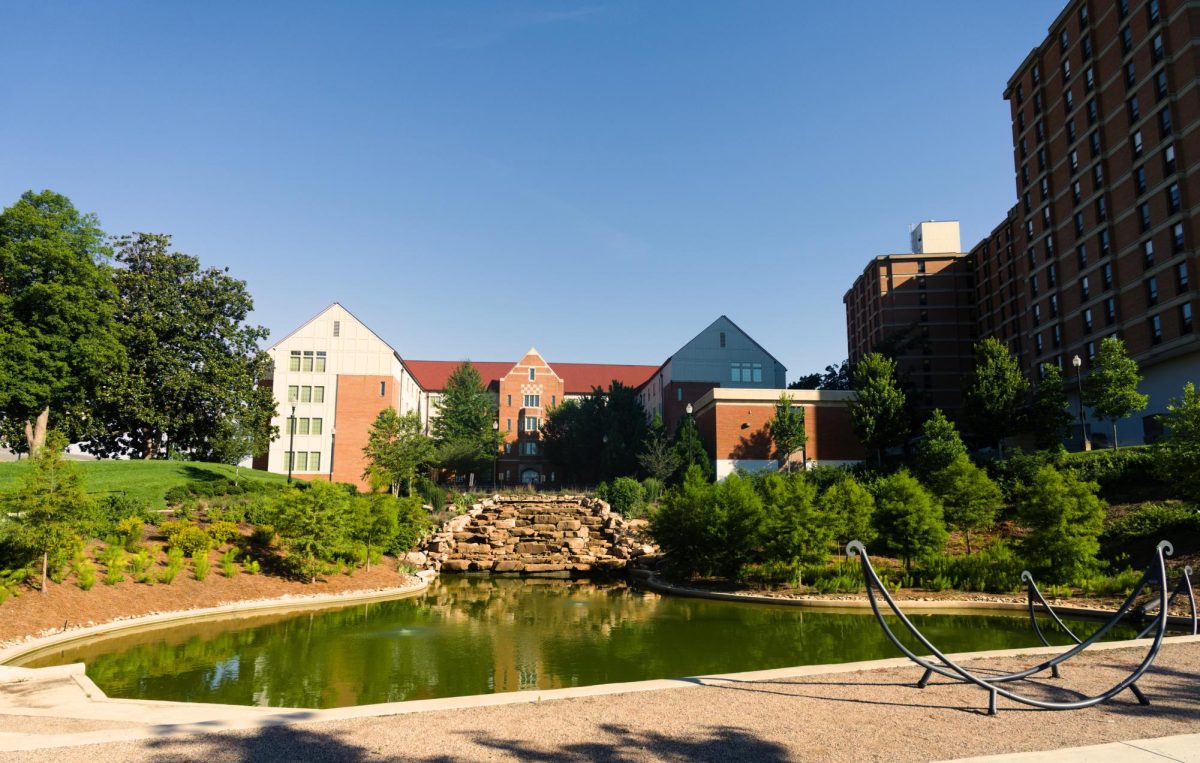
For many UT students living in Fort Sanders, the historic neighborhood once housing Knoxville’s elite is obscured beneath the debris and debauchery of a college town.
Yet, 20-somethings aren’t the Fort’s only residents.
Despite the Fort’s reputation for night life and crime, established adults and even families choose to stay for the area’s unique appeal.
Bart Rohrbach, a recently retired professor from UT’s veterinary school, lives with his wife Nancy in a nearly 130-year-old Highland Avenue home.
“I think the neighborhood has a reputation which was earned maybe a long, long time ago, but things have changed,” said Rohrbach. “We have not had one single incidence of a break-in or any kind of problem with the neighborhood.”
Rohrbach purchased his house in 1988 with proximity to campus and the character of the house in mind.
“When I bought the house, it was probably the only one I could afford that was really this unique. If this house had been anywhere else, it would have been out of my price range at that time,” he said. “The other thing is commuting. I think a tremendous amount of time and energy is wasted commuting back and forth long distances.”
For Rohrbach, whose wife also worked for the university as an animal science research associate, the clear alternative was to buy a home within walking distance of their offices on the Institute of Agriculture campus.
“We’d walk to work everyday and walk back in the evenings,” he said. “It was good exercise. We walk down to Market Square and the library.
“It’s just a very nice place to live.”
Rohrbach’s neighbor, Becky Wade, moved into her late 19th century home 35 years ago for similar reasons.
“It just feels like home more so than a very modern, sterile place,” Wade said. “It was a great location. We prefer walking places, so being so close to downtown and the Strip is a benefit to me.”
Like Rohrbach, Wade has seen her quality of life improve in recent years since her early days of being a Fort homeowner. Changing attitudes within UT’s student population, she believes, are partially to account for this.
“I think the students have gotten much more serious than they used to be,” she said. “It’s surprising to think back on how many weekends there would be a rather exuberant party at one place or another going on until the wee hours.
“You expect it during football season, of course, but overall I think UT’s students now realize (college) isn’t just fun and games.”
More than rowdy students, Wade believes the Fort’s true problem is the prevalence of crooked landlords.
“There have been a lot of awful landlords who let the houses go downhill and enclose the front porches to have one extra room for more rent,” she said. “The landlords who don’t take care of their property and then hope they can sell it to a developer for lots of money. They bother me more (than students).”
Negligent landlords and ambitious developers, including the university itself and Fort Sanders Regional Medical Center, have resulted in the deterioration and destruction of many historic structures.
This year, Fort Sanders Neighborhood was placed on top of Knox Heritage’s Fragile Fifteen list for the second time in a row.
“These apartments have all been built on land or over houses that were really historic,” Rohrbach said. “Look at (James) Agee’s house—it’s now the office for Prime Campus Housing.”
Rohrbach believes this crisis could partially be solved if more university faculty viewed the Fort as a viable neighborhood to live in.
“I’ve never understood why more faculty wouldn’t look at the historic homes that are rapidly being eliminated in this area,” he said. “Almost all other university campuses I’ve been on, there’s an area adjacent to the campus that has really nice houses where faculty live and can walk back and forth to campus. It’s really convenient and makes a nice atmosphere, but we don’t have enough faculty choosing to live here for that, unfortunately.
“For us, being able to live in this house and be close to the university… the benefits are worth the cost.”