The Big Orange Orchard project recently planted its first roots in Knoxville soil.
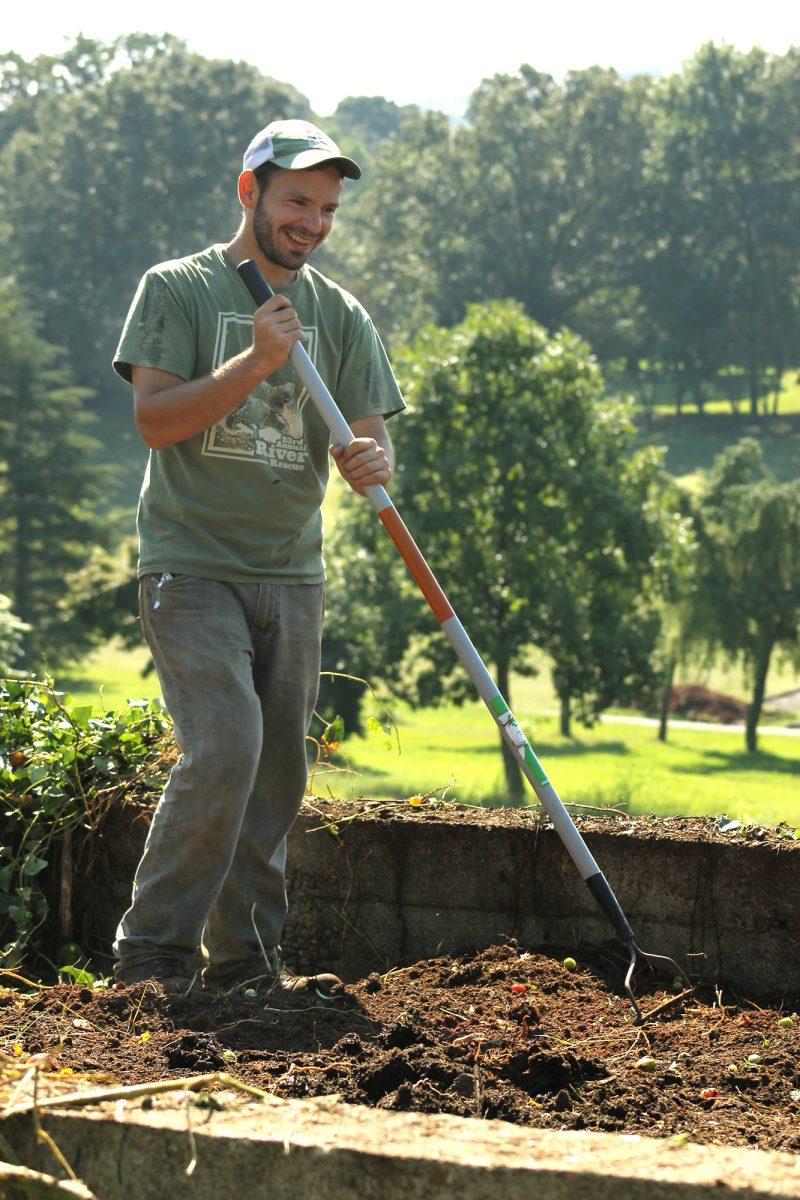
Volunteers from Ignite Serves, a five day leadership program for incoming freshman, toiled in the early morning of Thursday, Aug. 14, to prepare a potential plotting site for the Big Orange Orchard at the Knoxville Botanical Gardens.
Disposing of weeds and clearing topsoil, the freshmen volunteers completed the three-day groundbreaking event to transform the innovative Big Orange Orchard project into a reality.
Although liability and financial issues have prevented any planting from beginning on campus, the project has made headway in the past year after the Big Orange Orchard resolution was passed by the Student Senate last spring.
“It’s really just an initiative to continue with sustainable practices at UT,” said Julianna Burchett, senior in environment science who supported the project when she served last year as a senator for the College of Arts and Sciences.
Stressing the importance of incorporating fruit bearing plants on campus, Burchett said she plans to oversee the garden’s growth as chair of the Environment and Sustainability Committee.
As the campus continues to develop, Burchett said she “would always rather see more trees, plants and green-space than concrete.”
Although the produce to be planted in the garden has not been decided, Chris Weller, a 2013 UT graduate and one of the original minds behind the Big Orange Orchard project, maintained that preference will be given to native species such as raspberries, blueberries and blackberries. A myriad of herbs that could act as natural pesticides will also be considered.
While the fate of the produce itself will largely depend on its location, Weller said ideas for the harvest include giving the food to campus dining or allowing students the privilege of eating “right off the bush.”
Neil Brown, senior in chemical engineering and co-creator of the Big Orange Orchard, described his wish to transform UT into an “edible campus” where students can enjoy fresh produce on their way to class.
Despite legal liability issues concerning the safety of the produce grown in garden areas, Brown continues to stress the necessity of such a program. He said he believes modern eating habits have created populations that are “disconnected from their food.”
Ultimately, Brown expressed hope the Big Orange Orchard will revolutionize food consumption on campus by embracing a “new take on how to landscape,” stressing plant usefulness in combination with aesthetics.