The commute to class may have just become more difficult.
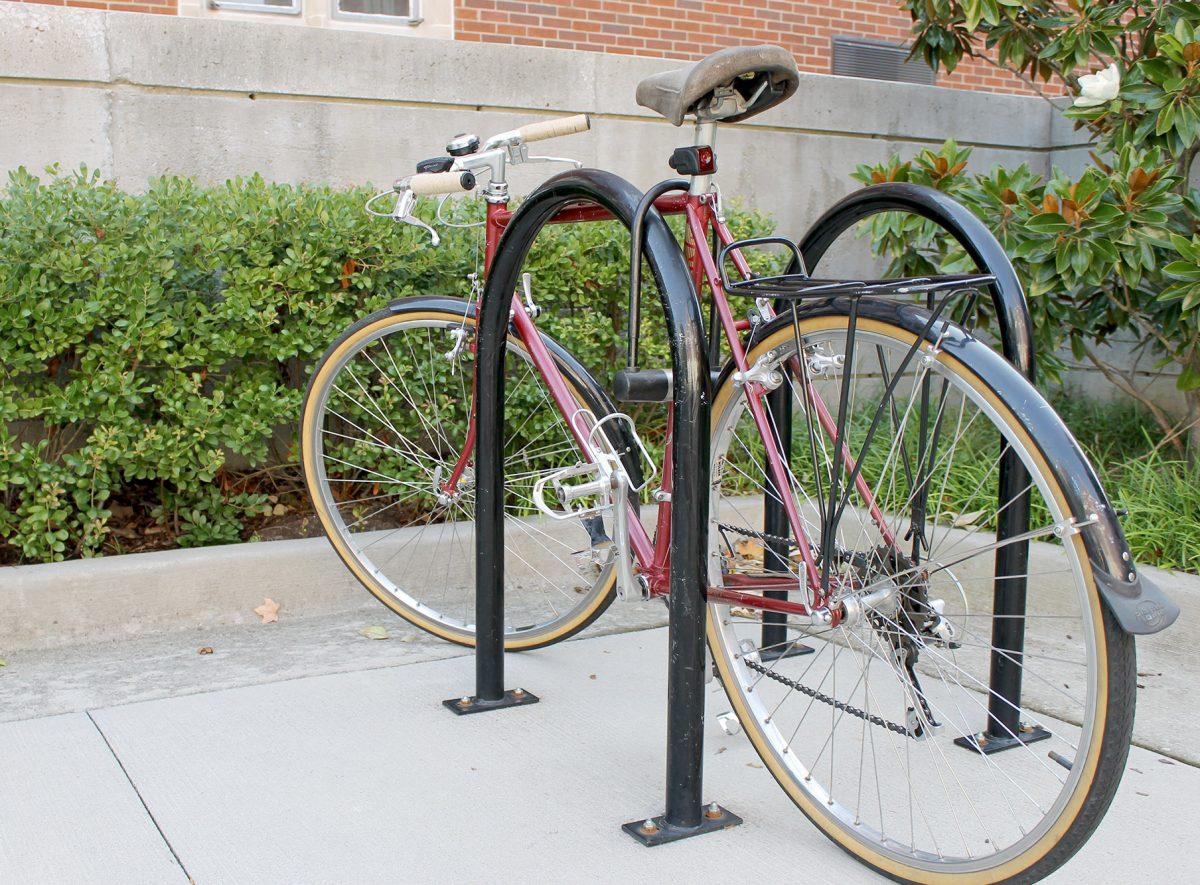
CycleUshare, the nation’s first electric bicycle sharing system, has been shut down at UT indefinitely due to a lack of university funding, Christopher Cherry, associate professor and founder of the cycleUshare research project, said. The system, made up of two stations located in Presidential Court and on the Institute of Agriculture campus, made use of bicycles equipped with rechargeable, electric motors designed to aid participating users in pedaling and going uphill.
Originally launched as a research project, the system was free to participating users while in service and provided an alternate means of transportation across Knoxville’s expansive campus.
“There came a point when we proposed to the University what it would take to continue the program,” Cherry said of his proposal to continue cycleUshare. “They’re interested in having it, but not interested in funding it.”
While Cherry acknowledges the lack of a “significant future” for electric bike sharing at UT, he hopes that a current research proposal with Knoxville Area Transit could help to “integrate bike share and electric bike share with the bus system,” and thus continue the city’s trend towards alternative means of transportation.
Though Cherry may find hope in an immediate expansion of e-bikes across the city, his optimism is not shared by all.
Kelley Segars, principal planner of the Knoxville Regional Transportation Planning Organization, described cycleUshare as “a great program for UT,” but recognized the difficulties associated with its expansion to the city at large.
Citing a potentially large “initial cost” for the system, as well as a lack of a “cohesive network” of bike lanes necessary for the success of any bike sharing system, Segars expressed doubt in an immediate future for e-bikes in Knoxville.
For the former participants of cycleUshare, the benefits of electric bicycles extended beyond just convenient transportation. In his doctoral dissertation covering the research findings of the electric bike sharing system, Casey Langford, graduate research assistant for cycleUshare, maintained that electric bike sharing could, “reduce costs such as congestion, parking costs, energy consumption, and greenhouse gas emissions.”
Despite the myriad of benefits to be had from the former e-bike system, it’s unclear whether students will even take note.
For Kelly Nicholas, senior in civil engineering, the loss of cycleUshare to the campus is one met with mixed emotions.
“I’m a commuter student so I’m never on the side of campus that has the stations,” Nicholas said. “I never use them.”
Despite this, Nicholas recognizes the necessity for a campus-wide bike-sharing program, admitting that she was “sad to see it go.”
Even in the face of cycleUshare’s demise, Cherry remains an advocate, noting the positive change e-bike sharing could potentially bring to campus.
“It provided low-cost, low emission, low impact transportation,” Cherry said. “Bike-share is one of the most cost-effective ways to move people around.”