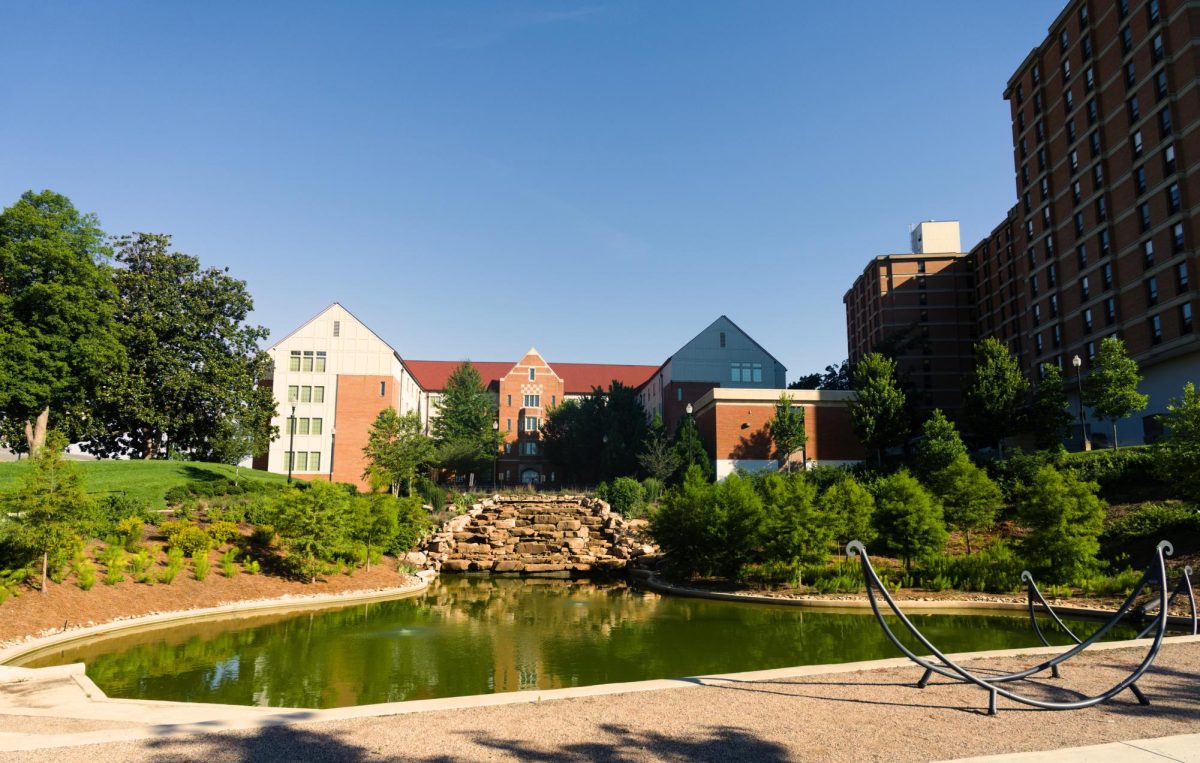
This fall, freshmen had the opportunity to join one of five new Living and Learning Communities on campus.
These communities include the Engineering Career and Academic Preparation community; the Greenhouse community for freshmen interested in sustainability and the environment; Pulse, for incoming nursing students; ConnectED, a community for first-year students pursuing their teacher licensure and MMP Connect, a community for students in the Multicultural Mentoring Program.
Geared toward specific majors and interests, LLCs offer supplemental programming and faculty support support within the conventional residential experience.
Each LLC occupies its own hallway or wing in a residence hall such as Massey, Morrill or Fred Brown Jr. Hall. The communities vary in size, ranging from 10 students in the Greenhouse program to approximately 300 in the Honors community.
Pulse, for example, comprises 23 students living on the eighth floor of Morrill Hall. Courtney Shaffer, the undergraduate academic advisor for the College of Nursing, said she believes creating a community of freshmen can help academic departments target and assist students earlier in their academic careers.
“Pulse gives us the opportunity to connect a core group of freshman nursing students to faculty and staff in the College of Nursing, providing them with unique experiences designed to develop their identity as nursing students earlier than might otherwise occur,” Shaffer said. “Our vision is that the Pulse would be one component of a leadership development pipeline for students within the College of Nursing.”
Frank Cuevas, executive director of housing, is pleased with the rapid growth of Living and Learning Communities on campus. Since 2010, the number of LLCs has more than doubled, jumping from eight to 18 and growing to accommodate diverse subjects like public policy, music and business.
The Greenhouse LLC will host activities throughout the year, including outdoor recreational team building, hands-on environmental service, special lectures and networking programs.
“Utilizing our offices on campus and community partners, we aim to provide the students with a diverse and meaningful variety of events during their time in the Greenhouse,” said Preston Jacobsen, sustainability manager in the Office of Sustainability. “Students will have their first community outing next weekend at Ijams Nature Center where they will participate in a low ropes course and team development program with UTOP.”
The other three LLCs new to campus this year include a multicultural mentoring program, a community for students pursuing their teaching licensure and a group of students in the College of Engineering.
For Cuevas, creating more LLCs and developing existing communities is crucial to UT’s Top 25 ambitions.
“It’s important to support those opportunities which lead to greater retention, greater participation and greater student engagement,” Cuevas said.
Most LLCs require community members to complete a 100-level course tailored to their uniting interest. Students in the “Riser” LLC are obligated to enroll in the same special sections of Math 130, a requirement which promotes group studying and eases the challenge of college-level curriculum.
According to a 2013-2014 study published by the Journal of College Student Retention, nearly a third of first-year college students nationwide do not return for a second year. However, the study reports the implementation of transitional “University 100” orientation courses and the availability of living and learning communities dramatically improve both retention and graduation rates.
The communities also attempt to connect students to relevant resources on campus. In “Compass,” the LLC designated for exploratory students, community members are connected to programs with UT Career Services
In order to introduce a new LLC to the university, academic departments must submit an application to University Housing and outline their plans to recruit students, support the community and ultimately measure the program’s success.
Housing then reviews the application and decides whether to introduce the LLC.
“We are very fortunate that academic departments come to us wanting to add communities,” Cuevas said. “We work with them on establishing a marketing plan and how to put the community in place. We also discuss what the ideal target size is for each community.”
Crystal Baldwin, coordinator for recruitment and retention in the College of Education, Health and Human Sciences, applied for the LLC “ConnectED” with the hopes of engaging students in a more hands-on and involved environment.
“A part of our mission in the Office of Student Services is to foster a positive learning environment where students can take ownership in their own development and success,” Baldwin said. “We felt that this was the perfect opportunity to build on that mission.”