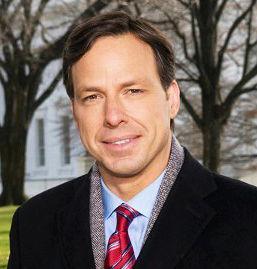
The Congressional Medal of Honor Society awarded CNN journalist Jake Tapper the Tex McCrary Award for Excellence in Journalism at the Medal of Honor Convention’s Patriot Awards Gala event Saturday night. Tapper is currently the host and Chief White House Correspondent for “The Lead with Jake Tapper.” The award came partially in recognition of his book, “The Outpost: An Untold Story of American Valor,” which debuted on The New York Times bestseller list for hardback non-fiction.
The Daily Beacon’s Editor-in-Chief Claire Dodson had the chance to speak with Tapper at Saturday’s gala about his experiences reporting in Afghanistan and the honor of receiving an award from Medal of Honor recipients.
Claire Dodson: What does it mean to you to get this award?
Jake Tapper: I’ll say this, it’s a great honor to get any prize or award. The times I’ve been recognized for journalism from my fellow journalists, it means a lot to have your peers say good job. But to have a room full of the most selfless, valorous men who have ever lived even invite me to the dinner, much less give me an award is, I can’t even come up with the words. I’m honored to even know these guys, much less have the whole Medal of Honor Society recognize my reporting. It’s immensely meaningful.
CD: What was it like for you when you working on the book on Afghanistan? Was it pretty harrowing, hearing those stories?
JT: It was difficult. Obviously, not nearly as difficult as what these men and women went through, but it was a lot of work. It’s not fun going to Afghanistan. It was emotionally very wrenching because a lot of these stories are very tough, very difficult, unpleasant. None of these people should have had to undergo these things. So to hear these stories, these men far braver than I crying to me as they tell these stories, was gut-wrenching.
CD: What was it like going to Afghanistan with President Obama?
JT: It was weird. You land in the middle of the night. It’s top secret, and the security is intense. We landed in Bagram and were supposed to go over to the U.S. Embassy in Kabul, but there was a windstorm so we didn’t end up going.
Then I went on my own as a reporter with a producer and was embedded at the tip of the spear at fort operating base in Kunar province. You realize how little the White House press corps or the president see, just because of security reasons they can’t.
It was much more meaningful when I was there for over a week, because then you see the conditions under which they live and how fraught with peril every drive down the road is. It made it much more real. Bagram was a moving experience, but nothing compared to actually traveling, sleeping in these big buildings with 50 bunk beds with men and women running in and out.
CD: When have you felt proudest to be an American?
JT: That’s a very complicated question, because I’m always proud to be an American, and you know, I’m a little older than you so I remember the bicentennial. I grew up in Philadelphia, and that was a time of tremendous patriotism and tremendous excitement.
Writing this book made me realize how incredibly lucky this nation is to have the kind of men and women we have volunteering to do what they do and protect this country and those who love them, their families who also give a lot. I don’t know if that’s so much a pride in being American as it is a gratitude for these Americans.
Some of the times I feel most proud are when I go to other countries and realize the freedoms they don’t have. So when I went to Turkey or Saudi Arabia or Vietnam or Russia and I realized the conditions under which millions, billions, of people live. They don’t have the freedoms we have. That makes me appreciate it even more.
CD: When do you most feel like you’re fulfilling your purpose as a journalist?
JT: That’s tough. Sometimes when I’m asking tough questions of an elected official about an issue that’s really important. I asked tough questions of Elliot Spitzer about his problems with prostitution, and I’m glad I asked them, but it wasn’t an issue of tremendous importance. An example might be when I had the White House Chief of Staff Denis McDonough on the show after the VA scandal broke and serving as a spokesman for people who don’t have a voice. In this case, veterans who are suffering, who aren’t getting the care they need.
I feel like you can really make a difference as a journalist if you’re being a voice for people who don’t have a voice. If you’re covering a story that has to do with a poor community, or a community that’s being discriminated against, whether it’s innocent people accused of doing a crime they didn’t commit or 9/11 families who feel like they’re not being heard.
Anytime I’m doing anything like that, I feel like I can feel better about what is sometimes a not always pure profession.