In the 1930s, Franklin Delano Roosevelt introduced a New Deal for the American people. Today, the Roosevelt Institute is continuing that legacy.
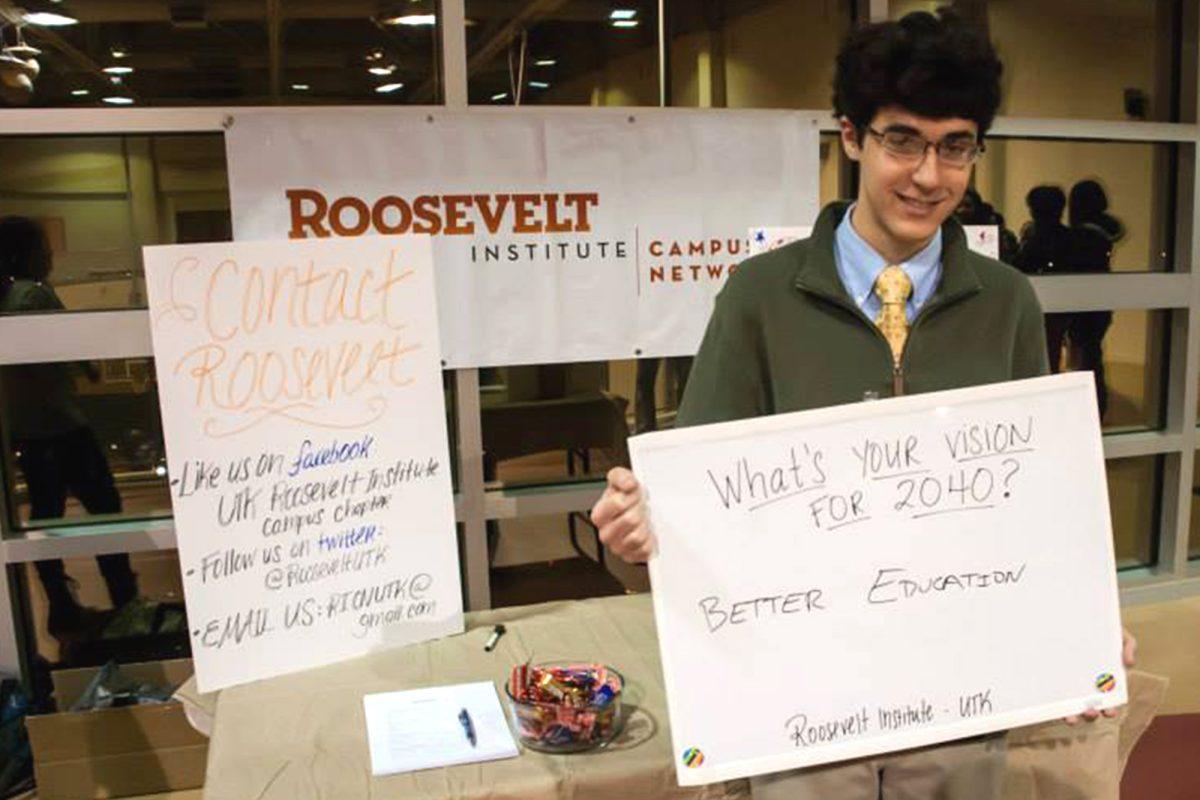
The Roosevelt Institute Campus Network, one chapter of the non-profit think tank, is a nationwide organization giving students across the country the skills to solve local problems using public policy. The University of Tennessee’s Roosevelt chapter was officially established in 2012.
Patrick McKenzie, sophomore in biochemical and molecular biology and director of UT’s chapter, emphasized the importance of giving students the power to make local change through policy.
“Public policy is a tool that is relevant to everyone in the U.S.,” McKenzie said. “It’s for everybody because policy affects everybody… Policy might become what is holding you back or allowing you access… It’s important to have an organization on campus dedicated to it.”
Approximately 100 to 150 campuses across the U.S. have Roosevelt Institute Campus Network chapters, said Alan Smith, associate director of networked initiatives at Roosevelt’s national office. Divided into six regions, students in each chapter identify problems in their area and explore policies to address these issues. Ultimately, the goal is to solve local issues with an eye toward widespread progress.
“We try to push folks to work hyper-locally,” Smith said. “If we create a sense of local change, then (students) can begin making changes nationally.”
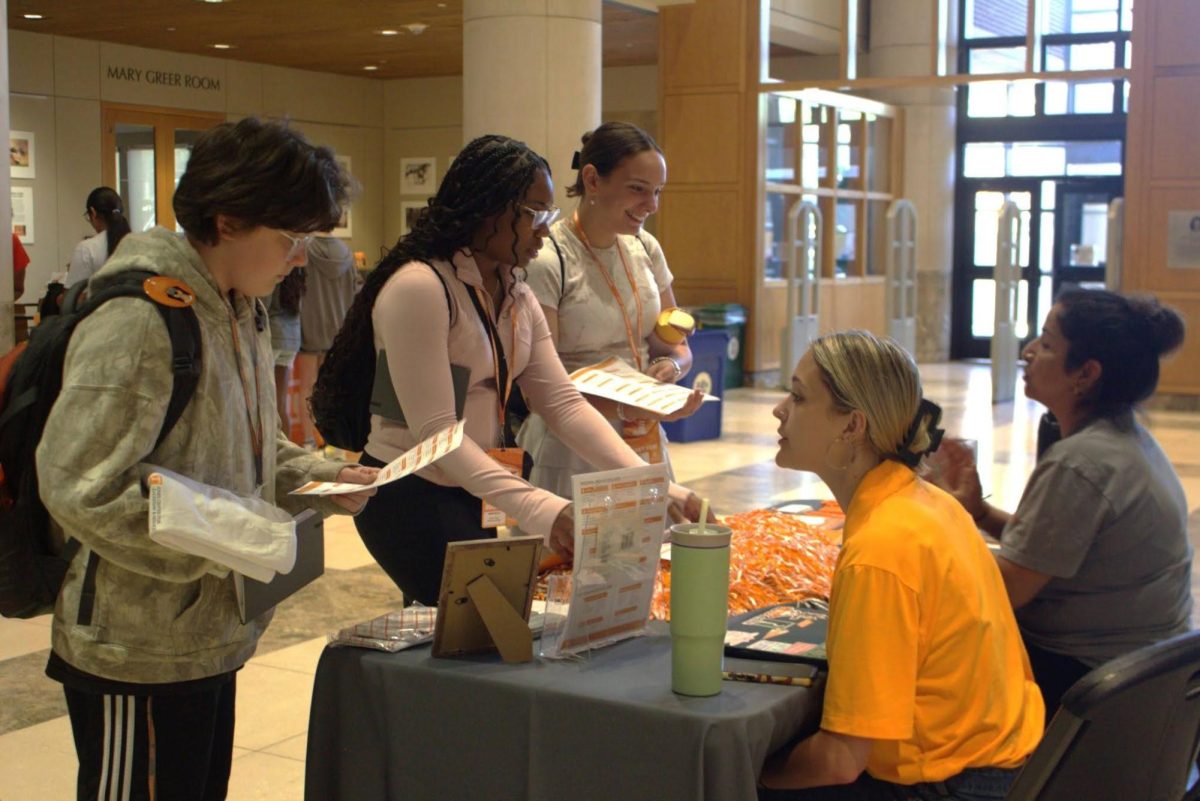
UT’s chapter is composed of 20 to 30 students, majoring in diverse subjects like political science, physics and journalism. In the fall, these students begin exploring issues present on campus and the Knoxville area and creating their policy proposals. After they have chosen a topic for research, they begin constructing a two-page policy piece to submit to the “10 Ideas Journal,” a national publication run by the Roosevelt Institute.
Last year, chapter president Patrick McKenzie submitted a policy piece on UT facilities service workers and the importance of providing a living wage. Chosen for publication in the “10 Ideas Journal,” the piece highlighted the benefits of increased wages for the university and employees and included a section for next steps on how to apply the policy. With its publication, this piece spotlighted the issue and placed it on a national stage.
The Roosevelt Institute Campus Network chapters, Smith explained, are completely student-run, whereas the Roosevelt Institute’s primary function is to assist students in developing their campaigns, writing about their policies and connecting with the appropriate stakeholders. After they are provided a rubric for success, students have the freedom to conduct research and write policies on their own.
“We try to push and help up a certain point that is useful,” Smith said, “but once they are off and running, they tend to forget to tell us where they ran to.”
Madelyn Schorr, the regional coordinator for the southern region, noted the unique opportunities afforded to chapters in the South.
“The South is different than other regions, because unlike the North, or even the Mid-Atlantic, we normally have schools with largely conservative populations,” Schorr said. “Although many would see this as a challenge, we like to think of this as a way to get creative in how we market Roosevelt on their campus.”
This year, UT’s chapter will recruit a team of two or three students to work solely on issues highlighted in the Rethinking Communities campaign, a national initiative asking students to apply pre-determined policy topics to their college or university with the intent to improve the surrounding area.
Students will also continue to write policies for publication in the “10 Ideas Journal.” Over the summer, McKenzie and other members of the UT chapter collaborated on a proposal to allocate a greater portion of student fees towards organizations that do community outreach and education programs. They plan to spend this year trying to push the implementation of that policy.
“I am a little biased, but I wholeheartedly believe that the power of this network comes from the students we work with every day,” Schorr said. “It isn’t every so often one will come across an organization that will allow you to do something concrete concerning something you are passionate about.”
The Roosevelt Institute’s next meeting is at 6 p.m. on Sept. 15 in room 58 of the Humanities and Social Sciences building.