A new car built in a matter of hours.
Strati, an electric 3D printed car, was created over 44 hours at the International Manufacturing Technology Show, a bi-yearly manufacturing trade show in Chicago, Sept. 13.
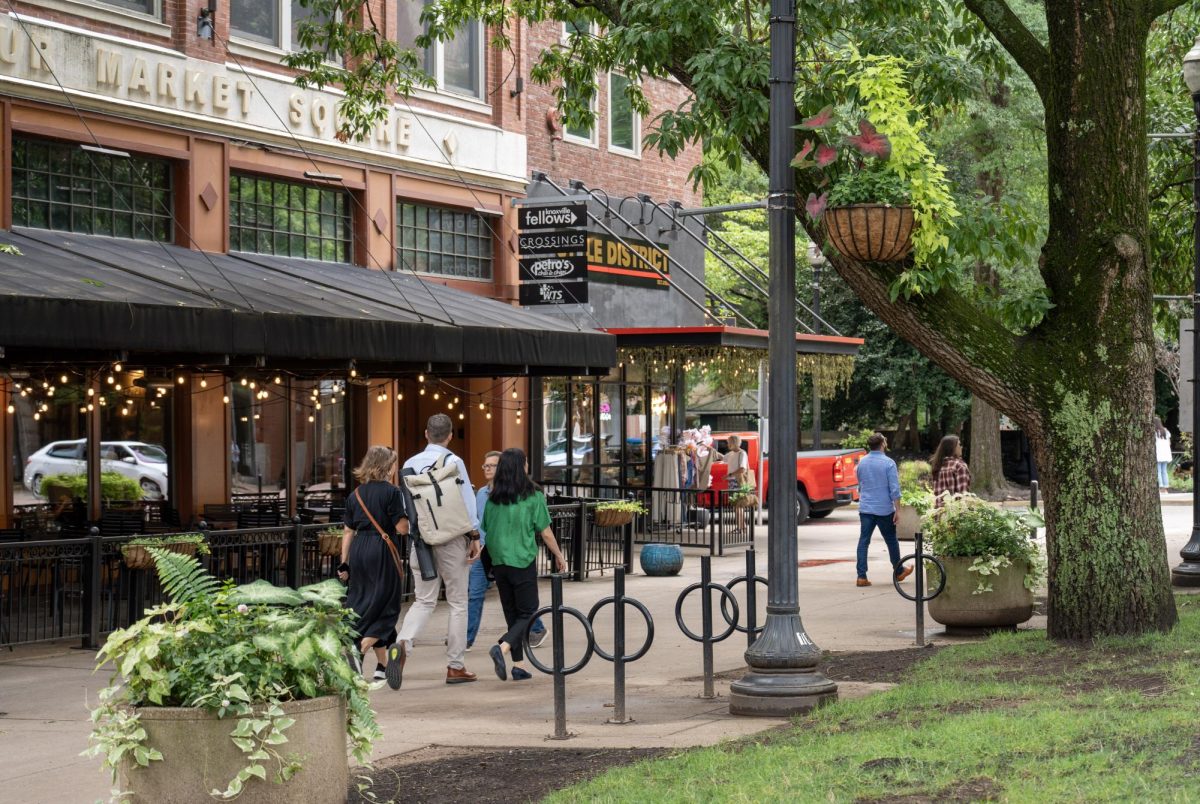
Five UT students were involved in the creation of the car and its assembly in Chicago, including James Earle, a May 2014 graduate, and Oak Ridge National Laboratory interns Kyle Goodrick, Andrew Messing, Aaron Young and Alex Roschli.The creation of the Strati project was led by Earle, himself a former ORNL intern and current employee of Local Motors, a company which plans on mass producing the cars for sale to the public and has a local office on Market Square.
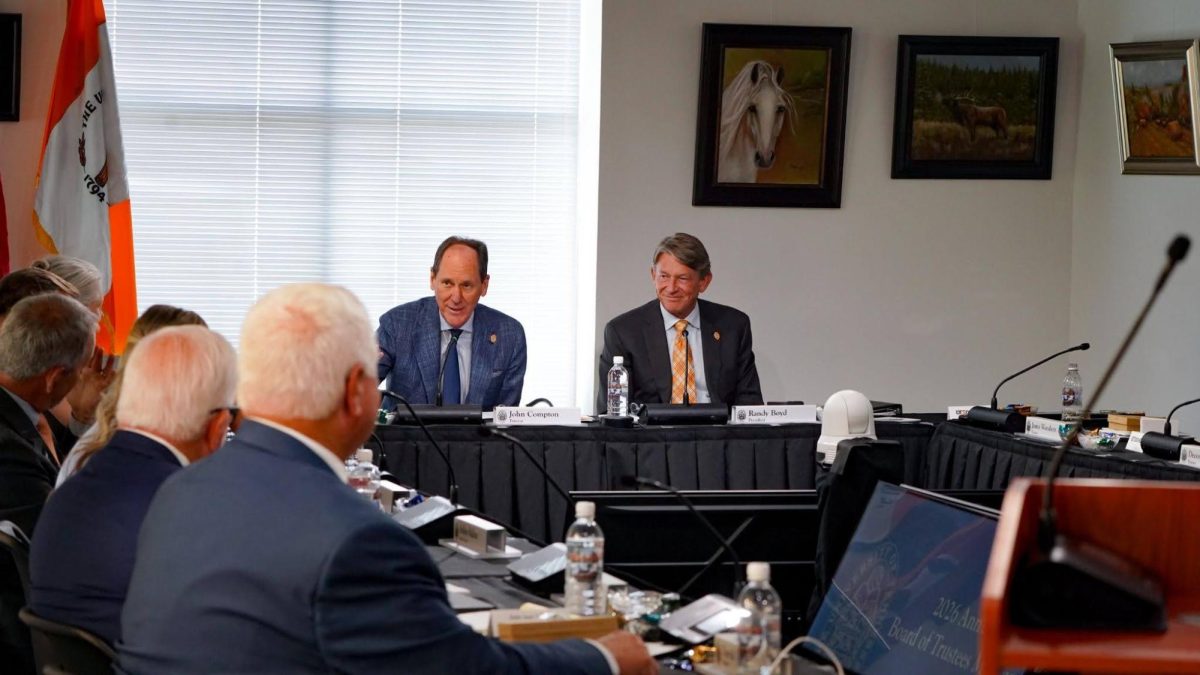
“He spearheaded the development effort at MDF for Local Motors and worked closely with the students,” Taylor Eighmy, vice-chancellor for research and engagement said via email.
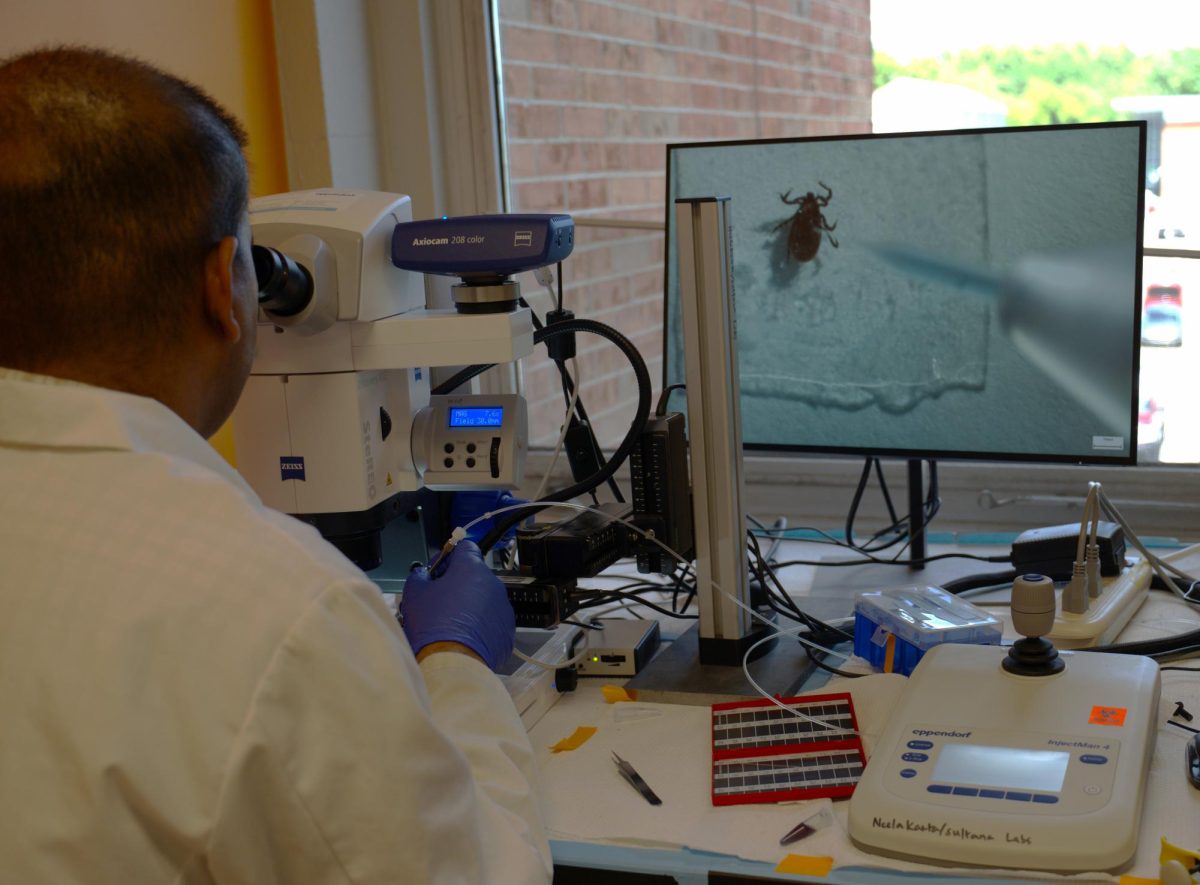
The other four UT students intern at the Manufacturing Demonstration Facility, an annex of the main ORNL campus and a place where private companies can test their additive manufacturing technology.
“Both ORNL and Local Motors were so impressed with the four,” Eighmy said. “This is but one example of our engagement with a national lab and corporate partner.” No longer working in a laboratory, Earle is glad to finally be working on a project he feels is applicable to the rest of the world.
“It was really cool to transition from building a part that wasn’t really going to be used, to a part that at the end of the day is going to transport people and had to be reliable enough to do that,” Earle said.
3D printing, technically termed additive manufacturing, uses digital blueprints to create a single object layer by layer, rather than creating separate parts with molds that are later assembled.
While the body of Strati was made with a high-density polymer, the motor, wiring and other critical components were taken from several car lines, including the Renault Twizy, a compact European electric vehicle.
Local Motors hopes to expand their Knoxville office by opening a micro-factory within a year. After its opening, the company will be able to create customizable vehicles for direct public sale. Two such micro-factories have already opened in in Phoenix and Las Vegas with another planned for Berlin.
Additive manufacturing allows for more freedom in design, from the size of the car down to the shape of the gas pedal. The new technology bypasses the traditional method of creating a reusable mold to cast a part.
“You print the car to suit what you want out of it,” Earle said. “If you want a gasoline engine, diesel engine or a natural gas engine, all you do is install one of those instead of the electric engine.
“There’s no limit to the customization aspect.”
Local Motors will sell their cars from $18,000 to $30,000 each. Earle emphasized the Strati is not merely a prototype, but a technology ready for real world use.
“It’s a fully drivable, structurally sound vehicle,” he said.
“There’s a way for people to get way more involved in the car buying experience than they have in the past.”
With the ability to use metals, composites, carbon fiber and other materials, Eighmy is optimistic about where the future can take additive manufacturing.
“It is sort of at the Model A Ford or Wright Brothers bi-plane stage,” Eighmy said. “It will rapidly advance; even in the next five years … Despite its infancy, 3D composites printing will become transformative to society. Local Motors, as just one example, is on to something really big.”