This year, UT began charging the highest in-state tuition of any public SEC school.
In response, the Student Government Association is preparing to launch a campaign to lobby the state Legislature to allocate more money for higher education. SGA took up the initiative at the request of top administration officials. This currently unnamed campaign will hopefully prevent tuition hikes similar to the 6 percent increase passed this summer.
“We’re going to start encouraging people to reach out to their legislators in the coming months,” said Daniel Richter, SGA chief of staff and senior in business analytics and statistics. “Their representatives are the ones that are in charge of all this.”
As the campaign starts to take shape, Richter hopes students will become more familiar with the mechanisms behind tuition increases and the consequences of depleting state funding.
The Tennessee fiscal year 2015 budget cut funding from UT and other public post-secondary schools following an unexpected $300 million deficit. While the majority of UT’s revenue now comes from tuition, the school still depends on state funding.
At a faculty senate meeting on Sept. 15, William F. Fox of the Center for Business and Economic Research said that while Tennessee has rebounded from the 2008-09 financial crisis, the state has not yet seen a subsequent increase in tax revenue.
“The only state that collects a lower share of its economy in taxes than Tennessee is South Dakota,” Fox said. “It will be a challenge to come up with revenue for higher education within the budget as it’s structured right now.”
The portion of the state economy that is taxed has shrunk to nearly one-third in 2012, down from nearly two-thirds in 1979. Unfortunately for UT, higher education is much lower on the state’s budget priorities compared to K-12 education and health care.
“If you have to tighten state government, there’s not much money to get from anyplace but higher education and TennCare, and TennCare can’t be cut,” Fox said.
Without guaranteed support from the state, Richter said he is worried UT will be forced to continue raising tuition until the school becomes inaccessible to most students. If state funding continues to decrease, Richter predicts annual tuition could be close to $20,000 or $30,000 by 2020.
“It’s something that I hope never happens and I don’t think the UT administration will let it happen,” Richter said, “but it’s still something that’s entirely possible with a lack of state funding.”
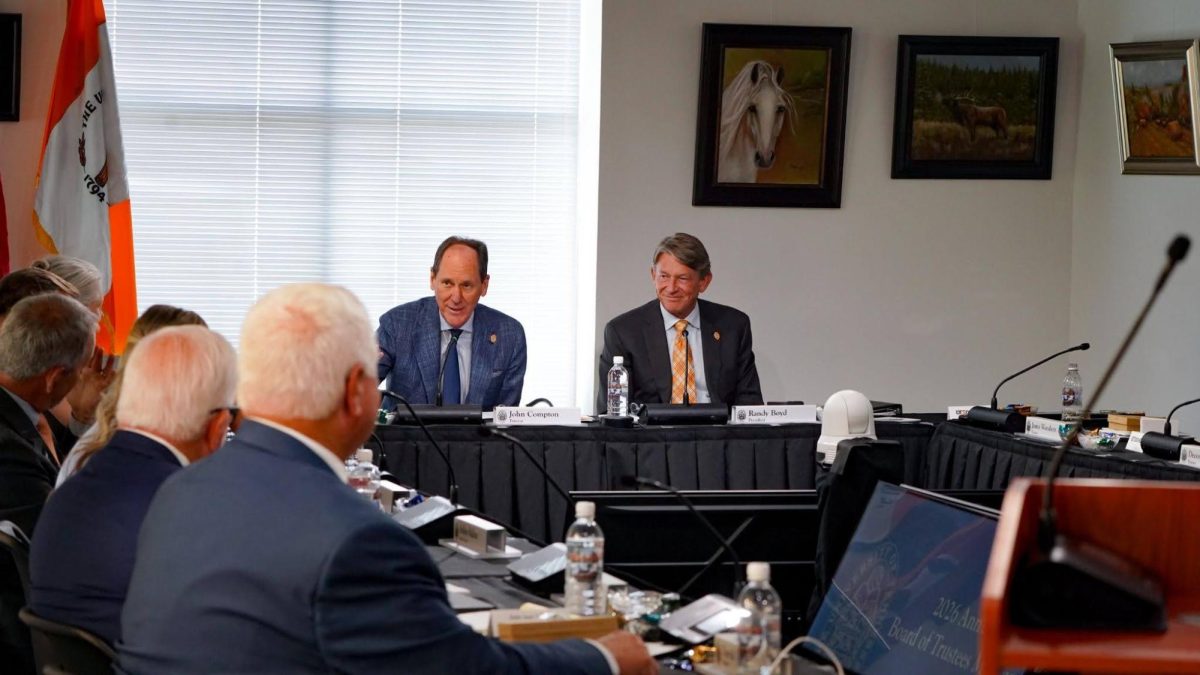
When state funding is strong, the Board of Trustees typically aims for a modest 2 to 3 percent annual tuition increase. In response to this year’s budget, the Board approved a 6 percent increase for most students to accommodate the loss in revenue.
As the funding issue is currently one of the primary concerns for UT students, Richter said SGA had to take a stand.
“You can’t really have an SGA if you are alienating part of your student base,” he said. “It’s important for the student government, but it’s more important for the student body in general.”
Graphic Courtesy of Samantha Smoak/The Daily Beacon