The Howard H. Baker Center for Public Policy doesn’t usually see much traffic on Saturdays, especially in the morning.
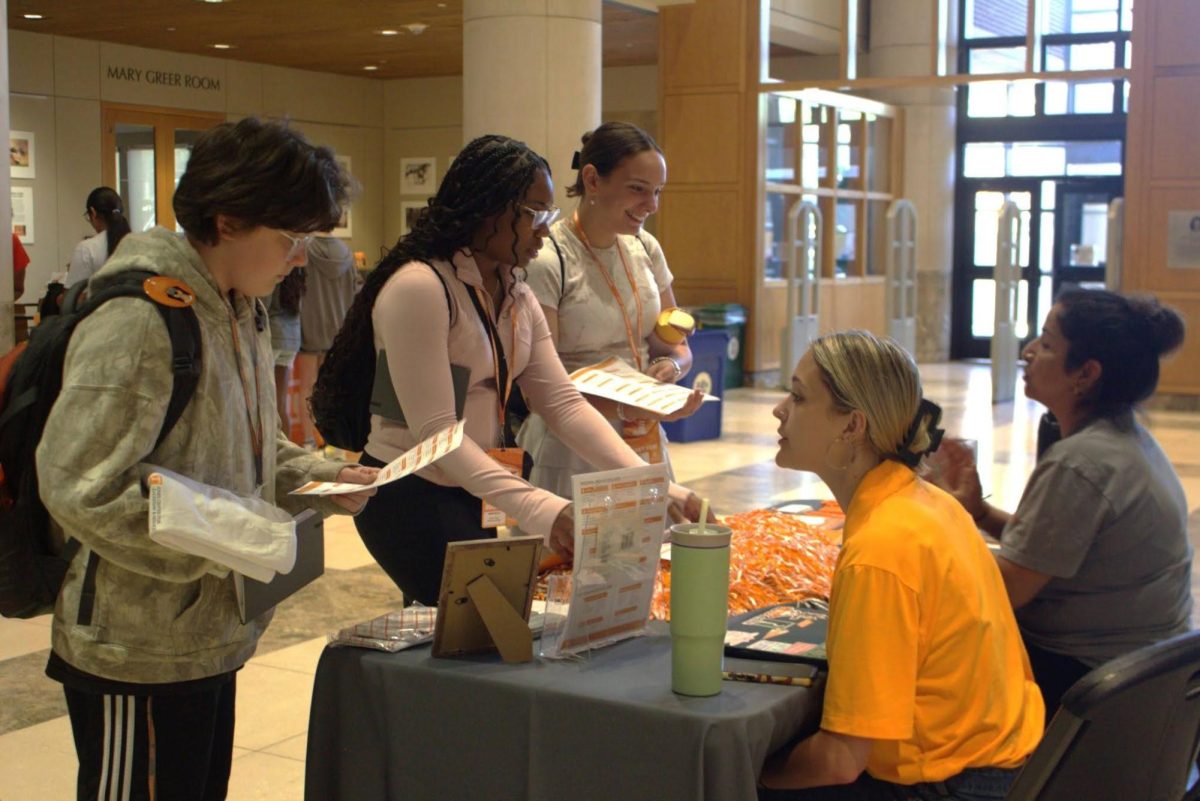
However, on Sept. 20, that was not the case. Forty students attended the “Red Zone Bye Week Workshop” hosted by Sexual Empowerment and Awareness at Tennessee, which offered a full day of panel discussions about topics like consent, rape culture and alcohol and assault.
“We hope that, throughout this day, you see how you can prevent sexual assaults on our campus and how you can apply this to your life,” said Nicky Hackenbrack, SEAT co-chair and senior in biological science.
Representatives from the Sexual Assault Center of East Tennessee Jill Akin and Kiley Compton prefaced the workshop with a Red Zone 101 presentation, familiarizing all attendees with a few basic concepts. After defining terms like consent and assault, they displayed a sexual assault pyramid that conveyed assault is perpetuated by attitudes, beliefs and norms. Compton said everyday occurrences like catcalling are indicative of a larger societal problem: rape culture. Rape culture defines the way society normalizes, rationalizes and even condones rape.
“It’s like saying, ‘Well one in four women get raped so carry pepper-spray.’ It’s just part of life,” Compton said. “We trivialize it and really downplay what’s happening.”
In a midday session titled, “When I Can’t Consent: Alcohol, Drugs and Sexual Assault,” University of Tennessee Police Department community liaison officer Kelly Mihalik spoke about victim-blaming, by which victims of sexual violence are partially or wholly blamed for the attack.
“Drinking does not cause rape, a perpetrator causes rape, but there are some tools that they use,” Mihalik said, naming alcohol as the number one date rape drug. “There’s a reason that usually women at parties drink free.”
Mihalik cited that one in 12 college-aged men admit to having committed acts that qualify as rape while intoxicated. Although Mihalik typically encourages victims to report crimes to campus security or UTPD, her perspective shifted after witnessing the impact of recent safety notices.
“I’ve seen what happens when we send Safety Notices out, I’ve seen what happens on Twitter and Yik Yak,” Mihalik said. “So put yourself in that survivor’s shoes, who probably has twitter and social media reading about something that happened to them yesterday. How likely are people to come forward seeing what happened to someone else?”
However, during the “Know Your Rights: Title IX and Campus Resources” panel, Title IX coordinator Jenny Richter said she, too, noticed a shift in attitude, noting the current national initiative encouraging college and university campuses to correctly report sexual assaults and raise assault awareness on campus. Richter credited students for pushing administration to confront these issues publicly.
“I’ve never seen this many reported this quickly in my time at UT,” Richter said, referencing the Safety Notices that have been sent out this year. “And, I think that’s a good thing. . . Maybe this awareness is causing individuals to report more frequently which means that you can get some assistance to them.”
The workshop also included panels about healthy dating relationships and sexual assault within the LGBTQ community. Sharvari Desai, senior in computer science, left the workshop feeling heartened.
“For me, it was all just really nice to talk about,” Desai said. “It’s really important for this to exist, because, even though I go out of my way to learn about these things, there are people out there who really need to hear it.”