His freshman year, Marc Cooper got hooked on catfishing.
Though an experienced trout and bass fisher, he was never drawn to the sport until an impromptu trip inspired him to create the first and only college catfishing club in America.
“I just loved it,” Cooper said. “It’s something fun that you can take anyone out to do with little to no experience, and they stand the chance of catching a fish the size of themselves.”
Now a junior in marketing, Cooper founded the UTK Catfishing Club last October with a couple of friends. After reaching out to a few members of the University of Tennessee bass fishing club and marketing it on Facebook, the club has gathered a group of more than 20 members.
“It’s going crazy—the growth of it,” Cooper said. “Anyone can do it and the fish are huge . . . You just show pictures to people, that’s all it takes.”
Cooper taught each of the club officers how to catfish. Daniel Baldwin, club secretary and sophomore in business exploratory, was on the bass fishing team at UT before switching over. Until the club’s creation, he had never been catfishing either.
“It’s different because it’s a whole new type of fishing,” Baldwin said. “You’re going out and you’re having to first catch bait—bass isn’t like that at all. You’re not up shallow and you’re looking for deep channels that would hold big, monster catfish. That’s a whole new experience right there.”
The club is currently in the process of networking with other universities to establish competitive, collegiate level catfishing. While they currently compete in local tournaments, placing second in the East Tennessee Catfish Anglers Tournament Series last year, they are reaching out to such universities as Tennessee Tech and Middle Tennessee State University to help establish clubs on their campuses. Eventually, they hope to travel to universities in other states and expand collegiate catfishing to the entire Southeastern Conference.
Cooper and Baldwin, however, agree that this has been a difficult challenge due to the emphasis classically placed on bass fishing as a competitive sport.
“We are the first people to come up with this crazy idea that if they’ve got competitive college bass fishing, why does it have to stop there,” Baldwin said. “Why can’t we think about other competitive fishing associations?”
Cooper notes that the search for sponsors has also been difficult.
“There is literally no other catfishing team anywhere else in the country — this is the first one…” Cooper said. “So, it’s going to take time to get things going…people are apprehensive and I understand that.”
However, Cooper is confident that the spread of catfishing is inevitable.
“It’s eventually going to start because it’s the fastest growing portion of angling in the United States right now, right behind bass fishing,” Cooper said. “You walk into a Wal-Mart and they have a cat fishing section — they didn’t have that a year ago.”
East Tennessee in particular is a popular location for catfishing, Cooper said. Due to the amount of forage space and lack of catfishers in the area as well as countless catch and release efforts, regional lakes make ideal homes for large catfish.
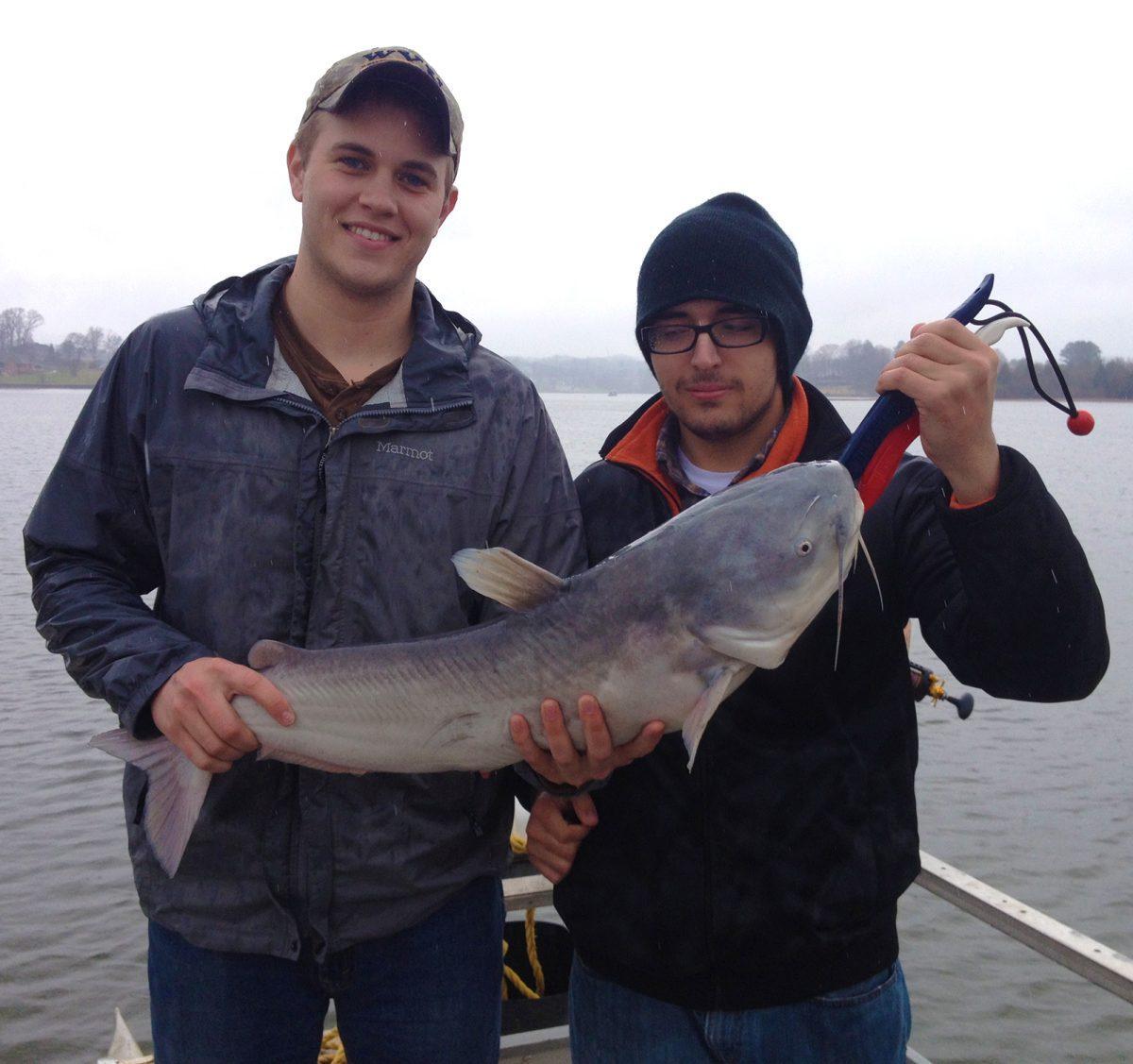
It is the sheer size of the catfish in East Tennessee that drew Cooper in initially. He said that on average, catfish can be 10 times as large as bass fish and, on certain trips, Cooper has witnessed members catch 100 pound fish in the Tennessee River.
“From a person who started off not knowing anything about fishing, clubs like this can really change you to have a positive outlook on life,” Baldwin said. “It’s giving me a hobby I can cherish for the rest of my life.”
Although the club’s goal is to ultimately establish the first collegiate level of competitive catfishing, Baldwin states their primary goal is always just to get people fishing.
“We just want our members to go out and have the chance to just fish, period, and have a good time,” Baldwin said. “We hope we can start something big here.”
To learn more about the club, visit their Facebook page.