The Daily Beacon set up interviews with two UT students to discuss the issue of hunch punch. The sources, who spoke on the condition of anonymity, will be referred to as Sarah and Kyle in this story.
It’s a brisk mid-October evening in 2013 – one that Sarah will barely remember.
She and her friends leave Presidential Court around 10 p.m. Laughing, they make their way to a fraternity party, just another night out with friends during the time of year when freshmen are still acclimating to the party scene so entwined with UT’s reputation.
One of Sarah’s friends texts the boy who invited them and asks him to come outside. It’s a football weekend, and lots of houses are having parties. No one wants to make a mistake and walk into the wrong one.
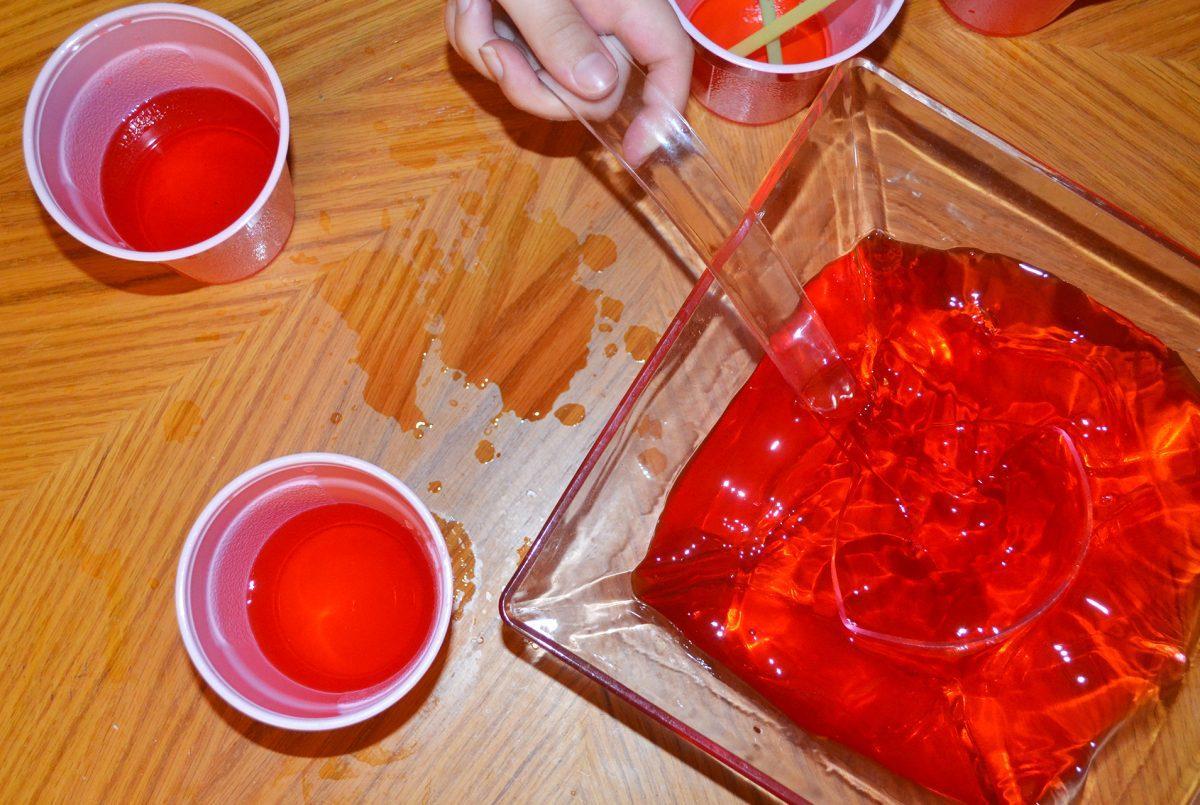
Once inside, Sarah and her friends begin to mingle as they make their way to the large bowl of red liquid. Hunch punch.
While being served, Sarah’s cup disappears into the hand of one of the hosts and is filled with the evening’s cocktail.
One and a half drinks later and Sarah and her friends have already decided to leave for their next destination.
Next door at another friend’s party, Sarah is now getting sick. In between throwing up, Sarah’s friends become concerned. They’ve seen her drink too much before, but this is very different. They begin to suspect something is wrong.
Recipe for Disaster
Hunch punch, a sugary alcoholic drink frequently served at parties, is not new to UT’s party culture.
Hunch punch is typically three to five gallons of what is essentially a mixed drink, but party hosts include any kind of hard liquor they can find.
In first-year studies classes, the Center for Health Education and Wellness specifically warns freshmen of the dangers of consuming anything they did not make themselves.
What worries people like Ashley Blamey, director of the Center for Health Education and Wellness, is the potency of common-source drinks and the lack of knowledge some students have about the potential risk involved.
“We would say (not to drink from common-source drinks) to anyone,” Blamey said. “If you choose to drink … then you control the amount of intake. And with a common-source you can’t control your intake (of alcohol) because you don’t know what’s in it.”
Taking Effect
“Sarah. Hey, Sarah! Wake up!” Sarah barely hears her friends as she sways and slowly falls to the floor. Higher brain function is gone. Someone grabs a fan.
If made with enough powdered drink mix and soda, the alcohol content inside hunch punch — usually at least two 750 milliliters of vodka and/or a 1.75 liter of grain alcohol — can be undetectable to the tongue.
While the drink is designed to mask any taste of alcohol, this also allows drugs to be discreetly slipped into drinks without the drinker’s knowledge.
Kyle, a fifth-year senior, has spent much of his time in college with his fraternity, whether planning philanthropic events or going to parties.
While hunch punch is hardly contained to Greek life, Kyle said he has helped host more than his fair share of events.
“One of the guys I live with has made (hunch punch) once a week for about two years,” he laughed. “And me? I’ve made it … 40 to 50 times probably?”
Although Sarah didn’t get sick at a party hosted by Kyle’s fraternity, he said he was shocked at the seemingly absurd question of whether hunch punch would ever be made to deliberately hurt someone.
“I don’t know a single fraternity that would be okay with somebody in their fraternity drugging someone,” Kyle said. “He’d definitely get kicked out, but he’d probably get the shit beaten out of him by a bunch of people for that happening.”
Time Lapse
Sarah is now slipping in and out of consciousness. Just as she recognizes the T: Late Nite bus taking her back to campus, she is suddenly in her friend’s car heading to the hospital.
Unsure of her surroundings or her driver’s identity, Sarah is having a panic attack and tries to escape. She fails and eventually is able to sign herself into the hospital.
“What’s a number we can use to call?” the ER nurse asks.
“47,” Sarah says.
Difficult to Prove
Insisting that Greek life would never tolerate drugging someone at a party, Kyle said he was doubtful the claims of spiked drinks match up with reality. Drink spiking, Kyle said, would most likely never happen in his fraternity, nor any other chapter on campus.
“People just get drunk sometimes, and they’re not drugged,” he said. “A lot of people who claim they got drugged didn’t get drugged when they actually go and do a tox screen.”
Sarah never had a toxicology screen. Once doctors assured Sarah’s friends she would be fine, they decided not to approve an added expense without her conscious approval.
The cost of the only strain of blood test capable of revealing levels of Rohypnol, or “roofies,” can be prohibitive to college students like Sarah, Christian Lawson, Emergency Room supervisor at UT Medical Center, said.
“The test takes a couple of days to get back,” Lawson said. “We have to send them to Nashville to get them done. And if it’s a lab test that takes more than a day, it’s going to be a decent amount of money, well over a couple hundred dollars.”
Beyond the possibility of running this expensive test, Lawson explained there isn’t much else the ER can do for people who believe they have consumed roofies.
“If someone comes in and tells us they think they’ve been given roofies, the first thing I would ask is, ‘Are you tired? Do you feel sedated?’” he said. “If they say yes, we can keep an eye on them for a couple of hours, but once they start acting appropriately again and are able to walk and protect themselves, they’ll be discharged.
“I don’t think there’s a good way of knowing (if someone is roofied).”
The Aftermath
Once it was determined Sarah’s health was no longer endangered, her roommate arrived to take her back to their dorm. However with nothing to prove definitively she was drugged, filing charges was nearly impossible, Sarah said, now nearly a year after the incident.
“It would have been extremely hard to prove that whatever happened was in relation to the frat party versus the other party,” Sarah said. “Even if I had just gone to the (frat) party, it would have been very, very hard to really prove it.”
With no evidence of drugs and nothing to prove which party it was that made her sick, any evidence at a trial would be seen as merely hearsay.
Despite this, Sarah has no doubt she was deliberately targeted that night. For her, confirmation came when she later heard about two other girls who had similar experiences after going to the same party.
“Fortunately we all had friends that took us out of there,” she said. However, Sarah worried there were other girls that night who did not have anyone to escort them to safety — whose stories may not be heard.
She advises anyone new to the party scene they “can never be too careful.”
“No one ever really knows what’s in it,” she said. “That’s why it’s called hunch punch.”