On Tuesday, Dec. 2, at noon, part of the UT community will walk out of scheduled classes, announce “Black lives matter” and gather in the Humanities Amphitheater — all in support of 18-year-old Michael Brown, who was killed by a policeman Aug. 9.
The protest was planned Tuesday afternoon during a “Moment for Dialogue” at the Black Cultural Center. The meeting was set up as a forum to discuss the controversial decision by a St. Louis County grand jury not to indict Officer Darren Wilson in the killing of Brown, an African-American Ferguson, Missouri, resident.
Wilson shot the unarmed Brown six times on Aug. 9, resulting in his death at the scene. The case was turned over from Ferguson police to the St. Louis County grand jury, which spent 25 separate days hearing evidence and testimonies. County prosecutor Robert P. McCulloch announced the decision not to indict Wilson on Monday night, sparking protests, looting and violence in Ferguson and around the country.
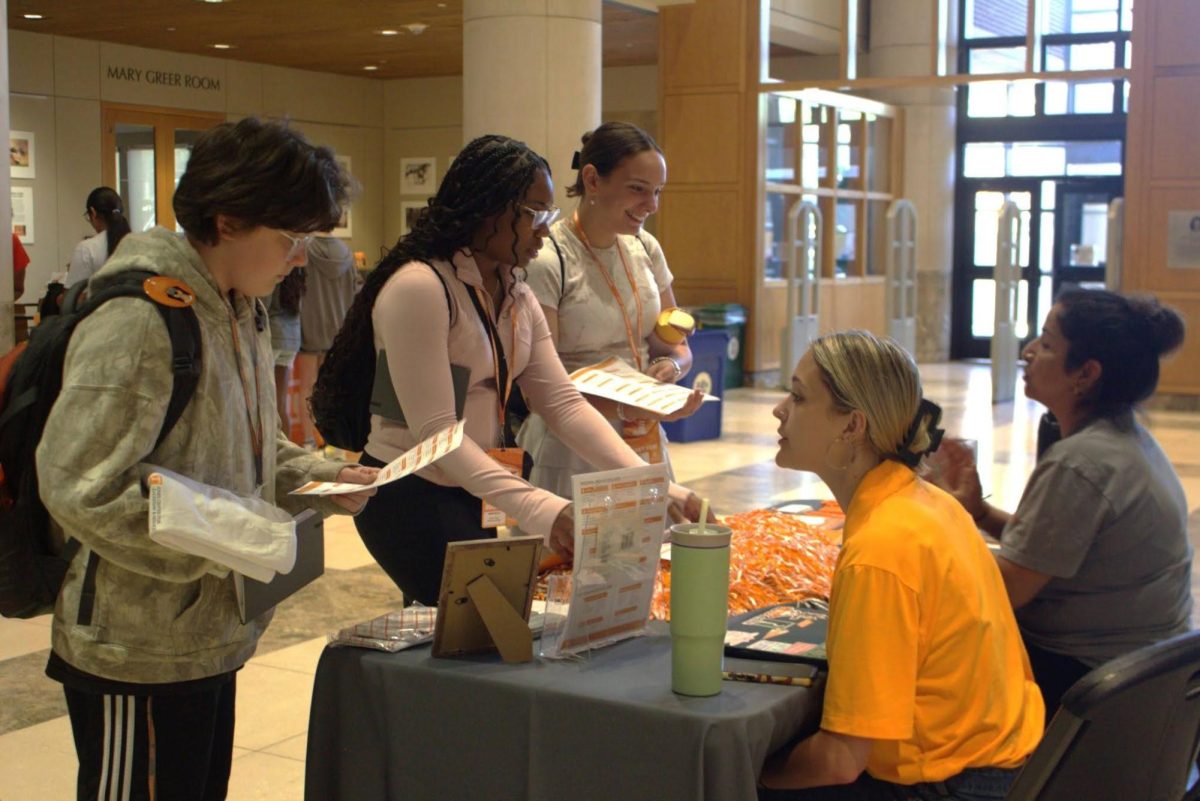
Seniors Rilwan Balogun, Christopher Smith and Laquesha Wilson were called upon as members of UT’s Summer LEAD Institute to take action. The three decided an open forum was necessary for students and faculty to process the decision, its effects on the community and an effective response.
“I knew that people really had a lot to say but didn’t have a better outlet than Twitter,” said Balogun, a senior in journalism and electronic media. “We wanted everyone to meet and vent.”
Around 50 people of various races crowded the Black Cultural Center’s multipurpose room, where the primary emotions were anger and confusion. Attendees spoke one by one about the controversial decision, with most saying it was a miscarriage of justice and a symptom of deep-seated racism still present in the U.S.
Deandra Gordon, a junior in Africana Studies, was one of the attendees who vocalized her dissatisfaction with the way the case was handled.
“When all this first started in Ferguson, I was really happy because all the different ethnic groups and social classes were coming together to show their support … usually the black struggle is just the black struggle,” Gordon said. “But then when I heard the verdict, I was like, all those people — black, white, Asian, Hispanic, indigenous — all those people coming together still did not stop this from happening, did not stop this man from getting away with murder.”
The discourse spanned from police brutality to how the actual crime scene was handled. Transcripts of the grand jury testimony indicated that the medical investigator, whose name was redacted from the report, did not take pictures at the scene because of a dead camera battery and did not take measurements like investigators usually do, according to CNN.
Natalie Greene, a third-year law student, took special issue with the law aspects of this case.
“In the law building, things are so heavy. I can’t even describe to you how it feels, because everybody there knows, understands what happened last night in a different way,” Greene said. “What happened was wrong, and I can give you a law lesson in why it was wrong. That’s just not how it works, and it defies everything we’ve learned in the past three years.”
After around half an hour of debate, the conversation turned to practical steps the UT community can take to change the dialogue around race to one that is productive and educational, with participants citing the need for more campus dialogue about these issues and better education on the United States’ history of racism and oppression of minorities.
At this point, the group decided on the class walk-out to honor Brown and protest the lack of trial with the saying, “Black lives matter,” which was created after 17-year-old Trayvon Martin was killed in 2012 by George Zimmerman, who was later acquitted.
Greene emphasized the response from UT students should be one of leadership in order to effect change on a national level.
“We do have a voice, and the government is not bigger than people,” Greene said. “What’s changed things in the past is young people. We should be the leaders. We make the decision about how we respond to this.”