April is a great month.
The sun shines brighter, the flowers bloom and there aren’t torrential rain/slush storms hindering my walk to campus.
But besides its aesthetic beauty, April stands out as an interesting month for what it means for sports. March Madness ends, the NBA playoffs tip-off, the MLB season hits full swing and the NFL Draft will have me glued to my TV for 72 straight hours with a bag of Smartfood White Cheddar Cheese Popcorn in my hands and my rump set firmly on the couch.
But this April, for me, has had a meaningful impact on my views on sports in that for once, with my college days winding down, I can reflect on the crooked system that I’ve helped prop-up: the NCAA.
Ever since I could remember, I’ve followed college athletics blindly, and I never stopped to question the consequences of my patronage.
Why should I have cared if an athlete was being exploited so long as I could watch him bust a long run into the red zone? Or why should the educational opportunities and personal development of a basketball player make me enjoy his jump shot any less? If the shot is good and the run “Sportcenter”-worthy, then nothing else should matter.
Looking back, it feels sophomoric to be so naïve about the product I was being spoon-fed.
Before I go too far, I feel I have to preface this by saying that I am a huge sports fan. I don’t care what’s on; I’ll watch it. But with that said, I feel like today, unlike any other point in my life, I’ve become a conscientious sports fan.
The NCAA doesn’t put the interests of their student-athletes, which is a term I think we brandish about too easily, above their own personal ones.
The NCAA is a non-profit organization, and yet billions of dollars are made off the blood, sweat, tears and futures of thousands of young men and women, whose efforts and hours are exploited to increase that profit margin. For instance, to stay eligible by NCAA standards, an athlete must keep a 2.3 GPA. That’s a C+ average, and while a C has long been considered “average” don’t we want our athletes to shoot for more than that? Just like every student that walks through the doors of a university, shouldn’t we tell them that the “average” isn’t what we want, but instead, we want more? To the NCAA, the answer is no, because with laxer standards, more athletes can concentrate on their sport and bring in more revenue.
It’s easy for me to sit at a desk and type these words about academic achievement when I don’t have to spend hours practicing to keep my education guaranteed. The life of a student-athlete is not an enviable one as they are expected to be a semi-professional at their sport while holding down a full-time job as a a student.
There’s only so many hours in the day, and let’s be honest, if it comes down to an hour studying, which might help you get an A in a Bio class versus an hour in the gym, which might help you get a spot in the NFL, which path would an athlete take?
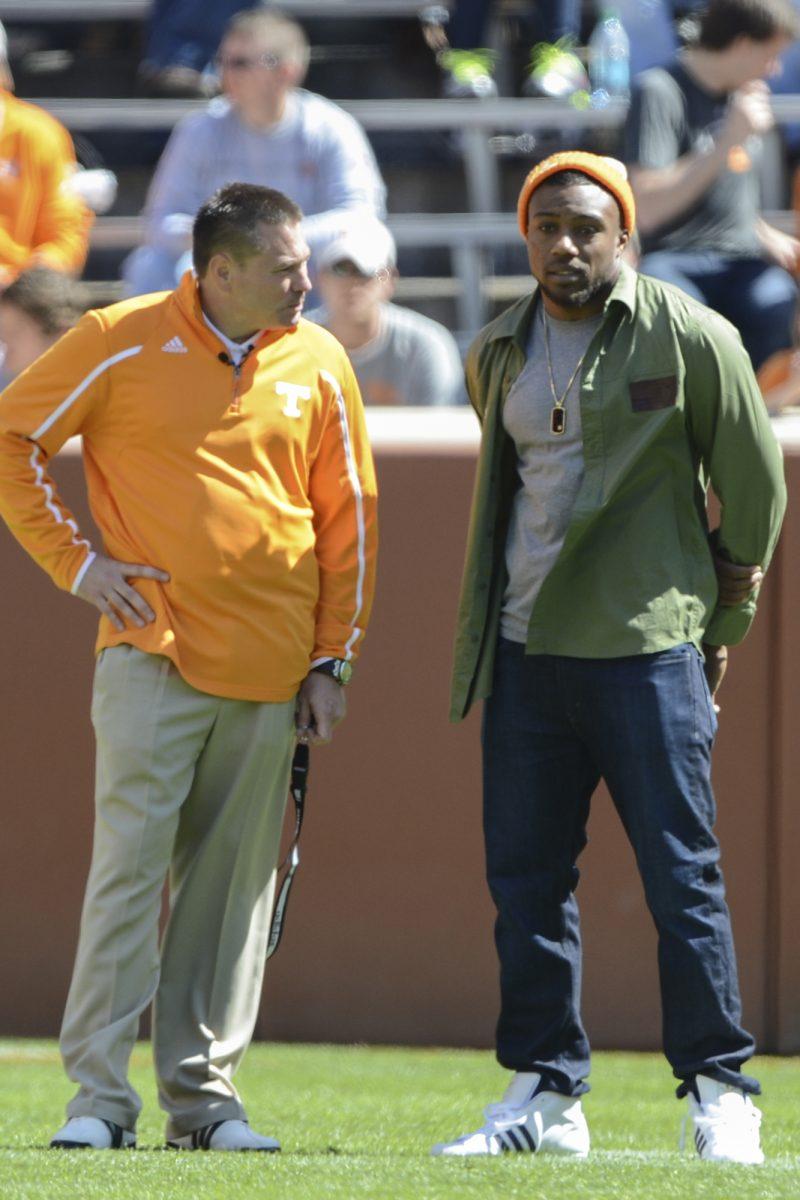
The issue with the NCAA and college athletics in general is the culture that it fosters. We like to say that we build student-athletes who will be going “pro in something other than sports,” but if you ask a Tennessee fan if they cared about Tyler Bray’s academic achievements versus his touchdown-interception ratio, which do you think would be valued more?
College athletics, just like the pros, is concerned with one thing: money. It’s about the bottom line and the wealth that these athletes generate through their work. But when an athlete’s eligibility is spent, and his or her playing days are over, will he or she truly be VFLs, or are his or her accomplishments slowly forgotten once the next big-name commits?
It’s a Ponzi scheme wrapped in neocolonialism on our own campuses.
Athletes earn their schools and the NCAA millions, and yet they don’t see a dime. They work their crafts to perfection and their bodies into tip-top shape, and yet it’s never really enough. In our world of superstar athletes standing as role models for middle schoolers playing ball on a blacktop, the student-athlete will always be torn between the dual role they are forced to occupy. We have created and nurtured this cognitive dissonance in every college athlete, as now they must somehow juggle two roles that rest at opposite ends of the spectrum.
And in between those polar opposites, the NCAA will line its wallets and fans will fill the stands, but I know, at least for myself, I’ll be watching differently.
— Preston Peeden is a senior in history. He can be reached at [email protected].