In the late 1980s, Gordon Gekko, Michael Douglas’ character in “Wall Street,” told Americans that “Greed is good.” Gekko’s assessment of the American economy examined a cause, “greed,” that would bring about a profit, “good.” He ignored the inevitable product of such behavior: guilt.
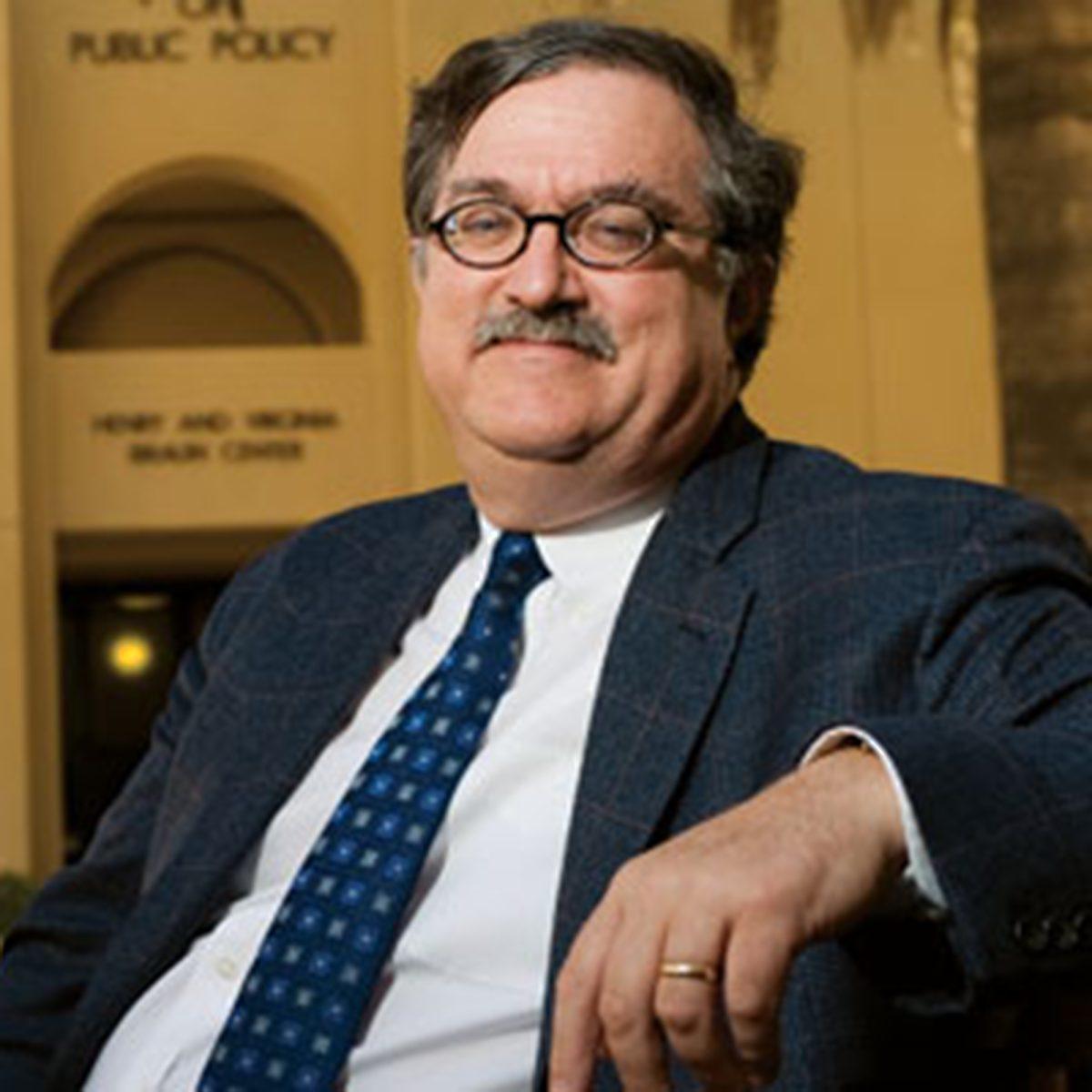
Dr. Wilfred McClay, who serves as the SunTrust Bank Chair of Excellence in Humanities and professor of history at UT Chattanooga, tackled that issue in his lecture, “The Mirage of Innocence and the Mirror of Guilt: Confronting the Dilemmas of a Postwar Moral Economy,” yesterday in the UC Crest Room. He asserted that the emotion, while complex, is essential to the human condition.
“To abolish guilt would be both futile and horrible,” McClay said. “It is the outworking of a healthy psyche. By and large guilt is part of what makes us who we are as humans. I would say that this is a characteristic of the West — that the West is so constituted as to criticize, even in a foundational way—its own institutions.”
McClay referenced this predisposition of the Western world in relation to Sigmund Freud’s belief that guilt follows societal progress. Beyond the nation-state, McClay examined the tenuous hold that guilt tightens around the individual and the victimhood some seek as a freeing release.
“Our achievements in the realm of science and technology have allowed us to exert an even greater influence on our existence,” he said. “It is impossible to exaggerate how often the deeds of men and women … can be traced to the need of human beings to feel morally justified … A victim is by definition a blameless person, whose condition is the fault of others.”
In dealing with the empirical emotion itself, he stressed the limitations of quantitative research.
“If I could summarize my book: guilt is becoming an evermore powerful and pervasive presence in everyday life … guilt is not a phenonmeon that lends itself to being properly measured … this is the nature of the beast.”
The Crest Room setting was intimate, but the group of professors and students in attendance fostered a lively debate about victimization, martyrdom and other phenomenon used to assuage guilt after the lecture. In response to various queries, McClay touched on the boundaries some individuals develop to cope with guilt in an increasingly atheistic global society.
“I think there are common-sense guidelines that we all end up adopting … but there is a potential infinitude of guilt,” McClay said. “Part of what I’m pointing to here is an empirical phenomenon. There is a kind of argument here that the one thing that the Richard Dawkins’ of the world don’t seem to understand is that religion doesn’t just provide an account of how the universe came to be. What religions also do is provide a way of transacting this moral economy of sin. This is one of the central tasks of any kind of religion in civilized society. We no longer have those means available to us. … I’m drawing our attention to a moral dilemma that we face.”
Dr. Vejas Liulevicius, director of the UT Center for the Study of War and Society, appreciated the opportunity to invite McClay for the special lecture.
“I would like to do the proper thing by thanking the Humanities Center here at UT for making this lecture possible,” he said.
McClay left the audience searching for the answer to guilt’s grip.
“(There is) a pervasive need to find absolution … conventional means of finding that absolution are no longer available,” he said.