Inflamed by injustice and impassioned by a sense of universal human rights, seven students marched off the elevator in Andy Holt Tower into the offices of UT System Presdient Joe DiPietro and demanded change.
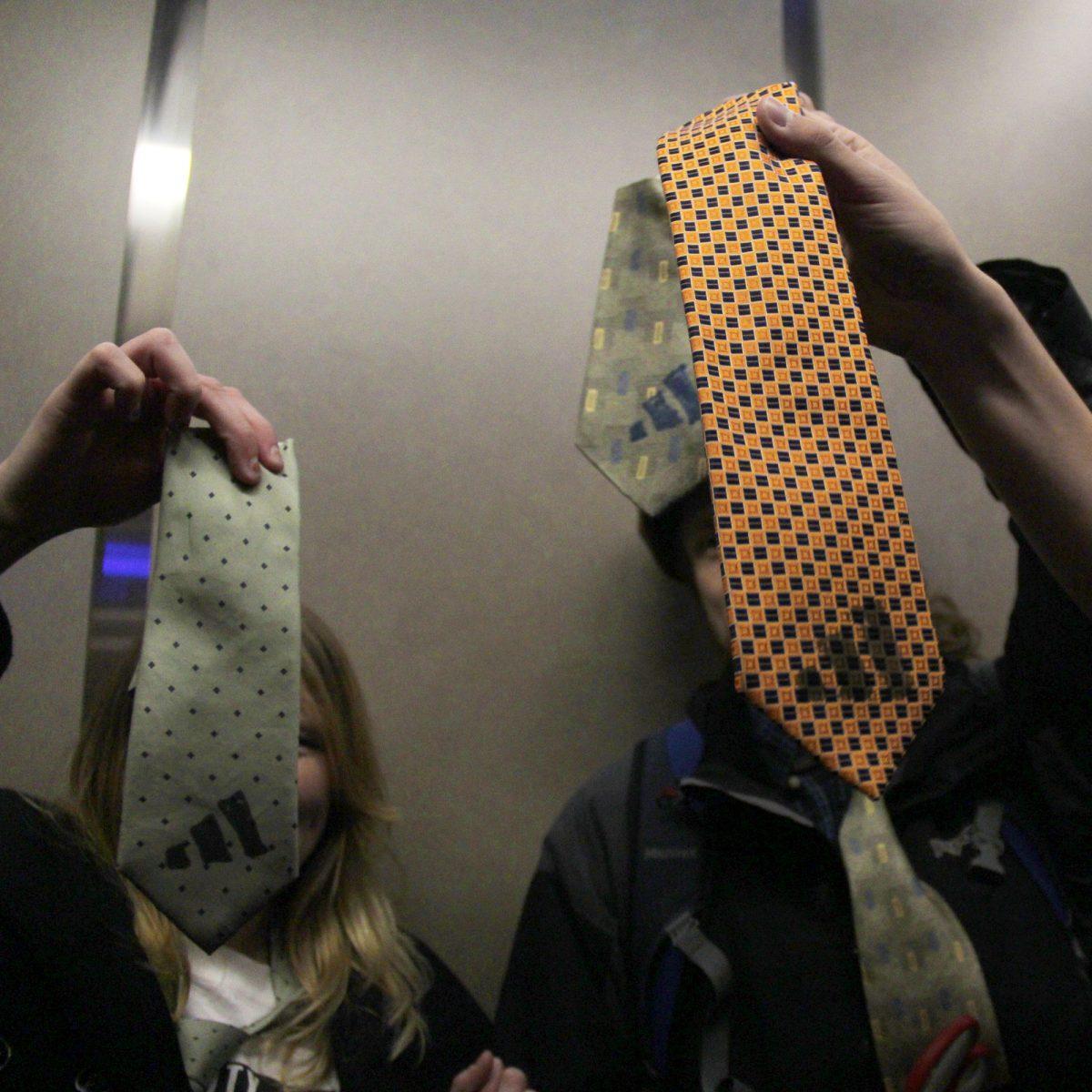
The group cut the neckties they were wearing as a symbolic gesture for the university to “cut ties” with the athletic apparel company adidas.
Led by Robert Naylor, a sophomore in global studies, and Kayla Frye, a freshman in global studies, the Sweat Free Tennessee Coalition, a coalition-based effort, has been campaigning, as Naylor put it, “to end our dependence on sweatshop as a university.”
Backed by other progressive groups on campus, such as the Progressive Student Alliance and the Students for Justice in Palestine, the Sweat Free Tennessee Coalition draws its inspiration from adidas’ refusal to pay their severance package payments to over 2,800 overseas workers.
“We want the university to cut ties with adidas, that’s our core campaign,” Naylor said. “And that’s because adidas has not paid the workers of the PT Kizone factory in Indonesia the 1.8 million dollars that they are legally owed in severance wages.”
Adidas took their actions a step further by paying these workers in food vouchers, which do little to solve the issues of these people’s immediate needs.
“You can’t pay your rent or your bills with food vouchers,” Frye said. “And a lot of them ended up having to sell the food vouchers for way less than they were worth just to get by.”
These violations, Naylor states, are enough for the university to justify cancelling their contract with adidas, which UT renewed in 2010 with an agreement to run through at least 2015.
“Universities are able to cut contracts if there is a violation of their labor codes, it is part of the contract,” Naylor said. “If a brand is found to be in violation of the contract, UT can choose to either not renew or just cut ties entirely. And we want to work with President DiPietro on a time frame of getting rid of adidas.”
Along with the symbolic gesture of “cutting ties,” Sweat Free Tennessee also dropped off a letter to one of DiPietro’s secretaries outlining their cause, which was the third such attempt to make contact with the system president.
“We dropped off one letter at the beginning of the semester and we dropped off another letter with cupcakes, hoping that he would eat the cupcakes and get trapped into the letter,” Naylor said “… I think we’ll be much more likely to get a meeting this time.”
For the participants in last Wednesday’s demonstration, the message and goals were clear.
“I believe that better working conditions in places like Indonesia are also going to bring better conditions to here in the United States,” said Jordan Welsh, a sophomore in history. “There won’t be as much outsourcing, and the standard of wages would be higher for workers in both Indonesia and the U.S.”
For junior sociology major Justin LeDuc, the demonstration was about more than just business figures and terms; it was a matter of humanity.
“I am a believer in democracy and direct action,” he said. “Anything that has to do with humanity, human rights and basic needs, I’m in on it.”
Drawing inspiration from successful campaigns against Nike and Russell Athletic, Sweat Free Tennessee is hoping to make UT the seventh school to cut ties with adidas over the dispute.
“These contract cut campaigns have been effective in the past and I think that if UT stepped up it could help get these workers their money,” Naylor said.
The group recognizes the overarching issue of the prevalence of sweatshop labor throughout all major athletic apparel companies.
“Most clothing brands that do sponsor schools are made in sweatshops, but there are alternatives,” Naylor said.
Once such alternative is the Dominican company Alta Gracia, who not only pay their workers on the basis of a living wage but have also recently begun to have their goods sold at the UT Bookstore.
“If the bookstore is barren once adidas is gone, then we’d want to fill it with Alta Gracia,” Naylor said.
Ultimately, the Sweat Free Tennessee Coalition wants to change the way people look at what they wear and the cost of those garments that aren’t represented on their price tags.
“I think it’s important to raise awareness for consumers to make good choices and to be more aware of where the things they buy are coming from,” LeDuc said. “As well as it’s important for big institutions and governments to pay attention to this so that we can solve the problems for people who are suffering.”