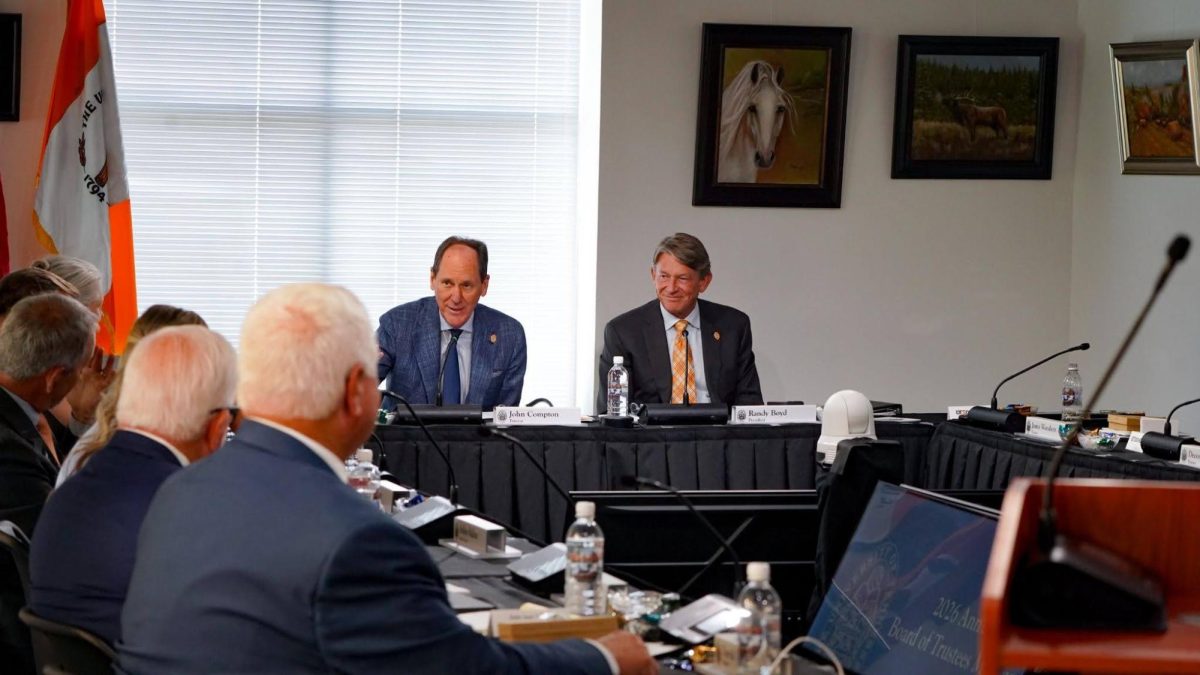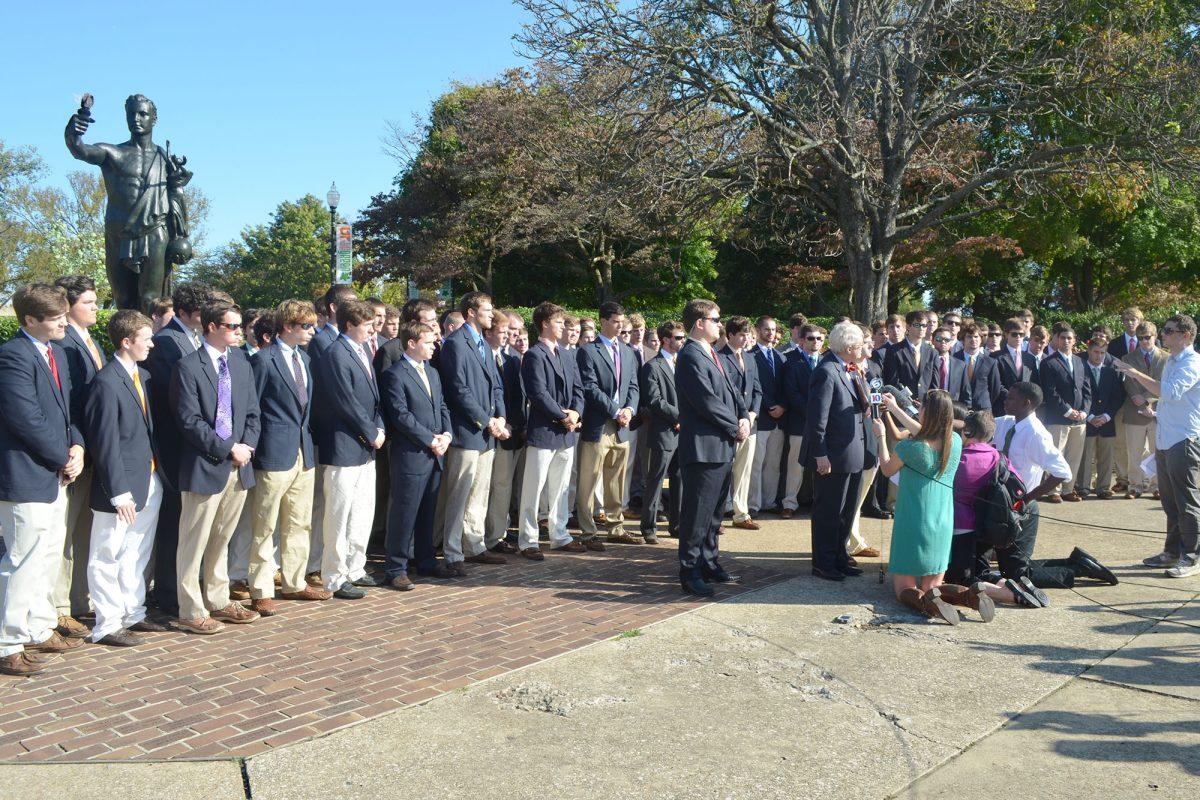
The Fraternity and Sorority Life Task Force, born out of last fall’s butt-chugging fiasco, released their recommendations to enhance the quality of UT’s Greek life Wednesday.
Faculty, student and alumni representatives shared their support for leadership training, in-house fraternity management and protection for Good Samaritans.
“First we are just very pleased with the amount of effort and energy that a really large group of people put into this: there were alumni, faculty, students and staff, 25 people in all,” Jeff Cathey, associate dean of students, said. “We are very optimistic some of these things can help us in facilitating a sorority and fraternity community that is really engaged in providing a positive experience for our students.”
SGA Vice President Terry Nowell highlighted the team’s focus on education and rewards to strengthen Greek life, specifically those who lead it.
“We have proposals involving education of Greek members and officials, so that they are learning about their role before they go into it and not just learning on the job, which is something that has been a problem in the past,” he said.
Cathey believes this approach will receive a positive response.
“I think a lot of students who are leaders out in the organizations at times struggle with keeping some of their peers on track, frankly, and at times I think welcome a little more direction from the university. And there may be some of those who feel like that’s not what they wanted their Greek experience to be about, and maybe it’s not for them then. ”
The committee recommends some of this direction come from live-in fraternity house managers.
“It’s been done in the past in both fraternities and sororities and it would be something we feel is very helpful in making sure that order is maintained,” Nowell said. “A lot of the models we have looked at do have live-in house directors, and fraternities in the past have had live-in directors like the sororities do currently … that is something that is great for the fraternities overall. ”
Beyond the practices inside fraternity houses, the task force recommended reprieve for students who seek emergency medical attention for their peers.
“A Good Samaritan policy is something we feel is important and vital to the university in making sure that students don’t feel afraid to do the right thing,” Nowell said. “If you are to take someone to a hospital, (this would make) sure you are not punished by the university for any wrongdoing.”
In addition to these polices, committee members called for revamped chapter review programs and increased roundtable discussions between fraternity advisors and administrators.
“One of the most important things that I learned when I was in a fraternity thirty something years ago was how to bring about change in a group of people … What I learned was is that if you have problems within a group, the way to deal with it was to talk about the problem … and I learned that in my fraternity,” Tom Hale, Phi Delta Theta alum and task force member, said.
Troy Lane, UTPD chief of police, appreciated the task force’s holistic approach.
“I think it was good,” Lane said. “Rather than looking at issues from just my perspective I was able to look at them from many different perspectives. … I know it will be easier to effect change that way than it will be just through sanctioning or enforcement. So I’m hopeful, I’m positive it’s going to make a difference.”