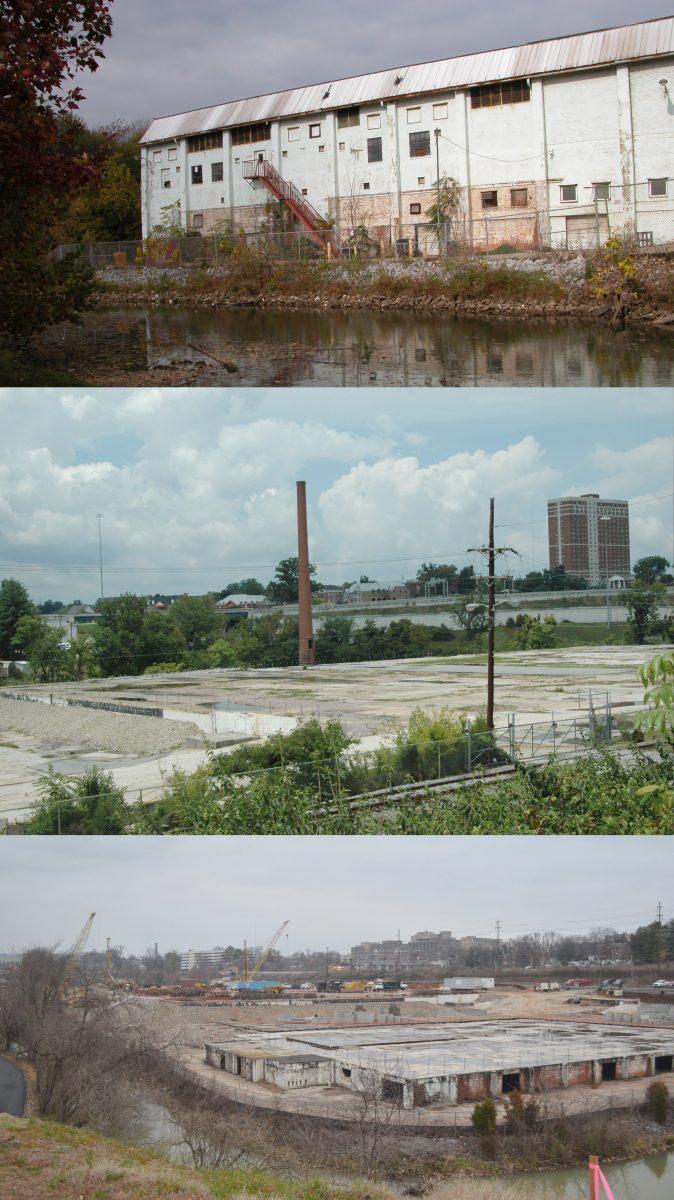
The large patch of dirt and concrete beneath the bridge to the Agricultural campus is nothing new to current students.
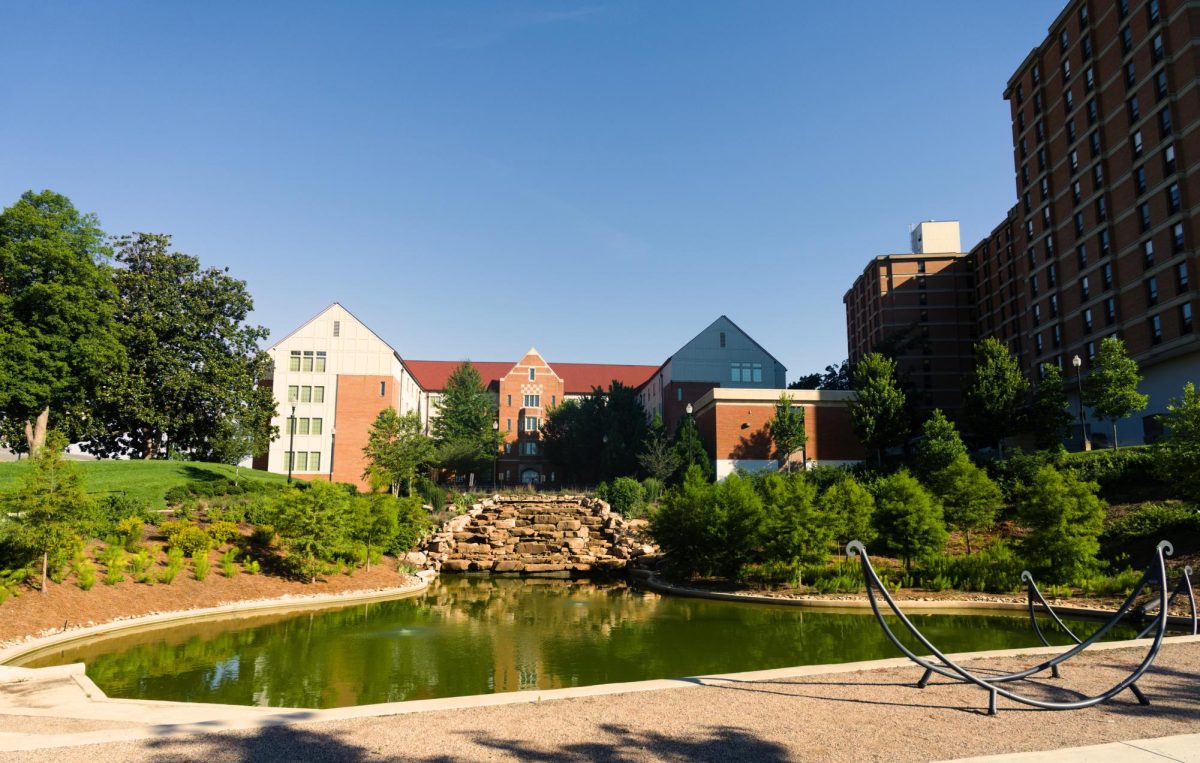
But the future of the previously unused and unknown space is bright with construction of a Walmart, Publix and a parking garage underway. Students will have the opportunity to wander over from Presidential Court and other areas of campus to retrieve groceries and other necessities without the aid of a vehicle.
However exciting and productive the future may appear, the site’s past continues to haunt from below ground.
Dr. Larry McKay, a professor and the head of the Department of Earth and Planetary Sciences, knows of the site and its extensive and dirty history.
The site below the bridge, which is located at the intersection of Cumberland Avenue and Volunteer Boulevard, was previously an industrial site. For more than 100 years, the industrial site was used to create brass bellows by the company Fulton Bellows.
The industrial site was eventually shut down in 2005, but its long-term environmental effects remain deep-rooted beneath the soil.
The environmental problems specifically lie with subsurface contamination and groundwater contamination. During the duration of its existence, the Fulton Bellows plant used carbon tetrachlorides, trichloretheylene (TCE) and perchlorethelyne (PCE) to clean and prepare the bellows for painting and production. In turn, some of these dense non-aqueous phase liquids (DNAPL) ran off the concrete and contaminated the soil.
These solvents are particularly hazardous to environmental degradation, because if leaked out of a broken tank, they will sink beneath into the soil. From the soil, the solvents may sink into the water table; because of their density, the chemicals will move lower and into the bedrock leaving a hazardous residue on the soil and rock.
“In the early to mid 20th century, these chemicals weren’t really considered hazardous, at least not how we consider them now,” McKay said.
Shortly after the discontinuation of the industrial site in 2005, GeoSyntec Consultants, a third party environmental consulting firm from Knoxville, evaluated the site and decided that removing the contamination was not feasible. Considering the deep contamination of the bedrock, all parties involved decided to proceed with a monitored natural attenuation plan.
A monitored natural attention plan is where a group monitors the contamination of the groundwater but does not actively try to remove it.
“The key is to monitor and make sure it’s not getting worse,” McKay said.
The contamination of the Fulton Bellows site may be problematic to the future Walmart and Publix development.
“Some of the challenges that have to be considered in that kind of development is to be very careful not to mobilize contamination that is still under the site,” McKay said. “The goal is to not do anything that will cause contaminants not to start moving out more rapidly than they are now.”
McKay believes that the real issue with the pollution is exposing construction workers to the contaminated soil. The current state of the site is not as much of a threat because the concrete slab was left of the old building, keeping the contaminants relatively contained.
Another professor raised alternative concerns with the development.
Dr. Michael McKinney, a professor and the director of the environmental studies program, sees fault with the future of parking and congestion of the Walmart and Publix.
“This development and eventual existence will not help with noise and will make us even less pedestrian-friendly,” McKinney said.
McKinney also raised concerns with the future of the Fulton Bellows site, imploring UT students to do the same.
“The campus community should care because this we are trying to make our campus a leader in environmental stewardship and sustainability,” McKinney said. “More automobile traffic, congestion and putting large supermarkets on a highly contaminated site does not exactly send that kind of message or set that kind of example.”