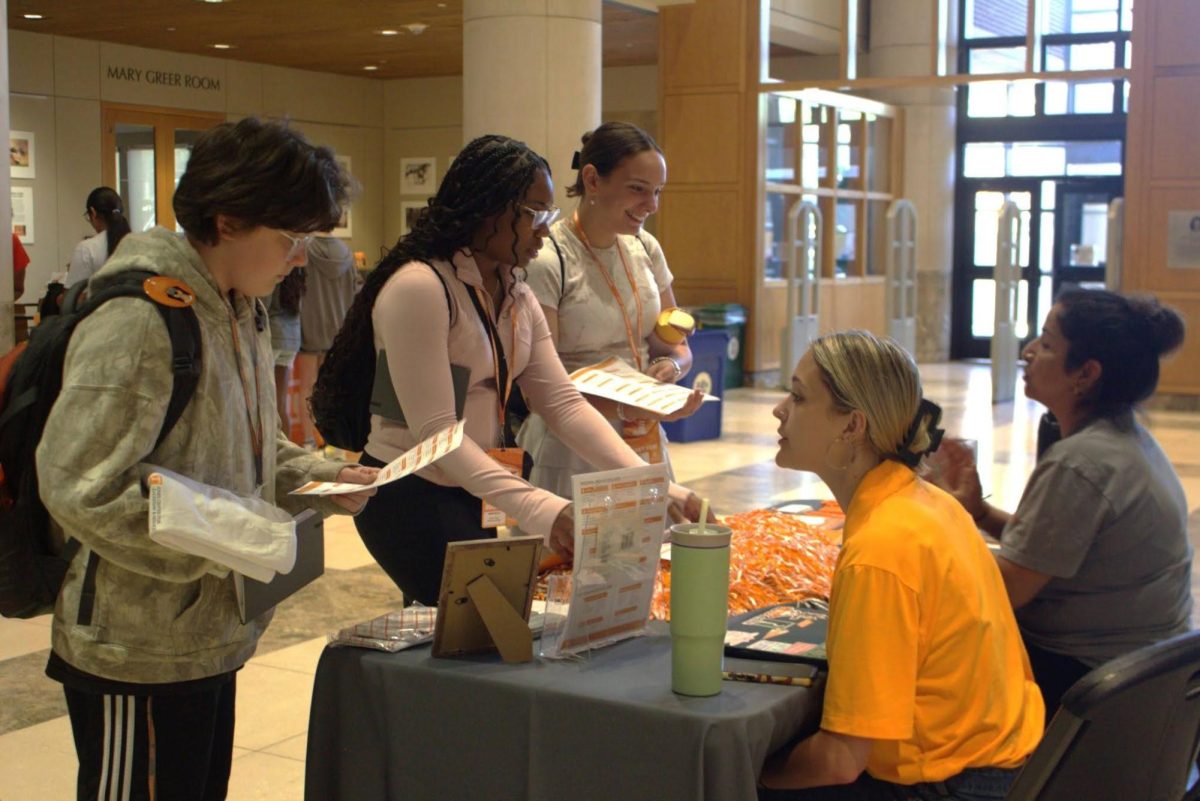
The UT Ambassador Scholars program finished its first selection process for new work-study-based ambassadors this past week, with only 16 of the 23 selected candidates qualifying to participate.
The program received 68 applications, according to the Department of Undergraduate Admissions. Nancy McGlasson, assistant dean of enrollment services and director of undergraduate admissions, has been with admissions for the past 14 months and said the new program was her idea and that several outside sources were used when deciding on the final model.
“We just picked a piece here and a piece there,” McGlasson said. “It’s been something we have been working on since I first arrived (in the department).”
One of the pieces deciding the formation of the new program was the university’s Scarabbean Society, according to a publication by the society obtained by The Daily Beacon. The newsletter shows that the decision to change the ambassador’s program could have been decided well over a year ago. The Scarabbean Society, or Scarabs for short, is a long-rumored secret campus society made up of students and administrators.
The Daily Beacon received a Feb. 29, 2002 edition of “Orange Slices,” a newsletter written by the Scarabs, that was sent to McGlasson. The newsletter said the society was “still meeting with administration regarding a revamped and re-energized ambassador’s program.”
McGlasson and Enrollment Services Dean Richard Bayer have both stated the changes to the program were based on the need for more time commitment from the student ambassadors and not due to the quality of work being performed.
“(The current ambassadors) are a good group,” McGlasson said on April 21. “We just don’t want to take advantage of them because we are going to need them to do more around the office … We don’t want to use and abuse them.”
According to information obtained by The Daily Beacon, an e-mail on Dec. 18, 2002, from Christy Gaines, a former ambassador and recent UT graduate, to McGlasson, said the ambassador program was seen as faulty from outside sources. The e-mail points out problems with the old system, such as “lack of prestige” and student accountability, and suggests answers to those problems.
“Start over with a clean slate,” Gaines said in the e-mail to McGlasson. “I think this is the only way to go forth with the vision that your department shares is to start completely over with the program. Hold interviews for a group of 30 students that would be the core of this new program.
“It is hard to teach a(sic) old dog new tricks, especially if they are lazy.”
The same view was also shared by Vice Provost Anne Mayhew. In a copy sent to The Daily Beacon, Mayhew wrote to President John W. Shumaker in an e-mail on April 2, stating, “Although we have tried not to offend those currently in the program by not saying so in public, the fact is that the ambassadors have not been doing an adequate job.
“It was an honor for students to be named an ambassador but not a job that many of them took seriously. It had become a student-run club. To make the program what we need it to be required that the current program be disbanded.”
Mayhew’s e-mail also said a smaller number of paid ambassadors would solve the program’s problems.
Nine of the current ambassadors made it through the process. Inimary Toby, a current ambassador who was selected for UTAS and qualified for work study, said the program should work in the long run but was unfair to the previous group of volunteers.
“The only reason most of the old ambassadors didn’t qualify wasn’t based on work ethic; it was because they didn’t qualify for work study,” Toby said. “It’s not fair, but UT wanted to go a different route. There were a lot of great people in this program, and its hard to see them go – these were the people who trained me.”
Toby said the new program brought several changes unseen in the former program.
“I was sitting in my interview with two guys who both said when asked why they were applying, ‘We’re doing it for the scholarship,'” Toby said. “You never would have heard that before. It would have been ‘I’m doing this to give back to the school or to welcome new students.’
“This first year will be a trial and error. You try it with the 23 you have and see how productive they are.”
Former ambassador Brandon Long said he approved of the new changes because it would allow a new group of students on campus to give back to the university.
“I think it will give a different group of people the opportunity to take advantage of something they haven’t been able to before, because the fact of the matter is some students have to work,” Long said. “It’s sad at the same time for the volunteers giving service to the university, but those folks doing it for free are just going to do something else and be great at it.”
Whether or not the program will affect admission to the university is yet to be seen, but according to George Warren, a freshman and inaugural member of UTAS, the program will open the door for new students.
“I guess it’s a two-way road,” Warren said. “I feel sorry for people who really wanted to help, but putting (the program) on a need basis would help incoming (students) relate to those students. A lot of students are need based, so this will give them someone to talk to.”