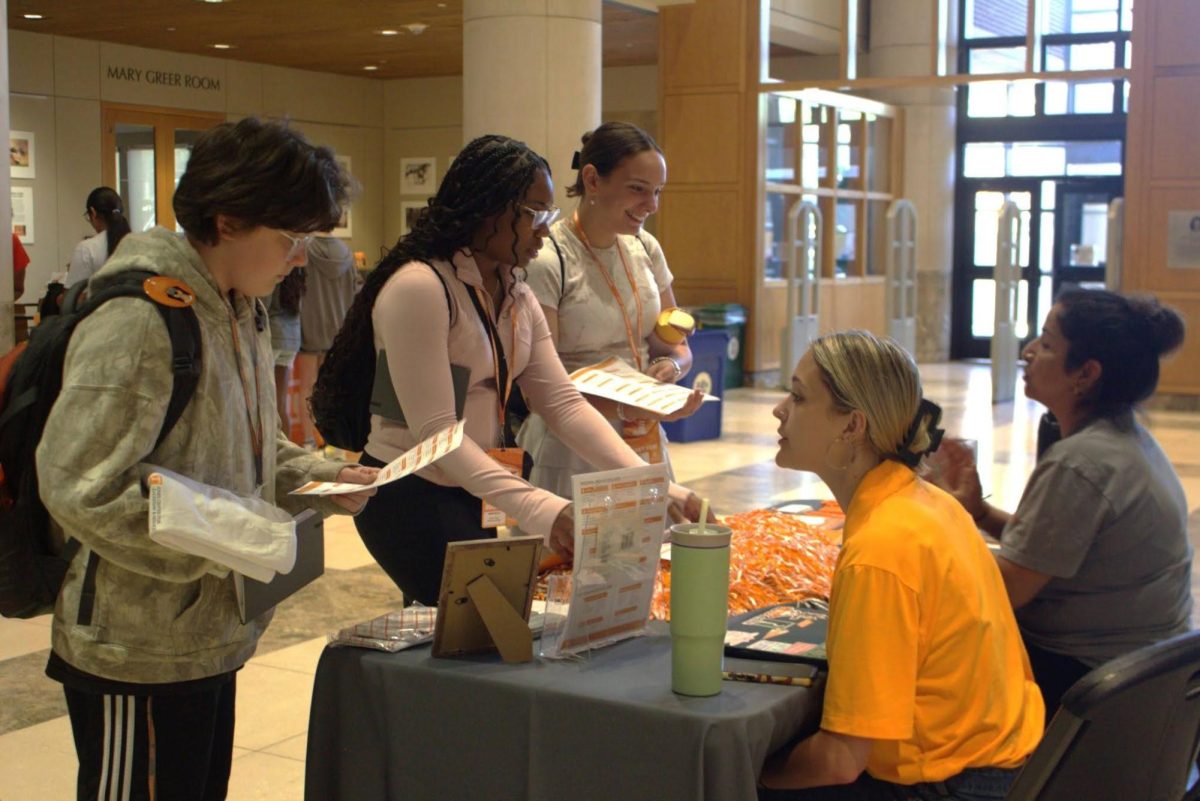
The UT Office of Admissions is taking applications for its new scholarship-driven ambassador program, but according to current ambassador Adam Riddle, the number of those applications returned will be slim.
“I don’t think they’ll get more than 10 applications,” Riddle said. “They’ve changed the system in a way that alienates all of (the current ambassadors), so when they come back to us for help, we won’t be willing to.”
The changes to the ambassador program include a new work-study-driven program allowing university student ambassadors to receive financial aid while giving tours and working in the admissions office. The problem, Riddle said, is that only 11 of the 45 current ambassadors qualify, meaning the admissions program will be turning away volunteers for the positions.
“If it ain’t broke, don’t fix it,” Riddle said. “I’ve only been in the program since November, and I don’t see the point in changing things if we are doing our jobs. We recruit great students and represent this campus on our own time, why change that?”
Enrollment Services Dean Richard Bayer, who helped make the decision to change the program and who delivered the news to the current group of ambassadors, said the changes weren’t due to the quality of the current group of student volunteers, but due to budget and time constraints.
“It wasn’t a question whether the ambassadors were doing a good job, because clearly they are,” Bayer said. “We just felt like we would be asking them to do too much without receiving payment. … The only way we logistically could compensate all the applicants was to go through the work study program, meaning some of the current students wouldn’t qualify.
“We feel these changes would be better for the long run to deal with the budget crunch and to meet President (John W.) Shumaker’s scorecard requirements.”
Bayer said his department had to compensate for $32,000 in lost funding, resulting in the loss of some part-time staff positions. He said those positions would be filled by the new ambassadors.
“The new program will place the students in a more active role in the admissions office,” Bayer said. “We just can’t make volunteer students work office hours without compensation. We want them to focus on academics, and with the work-study program we get the best of both worlds.”
Bayer also said while only 11 ambassadors qualify, 19 had yet to apply for need-based scholarships, and their qualifications were still uncertain.
Riddle isn’t the only ambassador who doesn’t agree. According to current Ambassador President Amanda Tolhurst, most of the current students would be willing to sacrifice time for the program.
“We already have the passion to take time out of our schedules for the university,” Tolhurst said. “Why wouldn’t we want to help in the office? We understand there are budget issues, but does it make sense to turn away volunteer workers who don’t cost the program anything?”
Tolhurst said most of the current ambassadors had volunteered to purchase their own supplies to keep the program the same. Thirty-three new ambassadors were just added in January, and Tolhurst said it wasn’t fair to those students to “get the boot.”
“I don’t think they will get as good of a quality of student ambassadors if the program changes,” Tolhurst said. “We weren’t given any input into this decision, and we are the ones doing the job – not them.”
Not all the current ambassadors agree the changes will negatively affect the program. Current ambassador M.G. Bailey said the changes would rule students who are apathetic about the program.
“I think that it will help the admissions office in many ways,” Bailey said. “If the admissions office needs a student to help with a college fair, they can send a student no questions (asked), because the student will be paid. It is easier to make a student go if they are paid.
“It will also help admissions recruit better and brighter students. I also think that it will reward the ambassadors that want to give several tours and work hard.”
Laura Bilderback, graduate student in the Office of Admissions and adviser for the Ambassador Program, said she was proud students were addressing issues they see as unfair.
“I’m glad that the students are making a point to have their voice heard,” Bilderback said. “The new program will allow some of them to return and contribute, but it will take some time to see if it is effective.”
Under the new system, students will receive a $500 scholarship and hourly pay. Bayer said he understood the negative reaction and would work with the students to find them a place in the program.
“We understand that people don’t always accept change right away, but over time we expect them to understand,” Bayer said. “Even if some of the current ambassadors don’t make it into the new program, we will find ways for them to contribute to the university. We don’t want to turn anyone away.”
Riddle said it would be difficult to repair the damaged relationship.
“They’ve burned those bridges,” Riddle said. “You have 45 people who have given their time and energy to see the best for UT. I think this shows just who the real volunteers are.”