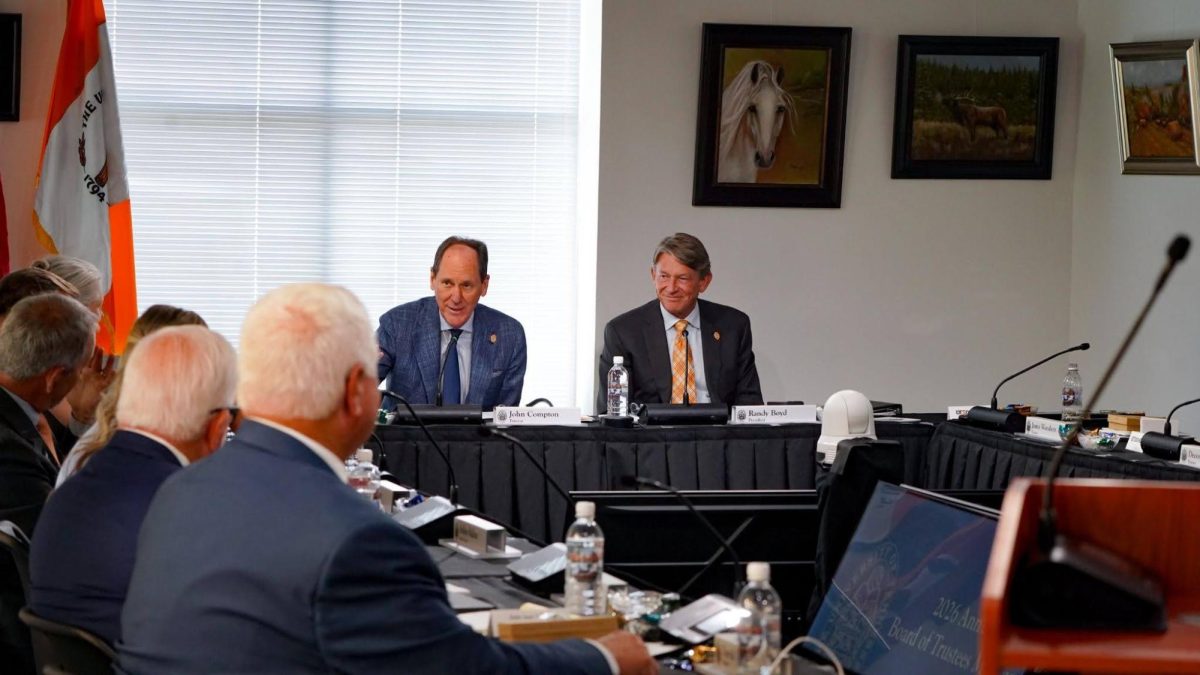
NASHVILLE – The University of Tennessee will receive a $38 million reduction in state funding, according to Gov. Phil Bredesen’s proposed budget for the 2003-04 fiscal year.
Bredesen introduced the budget to Tennessee’s General Assembly on Monday, outlining a nine percent cut in state appropriations to UT and $102 million reduction to Tennessee higher education as a whole.
“We face painful choices,” Bredesen said in his address. “I am proposing cuts that no one likes – including me.”
Bredesen’s plan calls for a $132 million reduction in state appropriations, marking only the third time appropriations would decrease in 30 years.
The new budget doesn’t include new taxes, something Bredesen said required using state reserve funds.
“We will face a deficit in the current fiscal year of a half-billion dollars,” he said. “To get through it, we are going to have to use up our reserves, including the rainy day fund.”
The new governor’s plans didn’t agree with everyone in attendance. Jason Bell, Nashville representative for Tennesseans for Fair Taxation, said using reserves would be damaging to the state’s future.
“There are major structural problems with the state, including higher education,” Bell said, “and nine percent cuts are simply unacceptable.
“(Using the funds) is going to be severely detrimental to Tennessee’s future, and is going to cost us far more than by saving right now.”
Bredesen said Tennessee needed to boost its revenue to assure no future shortfalls occurred.
“It is vital that we not overspend our budget next year,” Bredesen said, “and it is important that we do better than our budget so that we can begin the process of building our reserves back to a safe level.”
The focus of Bredesen’s plan is to protect K-12 education and increase teachers’ salaries for basic education.
“In the current fiscal year, nine states, including out neighbor, Georgia, are planning to cut K-12 spending … In seven states, some rural school districts are shifting to a four-day work week,” Bredesen said. “I am proud to say that Tennessee is protecting its public schools.”
Bell applauded Bredesen’s efforts to help primary and secondary education, but said tax reorganization was still necessary to protect the other government agencies and services.
He said the current sales taxes were harming Tennessee’s economy, and a new state income tax was needed to reasonably address taxation.
“(An income tax is) the only way we can provide the services Tennesseans want,” Bell said, “while at the same time taxing all Tennesseans fairly.”
Bredesen called his new proposal the “family budget” because he wanted a common sense and realistic approach to the state’s monetary needs.
Bell said the analogy was inaccurate.
“One of the things families are trying to do is have reliable revenue streams,” Bell said. “Families are not usually content to sit around and watch their bills increase if the revenue is not increasing.”
Bredesen also mentioned that his proposal would address rising costs and restructuring of TennCare.
“(TennCare) is innovative, and it is helping hundreds of thousands of Tennesseans,” Bredesen said. “It is also deeply troubled, and it is one of the most significant sources of our fiscal woes.”