A piece of history came tumbling down on Tuesday, Aug. 30.
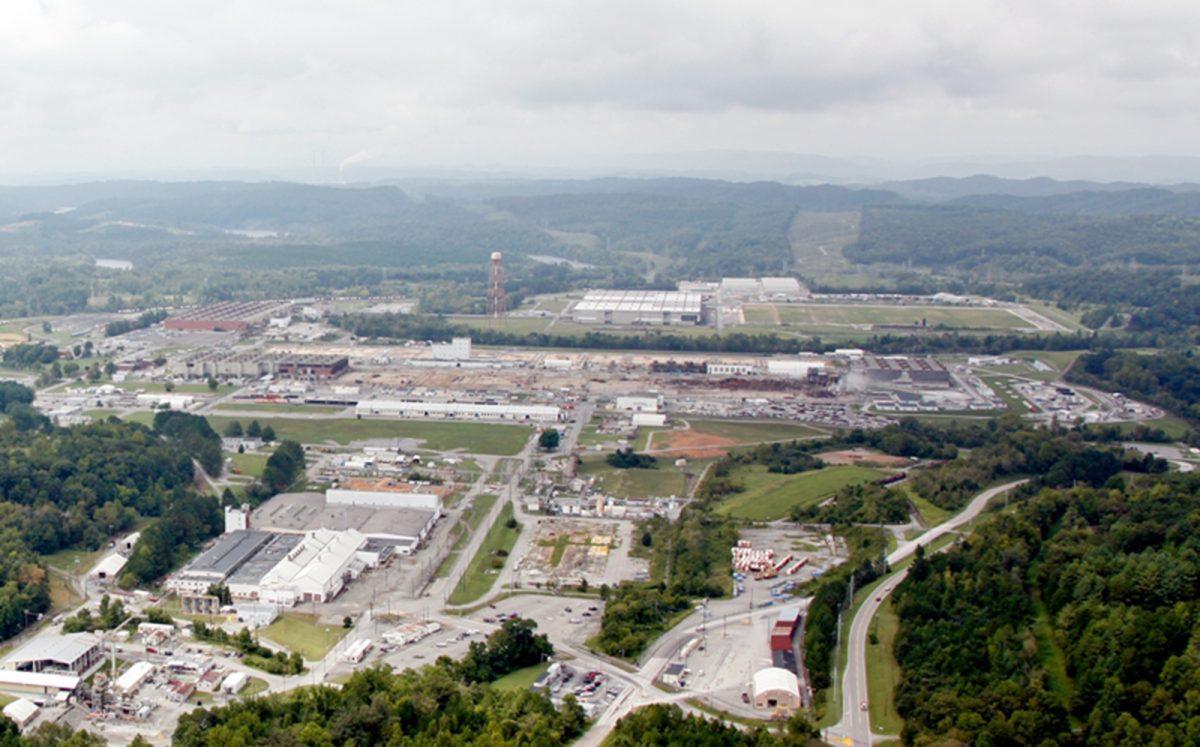
The final wall of the K-27 building at the K-25 plant, also called East Tennessee Technology Park, in Oak Ridge was torn down as part of the Decontamination and Demolition Vision 2016 initiative.
The building was a key contributor to the top-secret Manhattan project during World War II. The K-25 plant produced enriched uranium to use during the project.
“Vision 2016 is our goal to take down the five former uranium enrichment buildings by the end of 2016,” Ben Williams, senior communications specialist from the Environmental Management Program within the Department of Energy, said.
The K-27 building demolishment began in February of this year, and was the last to come down.
“We have taken down the other four buildings, demolition started in 2006. It’s been going on for about a decade. K-27 was the final of the five. We finished that on Aug. 30, so it allowed us to complete Vision 2016,” Williams said.
The U-shaped K-27 building was once the largest building in the world, being a mile long in length. It functioned as an instrumental part in the production of enriched uranium used in the atomic bomb dropped on Hiroshima.
“The cost of demolition of all five gaseous diffusion process facilities is $1.7 billion,” Ashley Hartman of UCOR, the cleanup contractor for the K-25 area, said.
A process called gaseous diffusion was used to produce the enriched uranium. Production continued well into the Cold War, but was stopped in 1985. By 1987 the K-25 site was shut down completely.
The demolition marks the end of Vision 2016.
“We completed before the end of 2016, so we are right on track with our schedule. It is a huge milestone to stay on schedule,” Williams said.
With Vision 2016 coming to a close, the Environmental Management Program can now start on Vision 2020.
“Vision 2020 is our goal to complete all clean up at the East Tennessee Technology Park,” Williams said. “So not just the five enrichment buildings, but also all of the support buildings that accompany that.”
The reason for the cleanup of the plant, is so it can be converted into an industrial park.
“Our goal is to transfer the land back to the private sector,” Williams said. “The sight has great infrastructure. It’s close to the interstate, it has its own roads, electrical lines, water lines and it’s on a large area of flat land.”
So while a piece of history has come to a close, it was to user in new history for the community by creating a large industrial park, bringing jobs and success to the Oak Ridge area.
“When we achieve our mission, it benefits the community. Industry moves in, creating new jobs and a new tax base which helps the economy,”Williams said.
Oak Ridge has also been recently named a historical natural park because of the plants and the work on the atomic bomb.
“We will be part of the Manhattan Historical Park with some historical preservation of K-27 as well as a viewing tower and a tourist center,” Hartman said.