Knox Heritage recently put out its annual list of the most endangered historic buildings and places in Knoxville and Knox County. Among the buildings listed, 12 were related to the University of Tennessee.
“We put out this list every year,” Knox Heritage Executive Director Kim Trent said. “Most of the buildings on the university’s campus are either scheduled to be demolished or are going to be changed so drastically that they will lose their historic value.”
Knox Heritage believes that as UT strives to enter the ranks of the top-25 public research institutions in the country, it should preserve as much of its history as possible.
“We see the preservation of these buildings as an asset to the university,” Trent said. “Keeping and preserving these historic buildings will help attract more students by making the campus more attractive and historic. Almost all the top universities have a large presence of historic buildings on campus.”
One such building that is slated to be completely redone is the Carolyn P. Brown Memorial University Center.
Among the buildings that will either be affected or completely razed in the construction of a new university center are the Carolyn P. Brown Memorial University Center, Aconda and Temple courts and the University Center Plaza and Parking Structure.
“Another problem with the plans to either tear down or completely remodel these buildings are the costs involved,” Trent said. “In most cases, preserving these buildings would be more cost-effective. The students should not have to pay for the renovations.”
Although preserving the historic values of the buildings on campus is important to the university, some projects are just not cost-effective to update, said Jeff Maples, senior associate vice chancellor for finance and administration.
“We look at each building on a case-by-case basis,” Maples said. “Some of the buildings we have couldn’t be included in the Master Plan because they would cost more to renovate than they would to simply build a new building in its place.”
Maples also said the university was not planning to raze all the buildings on the list.
The biggest problem with the renovation of the current buildings is that they would have to be brought up to compliance with present-day laws and regulations.
“Take Melrose Hall, for example,” Maples said. “If you have ever been in Melrose, you have seen that the ceilings are not very high. Melrose also lacks central heating and air. In order to upgrade this building, we would have to put in duct work in the ceiling, which would bring the ceilings down to a little over six feet.”
Maples said that issues such as hallway width, which would need to meet the dimensions proposed by the Americans with Disabilities Act, would need addressing.
“When you finish with the renovations, you have turned a 100,000-square foot building into 25,000 square feet of usable space,” he said. “Renovations of buildings like this simply would not be economically smart.”
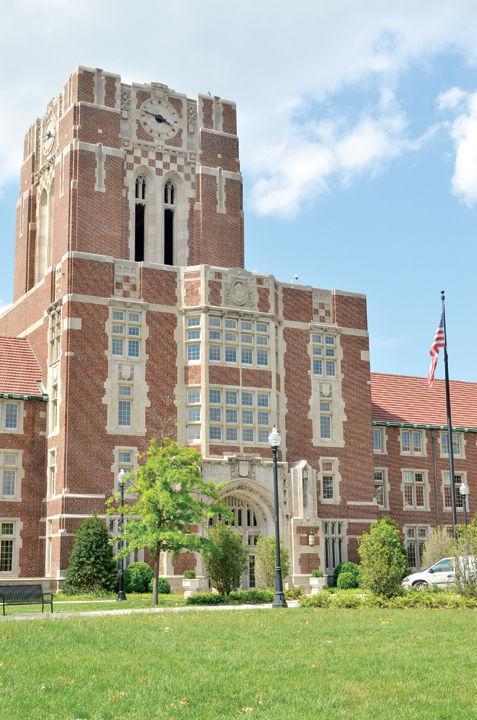
Although the master plan for UT does involve changes to historic buildings, it is intended for the buildings to resemble current architecture on campus such as Ayres Hall and other remodeled buildings.
“We’re hopeful we can work with the administration with preserving the historic buildings that are present at the University of Tennessee,” Trent said. “We hope to share our contacts with the administration, so they can make a more economically wise decision not only for students but for future students of the university.”