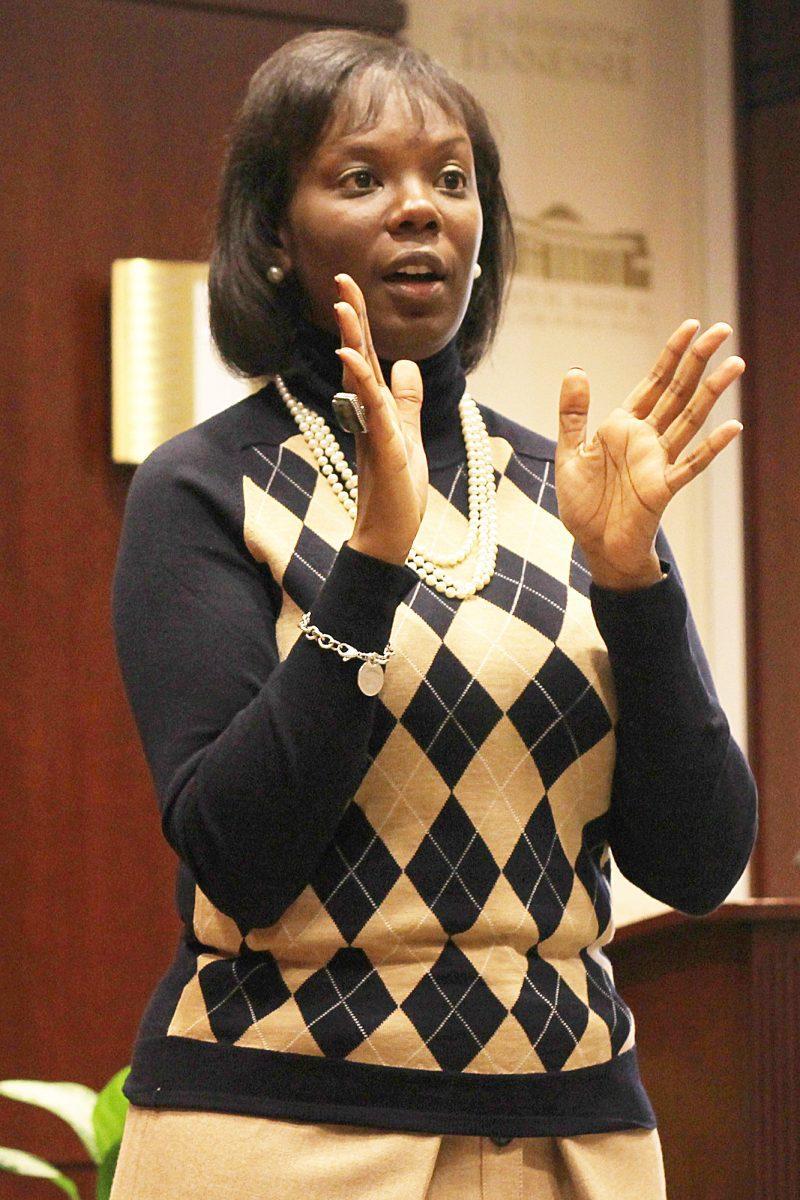
“The spirit of being a Volunteer is figuring out how we remain true to who we are while encouraging students to engage academically and have faculty and staff continue to challenge them,” said Melissa S. Shivers, assistant vice chancellor for Student Life. On Thursday night, Shivers served as guest speaker at SGA Government Affairs’ Top 25 Forum, speaking about ways UT is striving to become a top 25 collegiate institution.
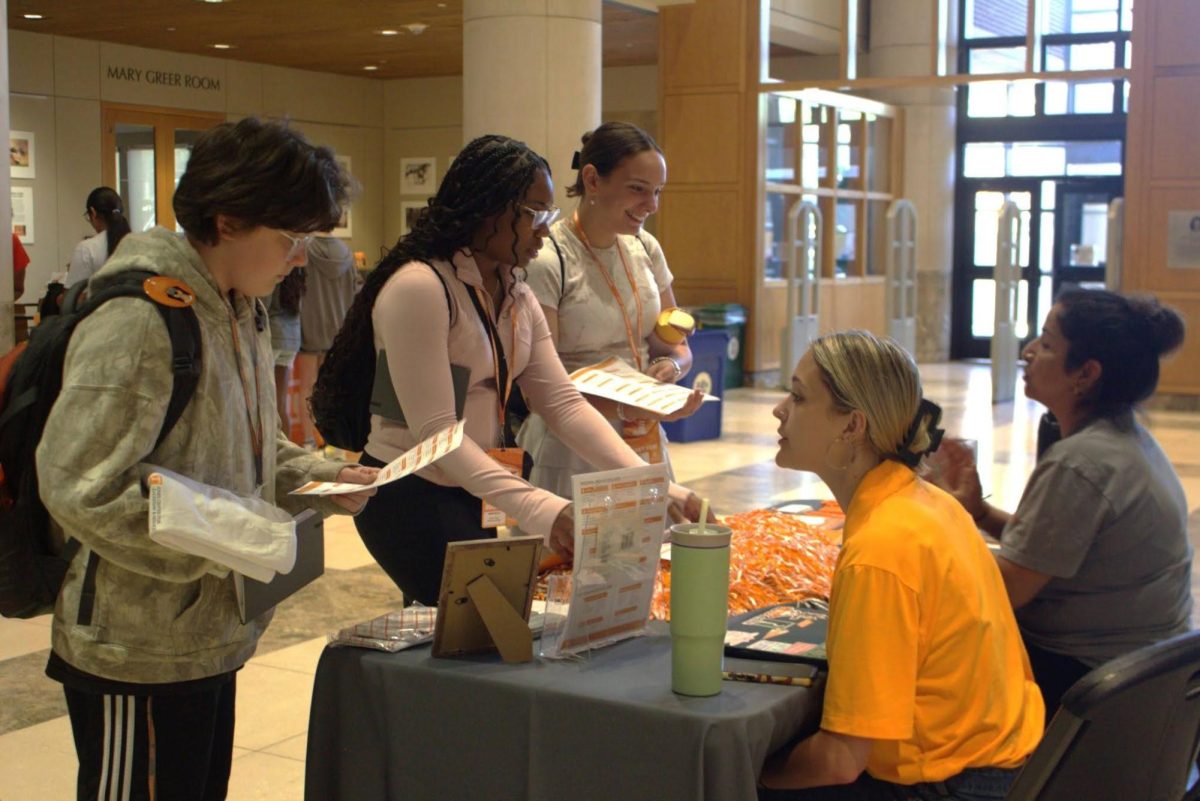
Shivers spoke to forum attendees at the Baker Center on ways UT is working on improving overall experience for its students. The top 25 strategic goals, she stated, first began as Vol Vision — a process trying to engage students, faculty, staff, alumni, and other constituent groups through interviews and other processes to learn what UT can do to improve its campus.
“We look at our top 25 peers, and we aspire to be like them, but not them,” Shivers said.
Shivers listed that the five goals UT is attempting to achieve are strengthening the focus on undergraduate study, increasing research and scholarship capacity, recruiting increased numbers of diverse graduate students, retaining a higher number of faculty and staff, and extending the school’s overall resource base.
“The top 25 institutions have high research and scholarship base,” Shivers said. “They’re constantly challenging students to think outside the box.”
With $200,000 already invested in improving research, Shivers applauded UT’s academics and efforts to improve the school thus far, stating, “We continue to attract the highest academic students.”
She believes that UT can compete with the top-rated U.S. institutions in the country if it continues to listen to and address student and faculty concerns. One major goal of UT is to improve the undergraduate graduation time to four years.
“Being in the top 25 for something is a good thing; it’s the same thing for school,” said Taelor Olive, a sophomore in biological sciences and Co-chair of Government Affairs. “We need funding, better facilities, and money to make the university better.”
UT is currently engaging in projects that aim to uplift students in their social and academic lives, including tutoring, advising, and counseling.
“We’re trying to expand tutoring here in UT in order to accommodate students who want to participate in tutoring,” Shivers said, also adding that UT has already hired a new tutoring director.
This summer will also be the first time that tutors will be offered for students enrolled in summer semester courses.
UT is also working to improve its academic advising. Since January, nine academic advisors have been added to staff, and a new online advising schedule is also under construction.
In terms of counseling, Shivers encouraged attendees to take advantage of the on-campus resources UT offers, stating that the university is seeking more funding to support additional counselors at the Student Counseling Center.
Other areas UT is working to improve are its summer school course selections, improving the Chancellor’s Honors Program, continuing the Life of the Mind program, maintaining the LeaderShape program, and expanding the Ignite program which is an opportunity for incoming freshmen to learn more about opportunities outside the classroom setting.
“We want students to participate in more than just learning,” Shivers said.
UT is also working on adopting a “one-stop shop” modeled after the University of Minnesota. This “one-stop shop” allows students to go to a single place on campus to get various questions and concerns answered about advising, financial aid, scholarships and other areas.
At the conclusion of the forum, Shivers addressed student concerns about what they would like to see improve on-campus, including implementing more scholarships for transfer students and seeking additional funding for study abroad programs.
“That’s pretty exceptional and exciting that you all have been engaging in discussions to reach the top 25,” Shivers told attendees. “We need to ask ourselves: what is it going to take for us to become a top 25 institution?”