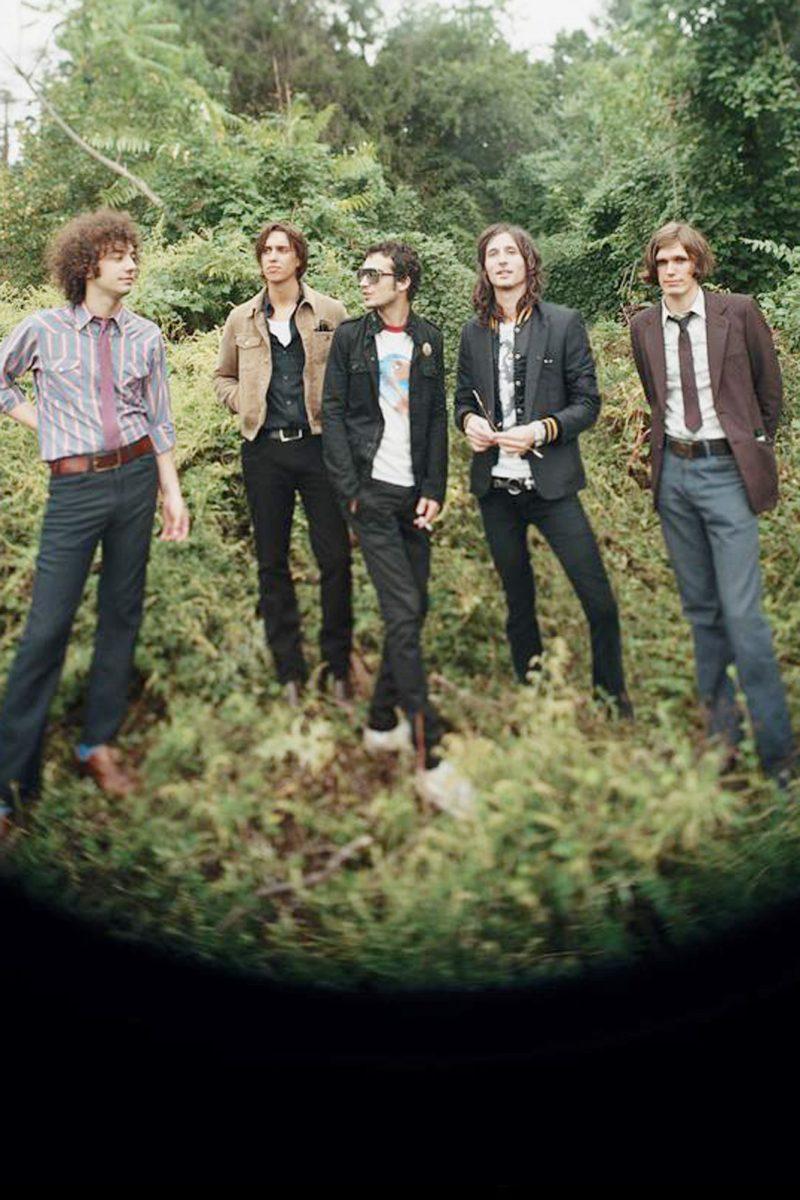
In music, the key to any band’s success is balance.
As a way to appeal to a broader audience, every great band must be able to grow musically and evolve its sound as it advances in years. But it is also important that the band keep an equilibrium and a foothold in the aspects of its music that made it great, so as to appease the fans that got it there. For the Strokes in their newly released album, “Angles,” there is an evolution of sound but a lack of balance.
After a five-year hiatus, the band returned on March 18 with its fourth collective album. But things have changed since the 2006 release, “First Impressions of the Earth.”
During that time, the Strokes has been replaced as the premiere indie darling in the eyes of many reviewers by the band Phoenix, whom many have claimed to be the “French Strokes.” It seems that in an attempt to reclaim its past glory, the Strokes has added some musical elements from its Francophone counterparts and other mainstream acts of today.
The album opens with the synth-pop tune “Machu Picchu,” which certainly is a departure from an old Strokes song but is still pleasing to the ears. The song also serves the purpose of setting up listeners for the new sound they are about to experience.
From this point, the album slides into the garage rock-like “Under Cover of Darkness,” which perfectly combines the masterful strumming of Albert Hammond Jr. and the always addicting voice of Julian Casablancas. This song sticks out on the album as a clear high point, as it achieves the closest semblance to the balance necessary for success. The remains of the old guitar-heavy, and also perfectly — and purposely — unpolished sense of the pre-2005 Strokes is blended well with a lightened pitch to Casablancas’ usually stage-stealing gravelly voice to create an enjoyable product.
The rest of the album is a mixture of differing song choices and bold guitar riffs. In fact, one of the few running constants of the latter part of the album is its diversity.
High points of this new sound abound throughout the album. “Two Kinds of Happiness” opens with an ’80s-inspired synthesizer solo yet works its way into a guitar-driven melody after the initial 45 seconds or so. “Gratifaction,” instead, opts for the path of a mainly vocals-inspired tune with a lighter feel to it, one that is reminiscent of carefree feelings. The album’s final song, “Life Is Simple in the Moonlight,” harkens back to previous Strokes endeavors like “Reptilia” and “Modern Age,” as it seemed that behind the strength of guitar riffs, Casablancas’ voice would explode from the speakers.
The true problem with this album, though, is that it tries too hard to be something that it is not. In even the best songs, “Under the Cover of Darkness” for instance, there is a tinge of almost Auto-Tune-esque overproduction that can leave Strokes fans wondering why the band changed. An example of this almost unnecessary, excessive change comes in the form of “You’re So Right,” which comes off sounding like it should be on a Linkin Park album.
All of this is not to say that “Angles” is a perfect album, or even really a great one. Rather, “Angles” is a good album, not up to par with “Is This It” or “Room On Fire” but certainly a step in the right direction after the failure of “First Impressions of the Earth.” The true missing ingredient from this album is constant balance.
While the Strokes achieved the first part of the equation of remaining a great band, it diversified its sound at the expense of its depth, and that is what “Angles” is left as. It is a good album, with definite high points, but it tries to be more than just the Strokes, and this could leave some fans searching for the essence of their favorite band.