Theatre and comedy is a tough combination. Maybe theatre line delivery makes it difficult or maybe most theatre audiences are tough crowds, but no matter the reason, I’ve always found it hard to laugh during my night’s on Broadway.
Clarence Brown tackled this challenge of theatre comedy with their first production of the spring semester.
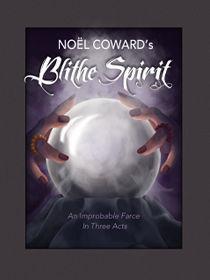
“Blithe Spirit,” a 1941 comedy by English playwright Noël Coward, follows author Charles Condomine and his wife Ruth. During his search for new book material, Charles decides to hold a séance with his wife and a few friends. However, things quickly go awry as Charles and Ruth find themselves haunted by the ghost of Elvira, Charles’ ex-wife. Hilarity ensues.
Like many straight plays of its kind, the spooky spectacle occurs entirely within a single living room. Fortunately for “Spirit,” that living room was beautifully made. Scene designer Ron Keller outdid himself. Every table, lamp, chair and accessory was placed with a care and attention that’s hard to convey in words. The best I can do is say that no space was wasted.
The actors occupying that set were similarly stellar.
Katie Cunningham was especially well cast as the silly specter Elvira. She’s the most active of the cast, she is almost never seen standing still. Cunningham managed this energy and used it as an advantage instead of a potential distraction. The result was a charming and fun performance that fit right in with both the story and the rest of the cast.
Brian Gligor was also delightful as the bumbling Charles Condomine. Gligor knows how to use every part of his performance to sell a joke. While other characters’ jokes sometimes fell flat, Gligor made the audience chuckle at every occasion. His stage movements and line delivery were just exaggerated enough to be funny and absurd while never crossing into full ham.
However, the play that takes place on that beautiful staged manned by such talented people is mostly mediocre.
The script broke the theatre-comedy curse by having plenty of well-delivered and authentically funny jokes, but between those jokes and humorous character interactions lies a field of filler dialogue — minutes worth of lines with seemingly no purpose besides stalling until the next punchline. This issue is especially prominent in Act I, to the point where I’d consider skipping it entirely in favor of starting with Act II.
The result is a consistently well-written play that has too much down time.
It’s not a bad script. In fact, it’s fun and well-written. However, I can’t point to anything that made the script anything above average.
The set and performances were well above average, both crafted by experts in their field. While I could easily recommend “Blithe Spirit” to anyone, I would never say it’s a must-see.