Editor’s Note: Please read a follow-up interview with the conference organizers here. The title of the conference has been changed from “Women’s Development Conference” to “Women and Development Conference” in this piece.
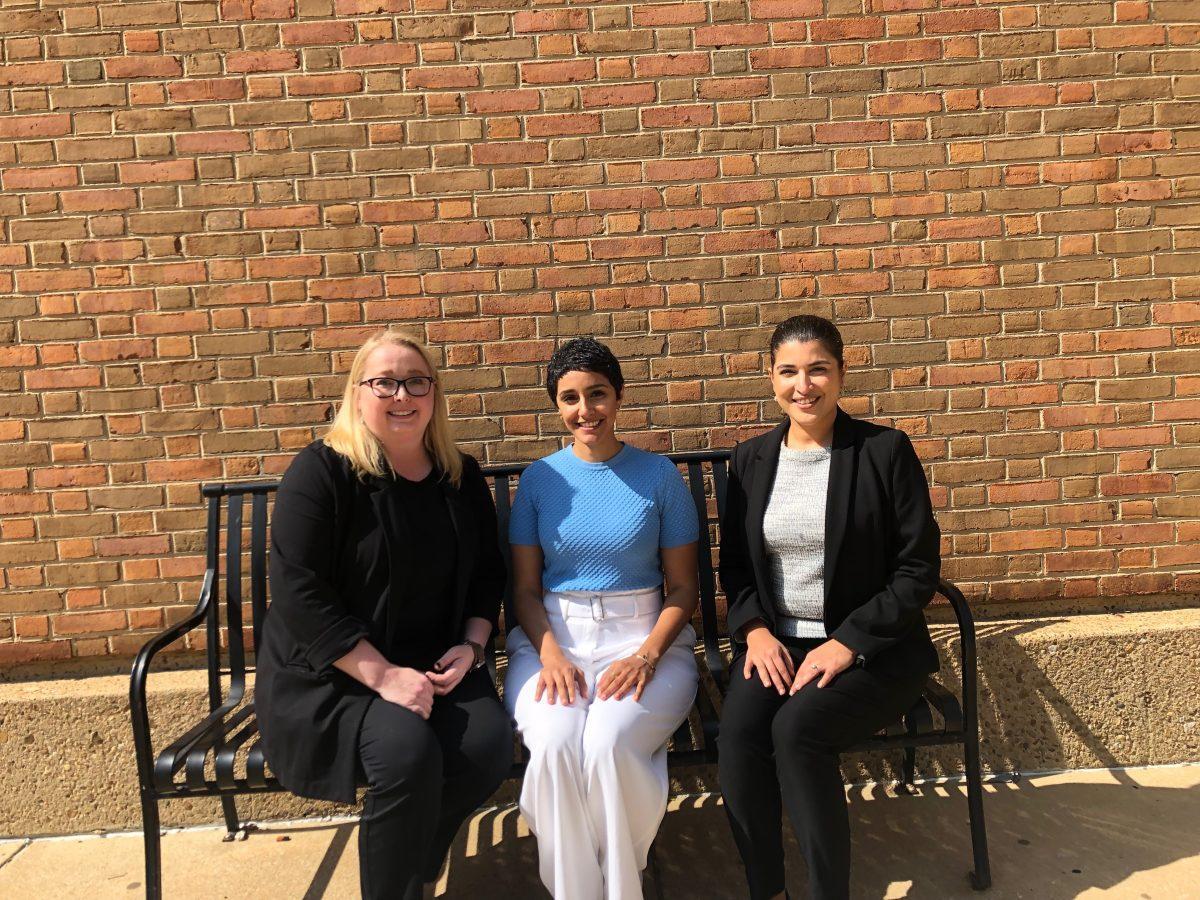
Three graduate students studying political science at UT have collaborated with the Deresat, also known as the Bahrain Center for Strategic International and Energy Studies, to organize a conference on the role of women in development in the Persian Gulf.
The idea for the Women and Development Conference began when Nourah Shuaibi, one of the students at the heart of the conference’s creation, received an email about an opportunity for funding. She then reached out to Amnah Ibraheem and Allison Critcher, the other graduate students involved with the organization of the conference, and the three decided that organizing an event to discuss women’s involvement in the changing the Persian Gulf would be a fantastic way to combine each of their different academic concentrations.
Recently, the United Nations Development Program (UNDP) released its plan for sustainable development, which has been adopted by nearly all countries in the world. For the Persian Gulf, this development plan is particularly important, seeing as the harvesting of energy sources, which are some of the largest producers of greenhouse gases leading to climate change, is a vital part of the area’s economy.
The countries in the region have incorporated the UNDP’s sustainable development plan into their national vision plans, and Shuaibi, Ibraheem and Critcher hope to analyze the way that women will be affected by these changes.
“We want to see what these states are doing to adopt these sustainable development goals as they apply to gender issues in their countries,” Ibraheem said.
The conference will be held in Bahrain on November 6th and 7th. Bahrain was selected to host the event because the country, which is the smallest and poorest on the Persian Gulf, rarely hosts academic conferences such as this one.
A stark contrast in international academic attention exists between Bahrain and its neighbor Kuwait which Ibraheem, who is Kuwaiti, explained.
“We picked Bahrain because it’s not a place that has as much scholarship and as much academic presence as the other (countries in the area) do. There’s a lot more going on with Kuwait. It has a much more open policy towards academia,” Ibraheem said.
Critcher explained how she hopes that holding the conference in Bahrain will demonstrate to the world that these kinds of academic events can be held even in a poorer, less academic, country if people are willing to work to make it happen.
“We really wanted to do this conference in a place that we knew that it would be beneficial, but also that it could happen, and to demonstrate that this type of thing can happen in these places if we’re willing to donate the resources,” Critcher said.
All of the speakers scheduled to talk at the conference are women, and all of those women are from the Persian Gulf region except for Critcher and Dr. Ellen Wald, an oil historian from Florida. Hearing from women who are actually from the area will give the conference a level of local authenticity, Ibraheem explained.
Ibraheem also stated that simply having women carry out these discussions on development raises awareness about the issue from a gender perspective.
“Just that person being female, speaking from it, through their perspective adds a gender component that people often glaze over, and we’re hoping to incorporate that and to capture that energy,” Ibraheem said.
The panels scheduled will examine a wide range of development issues, such as traditional energy sources, renewable energy resources, how to lower carbon emissions, labor force participation, labor issues and more. A speaker from Bahrain specifically will be on each panel.
The conference will include more than academic opinions; an affiliate from the UNDP will also be presenting at the event. Critcher explained that they have worked to ensure that the event is open to anyone concerned with or working with the subject of women’s role in development in the Persian Gulf.
“We’re trying to make it open to everyone and as many people so they can have access to the research, they can have access to the policy speakers. So it’s really wide open, and we really tried to recruit and open it and make it accessible to a wide range of people,” Critcher said.
Criticher stated that overall, the conference aims to represent women whose achievements may be overlooked and to give women in the region a chance to support their fellow women.
“The whole purpose is to lift them up, to empower them, to give them the chance to share their research and to just kind of share what they’re doing and the great amazing things that are coming out in this collaborative experience, so we can look towards how we can help women support women in the region,” Critcher said.