In recent years, a discussion surrounding mental health resources on campus has surfaced at UT. However, there has been little discussion regarding mental health resources with attention specifically on African American students in need of those resources.
Wednesday morning, the Center for Student Engagement set out to foster this discussion by hosting a webinar, entitled Black Minds Matter, featuring Jayme Hardy of American Baptist College and Harold E. Brown of Vanderbilt University. Aaron Dixon, a coordinator for the Office of Multicultural Student Life, hosted the presentation.
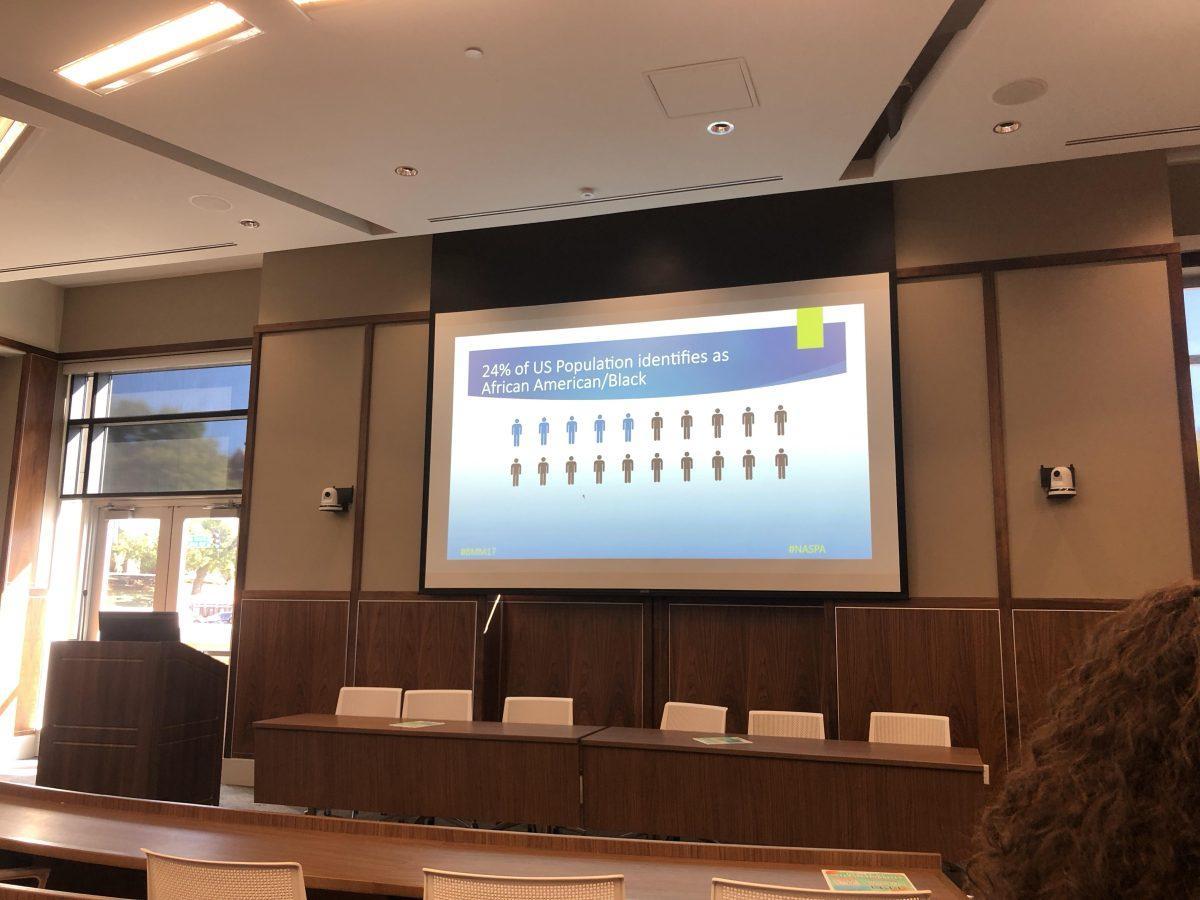
The presenters began by discussing what the problem is and what they hoped spectators would gain from the webinar. They explained that 24% of the U.S. population identifies as black, and only 16% of black Americans seek mental health resources. This statistic is especially concerning when considering the demographic of college students; college students are particularly susceptible to mental illness and suicide.
Brown explained that in order to encourage more students to seek help, collegiate professionals must be able to recognize when their students are struggling.
“In order to meet students where they are, we have to know where they are and so we’re gonna be, again, looking at literature, looking at some facts and figures that are going to be able to help pinpoint where our students apparently are within the social political climate,” Brown said.
Although black college students suffer with many of the same mental illnesses, such as depression and anxiety, as their peers of different races and ethnicities, the manifestation of their illnesses may appear differently. African American students’ already-existing mental health issues may be worsened by other difficult experiences that black college students deal with due to their race or ethnicity.
Hardy emphasized the important of analyzing the way that mental illness affects black students differently when attempting to get black students involved with mental health resources.
“It’s important to take this into consideration when starting to think about how to engage African American Students differently, when it comes to a mental wellness resource,” Hardy said.
The presenters then gave several examples of outside factors that worsen black students’ mental health with a collage featuring several recent circumstances involving African Americans. The image featured pictures of Colin Kaepernick kneeling, police brutality, Kendrick Johnson, Donald Trump, African Americans protesting and more.
These highly politicized and sometimes dangerous circumstances involving black Americans create anxiety for members of the black community. That anxiety only worsens any mental health conditions that a college student may already be experiencing.
Brown explained that the widespread attention given to these negative situations creates an environment of stress for African American students.
“All these things [in the collage] work together, constantly being portrayed in the media, constantly being shown on Facebook, constantly being talked about, and so for people of color, particularly black, African American students, this is very stressful,” Brown said.
The presenters attributed the lack of African American students seeking mental health resources to a number of factors, one of which is the idea that black students are taught that, as members of a marginalized group, they are expected to develop a certain level of resilience and therefore, they should not be as affected by mental health troubles as others, Hardy explained.
“Oftentimes, our students of color are encouraged to develop grit and resilience, and the conversation ends there when it comes to dealing with or persevering through particular issues that they may be going through regardless of what they are,” Hardy said.
Additionally, black students may be discouraged from seeking mental health resources based on the way in which they were raised. A large stigma still surrounds mental illness in the African American community, Hardy explained. Blacks students’ parents may not be encouraging about their children seeking treatment. A lack of prior treatment, perhaps because of the situation aforementioned, is also another reason why black students don’t seek out treatment.
Furthermore, African American students may avoid seeking mental wellness resources, such as therapy, because they feel unable to connect to a counselor who is a different ethnicity; there are not many black counselors and therapists employed in higher education, Hardy explained. African Americans are misdiagnosed, in terms of mental illnesses, significantly more frequently than other demographics as well.
The presenters ended the discussion with suggestions on ways that university administration can encourage their black students to seek mental health resources and sharing what they have done personally to solve the problem. They suggested creating workshops that connected academics with mental health; for example, Hardy discussed a workshop she held which analyzed the connection between midterm exams and mental health.
Hardy, who is a collegiate therapist, also shared the story of a Solange listening party that she held at American Baptist College. African American students were encouraged to gather and listen to Solange Knowles’ album “A Seat at the Table,” while drawing and eating snacks. Through discussion of a popular artist’s music, which was simultaneously entertaining and informing, Hardy was able to introduce black students to mental health resources at their university.
“That album did a very good job at describing some of the challenges that African Americans face in the country of the United States,” Hardy said.
As for Brown, who is the Greek Life Coordinator at Vanderbilt, he discussed a concept he introduced to his students called “WTF Moments.” Brown reclaimed the acronym of “WTF” to mean “Why Those Feelings?” He encourages his students to think to themselves, “Why those feelings?” when they are experiencing a situation that is depression or anxiety-inducing—particularly a situation that relates to their race or ethnicity.
“Typically things happen in the media, in the news that create a lot of anxiety and emotion for our students, and so asking them, ‘Why those feelings?’ helps them to share their voice, which ultimately helps them to share their stress and then later, ultimately helps them to later share their story that can promote understanding of all these things,” Brown said.
The presenters also explained that implementing programs that involve African American students’ parents in their children’s mental health is a great way to combat the stigma surrounding the topic. Hardy and Brown were sure to discuss resources that would benefit not only students, but their families as well.
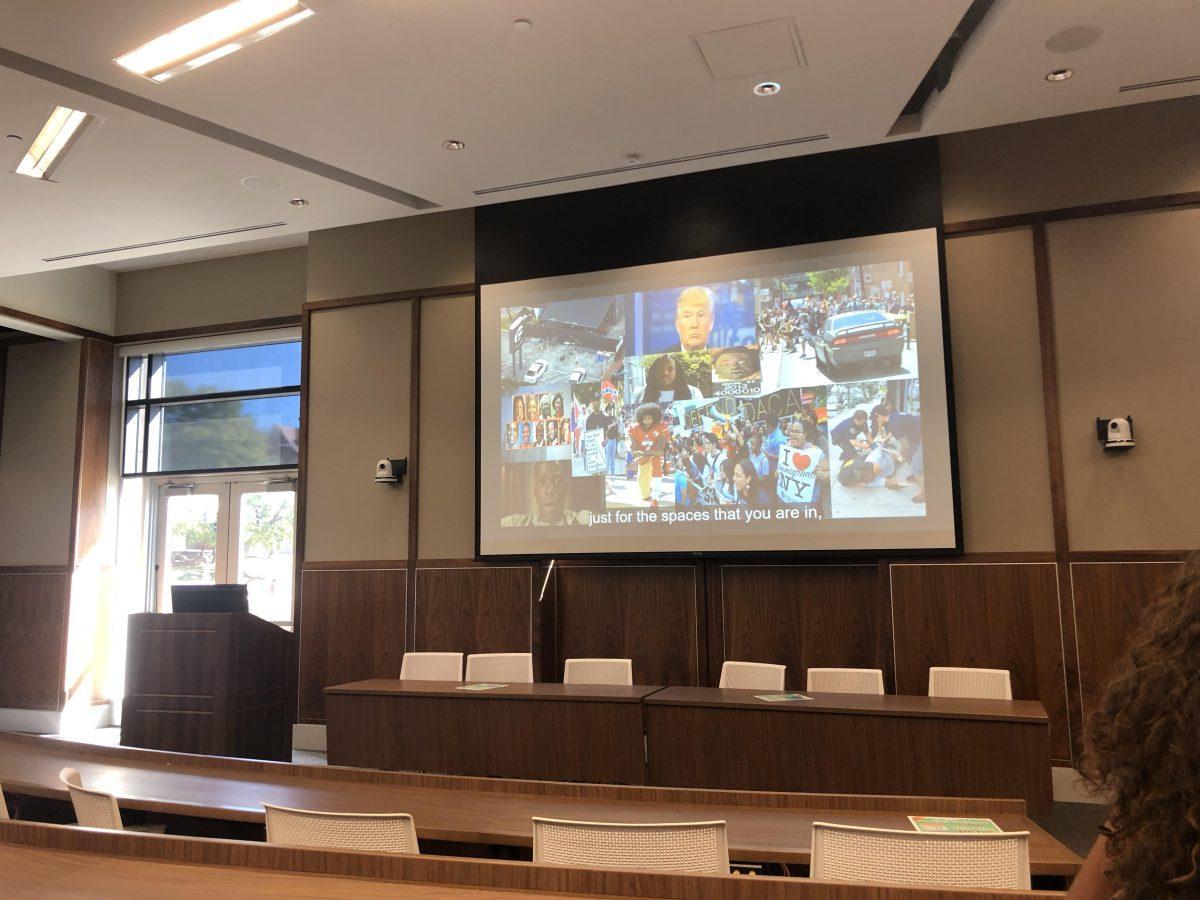
A collage features recent political and social events that have been difficult for the African American community.