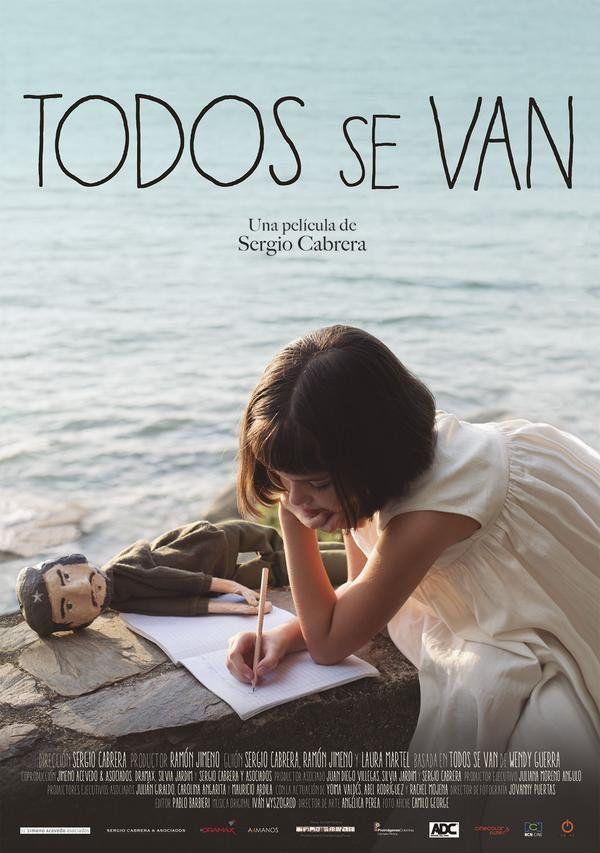
The film “Everybody Leaves,” or “Todos se Van,”is based on the coming of age novel of the same title by Wendy Guerra. The movie was shown in Hodges Library on Tuesday night as the second installment of the Hispanic Film Festival.
The movie takes place in Cuba in 1979, a couple years after Fidel Castro became the Cuban president. A young Cuban girl named Nieve lives with her mom, Eva, and her stepdad, Dan, who is living in Cuba on a work visa from Sweden. Nieve’s father, Manuel, lives in a communist revolutionary camp and is adamant about getting both his ex-wife and his daughter back.
Because Eva doesn’t send Nieve to school, a custody battle between Manuel and Eva ensues, and Nieve is sent to live with her father at the camp. However, that situation does not turn out to be favorable for her.
I really did love this movie, and after watching it, I really want to read the novel it’s based on. I loved the story and the acting as well as the imagery — as for the camera work, not so much, but that didn’t take away from the story and the rawness of the emotions conveyed.
Some of the film’s themes centered around education at the time, dogma, government alliance and freedom of expression. Because of the communist era depicted, a big portion of the story was dedicated to the ideas of “Big Brother is watching” and freedom versus authority.
During the era depicted in the film, authority was disguised as freedom, and this is demonstrated throughout the film with the way in which the characters are watched and reported on. For example, during the custody battle over Nieve, Luis, Eva’s boss, reveals some photos he had taken of Dan with Nieve. If taken out of context, the photos could be considered compromising, although the two were just playing at the beach.
Additionally, Manuel’s alcohol problem and his abuse of his child is revealed when his boss and neighbors, as well as his teachers, witness him abuse Nieve and see the cuts and bruises on her underweight body.
I personally really liked the connection to “Big Brother” and the idea that someone was always watching over the characters. At the time the film is set in, that level of surveillance was reality. Anyone could have been watching you, from a coworker to a family member, waiting to report you if you showed signs of resisting the government in any small way.
The themes and the movie itself are interesting, if not horrifying to observe when one is thinking of Cuba and Castro’s rule. The film depicts the effects that the communist revolution had on Cuban citizens, as well as their “understanding” of freedom and the imposing authority of the government.
In the film, Eva teaches Nieve the difference between the two; Nieve in turn writes a story about this and gets in trouble for having different ideals than the other revolutionaries. On the contrary, Manuel justifies what he does in his home and to his daughter as his right, or freedom, to show his authority over his child.
I think that this movie is truly amazing, especially when you take the plot and analyze its contents. The characters’ dialogue and the manner in which they carry our their conversations are also reflective of the state of Cuba at the time. It’s a movie that I would recommend for anyone, really, and it’s just a phenomenal portrayal of the theme of freedom in general and what it meant in communist Cuba.