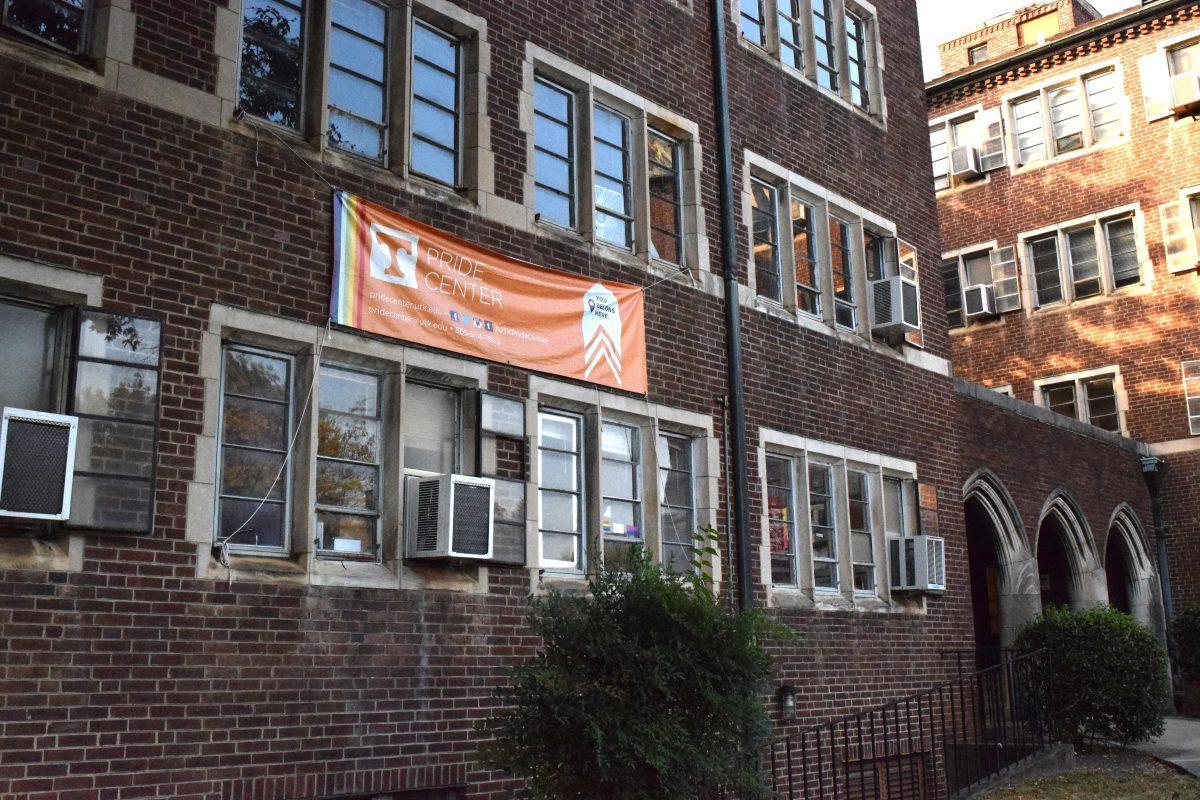
After UT’s Pride Center was defunded in 2016, Donna Braquet, the director of the Pride Center at the time, knew that she had to engage herself in another project she was passionate about. By that point, Braquet had worked as a UT librarian for over a decade, and she realized that with her experience in research and her involvement in the LGBTQ+ community, she had the perfect resources to create an archive detailing the history of LGBTQ+ activism in East Tennessee.
“I was trying to think of what is my next endeavor going to be, so it seemed like a natural fit, being a librarian and wanting to give back to the community,” Braquet said.
And thus, the Voices Out Loud Project was born with the aim of compiling materials for the archive. Wednesday evening, the Pride Center partnered with the project to host Knoxville Queer History at Hodges Library in order to display the archive.
The physical archive is extensive; it contains hundreds of photographs, many by the late Jan Lynch, as well hundreds of newspapers and news clippings. Dated editions of “USA Today,” “Knoxville Mercury,” “Metro Pulse” and even the “Daily Beacon” were on display at the event. The archive also contains books written on LGBTQ+ activism and gear from pride parades, including bedazzled hats, sunglasses and t-shirts.
And, at the last table in the display, at the very end of the hallway, lay the tattered and torn gay pride flag that once hung outside of the Pride Center and was destroyed when the center was vandalized in 2016.
Activist Ed White spoke at the event. White has been an activist in the gay community for many decades, and throughout that time, he has been compiling physical memorabilia about the East Tenn. LGBTQ+ community and its activism endeavors. Many of the items in the archive are from White’s personal collection; his contributions make up about 90% of the archive.
“I’ve basically been waiting for something like this to come along all along. I’ve been stuffing things in boxes all my life and just knowing that given time, all of it’s going to be valuable — especially when we were involved in some of the early 90s part of the movement,”White said. “That was kind of this up-swelling in the movement where things got really busy.”
White explained that the archive plays an extremely important role by simply displaying displaying the LGBTQ+ community that exists in East Tennessee. As a marginalized community, it is necessary that members of the LGBTQ+ community remain in the public eye in order to ensure that their needs are not ignored.
Additionally, White emphasized that history is never quite as far away as it seems to be. Progress is not linear, and remembering the importance of past activism will help modern activists continue to pursue their goals in times of discouragement.
“The things that were done a long time ago still affect what’s happening now, and of course, there’s always backsliding,” White said. “You can never assume that everything is secure as far as rights and everything goes. There’s always going to be some points of backsliding, and knowing what’s been done in the past can help you move forward.”
UT student Zach Plaster currently works in McClung Museum and was one of the founders of Sexual Empowerment and Awareness at Tennessee, the organization that organizes UT’s annual Sex Week. Plaster has been working on the archive with Braquet and agrees with White about history’s uncanny ability to repeat itself. The archive plays an essential role in allowed modern activists to learn from that history, Plaster explained.
“A lot of the time when you’re going through these clippings, you’re reading about the exact same problems that we’re all facing now, so in one sense, I think that projects like this galvanize the community and give us a sense of belonging and family and home, and it also serves as a source of inspiration to keep making things better for us,” Plaster said.
The archive will be housed in Special Collections in Hodges Library, and the collection is also currently being digitized.