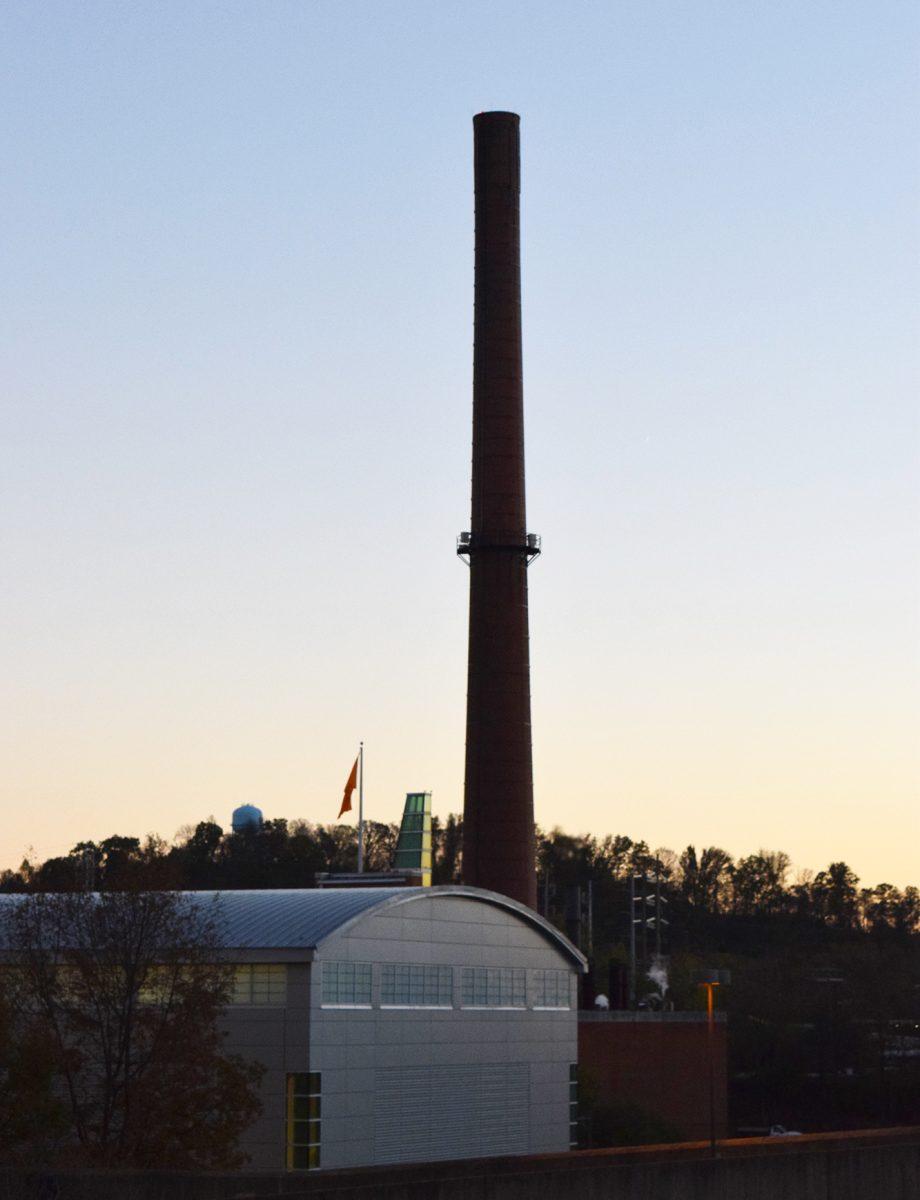
UT’s skyline is set for some big changes, as the 310-foot smokestack at the corner of Lake Loudoun and Volunteer Boulevard is set to be demolished. The smokestack was built to accompany the coal-fired burners constructed in 1965 to help power the campus through their steam output.
The university ceased coal burning as a means of power production on campus in March 2015, making the transition to cleaner burning natural gas to help power over 150 buildings on both the main campus and the agricultural campus. With the transition, UT’s utilities emissions were cut by half, while carbon dioxide emissions fell by over two-thirds.
“It’s important that we continually work to reduce air, water and land pollution from campus operations and to demonstrate our commitment to environmental stewardship,” said Dave Irvin, associate vice chancellor for facilities services, in a press release announcing the demolition. Irvin also noted the smokestack’s demolition will aid in the university’s continued efforts to beautify campus and the city in general, as the smokestack is visible from downtown Knoxville.
The structure originally cost $25 million, with $24 million being provided by the state of Tennessee and the remainder from the university.
The demolition of the smokestack will be done in phases. After a hole is prepared at the base of the smokestack, bricks from the top of structure will be removed and allowed to fall into the hole below and removed later. The demolition project is predicted to last around 45 days, including the removal of all remaining coal burning equipment left in the facility.