“We think Lakeshore can be what Central Park is to the people and community of New York City.”
At 8:15 a.m. on Thursday morning, city officials and staff of Flying Pilot gathered as Jimmy Haslam, current CEO of the company and brother to Gov. Bill Haslam, announced his family’s $15 million donation to the Lakeshore Demolition Project, which officially took root last July.
Given the property’s stunning vista over the Tennessee River and rich local history, it’s no surprise the Haslams were the first public donors for a project decades in the making.
The property stopped housing patients of the state-run Lakeshore mental hospital in Nov. 2011 when an outsourcing initiative moved all employees to Nashville, closing the land’s 129 year history as a residential hub.
“I think this will be a project that all of our children and our grandchildren will not only be using, but also contributing to,” Haslam said at Tuesday’s riverside gathering. “It is our company’s privilege to be the first to give a substantial amount of money toward that project.”
Phase one of the project, estimated at $25 million, has already made its mark on the 186-acre property with the completion of a playground in early September. The city has also partnered with Knoxville Utilities Board to eliminate and replace outdated water, sewage, electricity and heating lines buried beneath the fields once used by the facility’s patients and staff.
In junction with Lakeshore Park Board, a local non-profit overseeing all renovations, Parks & Recreation director Joe Walsh reported $12 million is required to tear down all remaining buildings on the Lakeshore property, including the 1940s Choate Boiler Plant and low-lying residential structures on the property’s west side.
Cardin Bradley, Lakeshore Park’s director of development, commented that the Haslams’ donation was not unexpected given Dean Haslam’s active membership of the Park Board for over twenty years.
“They have been around Lakeshore Park ever since Lakeshore has been a park, and they have seen the potential here and what a park of this magnitude could bring to the citizens of Knoxville,” Bradley said. “They feel like it’s an important investment to make and it’s where their heart is.”
As Walsh described, the master plan for Lakeshore Park envisions a space that takes advantage of the park’s natural beauty, ultimately transforming the property into a family friendly greenway and space for outdoor activities such as kayaking and field sports.
“We’re looking at installing viewing platforms that go out over the river, so people can get a view of the water itself and a place for watercraft to explore the creek and river,” Walsh said. “It’s a beautiful piece of property to be sure, and we fully acknowledge that.”
Though completion will not come for another four years, Walsh said Lakeshore’s new page of local history must be attributed, in large part, to the generosity of long-time residents of West Knoxville, individual donors like the Haslams and other private companies.
Such generosity, Walsh explained, has also added to the public’s positive response to the changing function of land following Metropolitan Drug Commissioner Doug Varney’s official “de-commissioning” of Lakeshore.
“There was concern that we would turn it into a place of business or put up condos, something that could potentially disrupt from the neighboring fields and people who live in the general area,” Varney said. “(But) they’re excited that it will be preserved as park, not just for people in the growing area of Knoxville, but people from all over.”
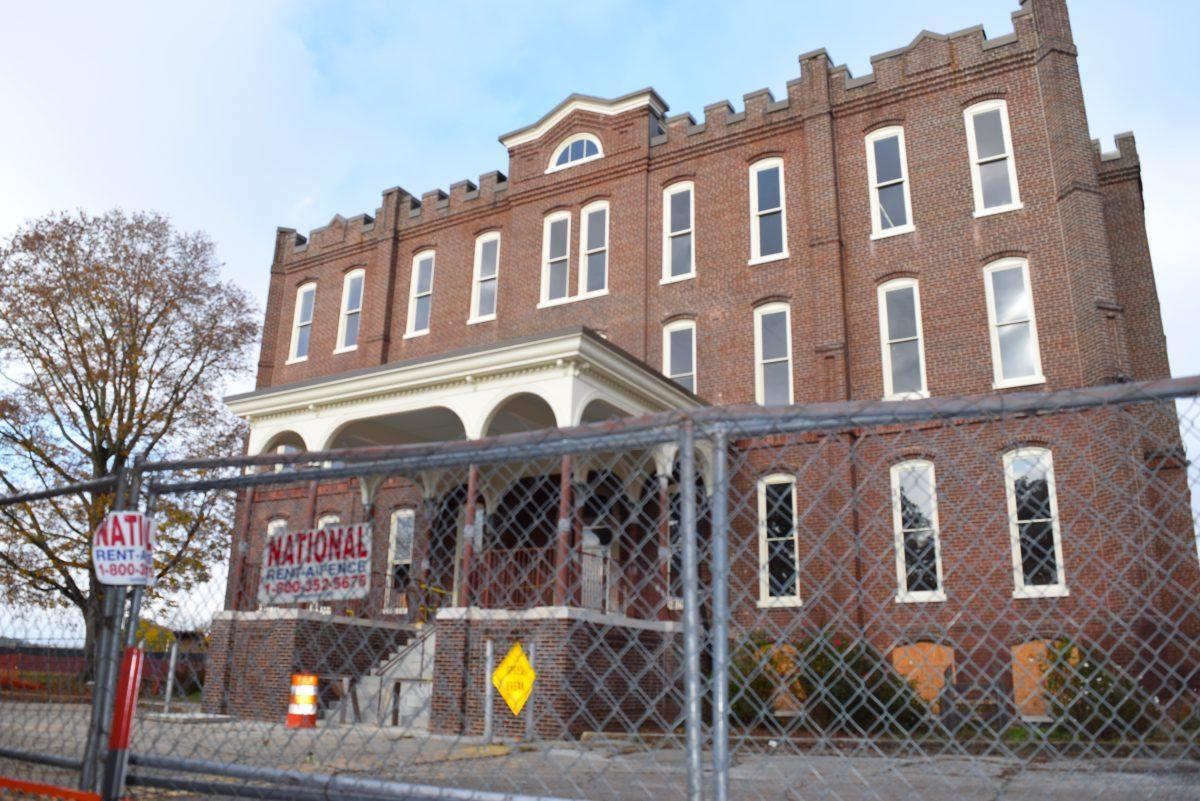
For Walsh, one of the more exciting moves is the renovation of Lakeshore’s administrative building. Once utilized as the main office of Knoxville’s mental health facility, the 1884 structure will house the new main office of the city’s Parks & Recreation department — an appropriate shift given the property’s future as a play and relaxation for the Knoxville community.
In an effort to preserve the original design, the contractor and city department have collaborated with local architect Elizabeth Eason to ensure original architecture characteristics are maintained as the 1884 building is renovated.
“To my knowledge, there will be memorabilia and pictures from former employees will present, so that we keep the property’s history intact,” Walsh said.
But for Bradley, a deeper motivation for restoring the property as a public park lies in Knoxville’s evolving reputation as a city for avid outdoorsmen and modern adventurers.
“Knoxville is becoming an outdoor city with so many recreation opportunities and Lakeshore has potential to become the centerpiece of that.”
Phase I of the Lakeshore Park Project is scheduled for completion by March 2016. For more details on construction, visit the official website for the City of Knoxville.